
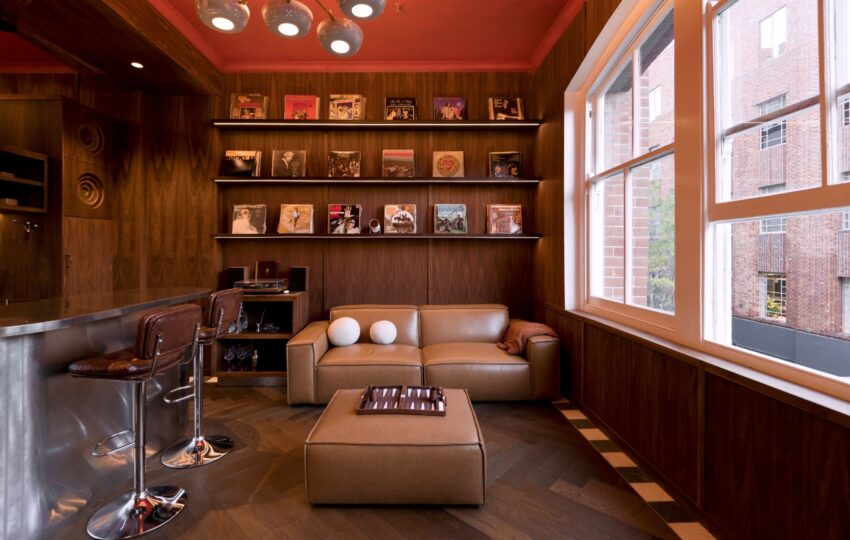
Hidden among the restless streets of Surry Hills, Sona Place distils the neighbourhood’s industrial past and creative pulse into a compact retreat where hospitality is measured through atmosphere rather than scale. Conceived by Jform director Jonathan Friend alongside Matt Rhodes, Kate Parsons and Olivia Parsons, the boutique apartment rejects the predictable language of short-stay accommodation in favour of an environment shaped by music, materiality and quiet immersion.
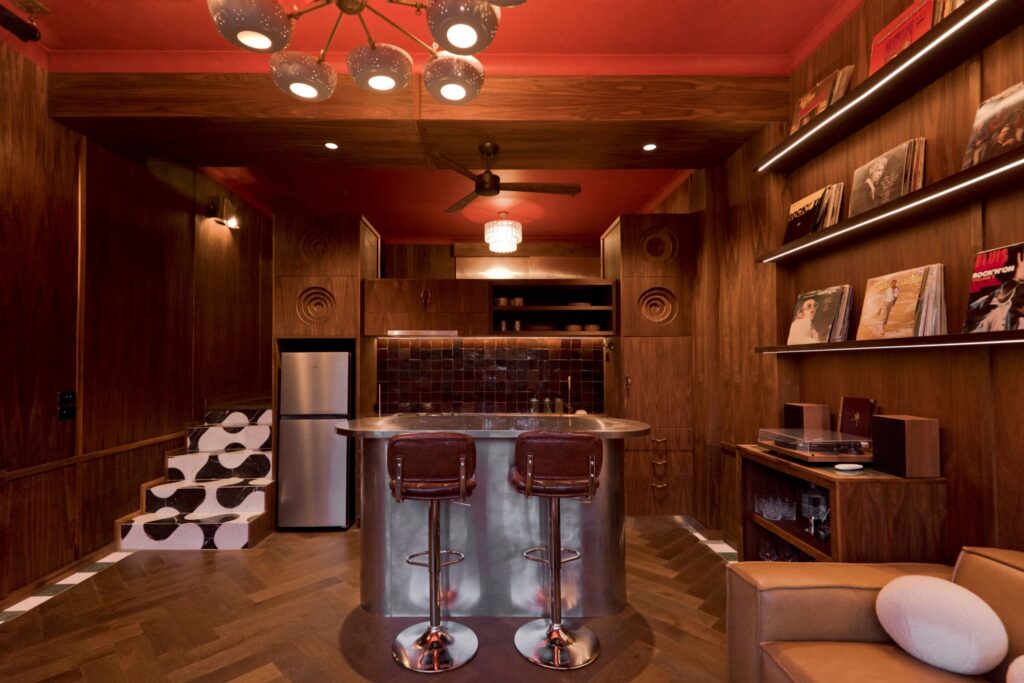
Positioned inside a restored clay-brick building moments from Sydney’s Central Station, the project embraces the layered identity of one of the city’s most characterful districts. Former warehouses, Victorian terraces, independent cafés and creative studios continue to define Surry Hills, and the apartment absorbs that cultural density without resorting to nostalgia.
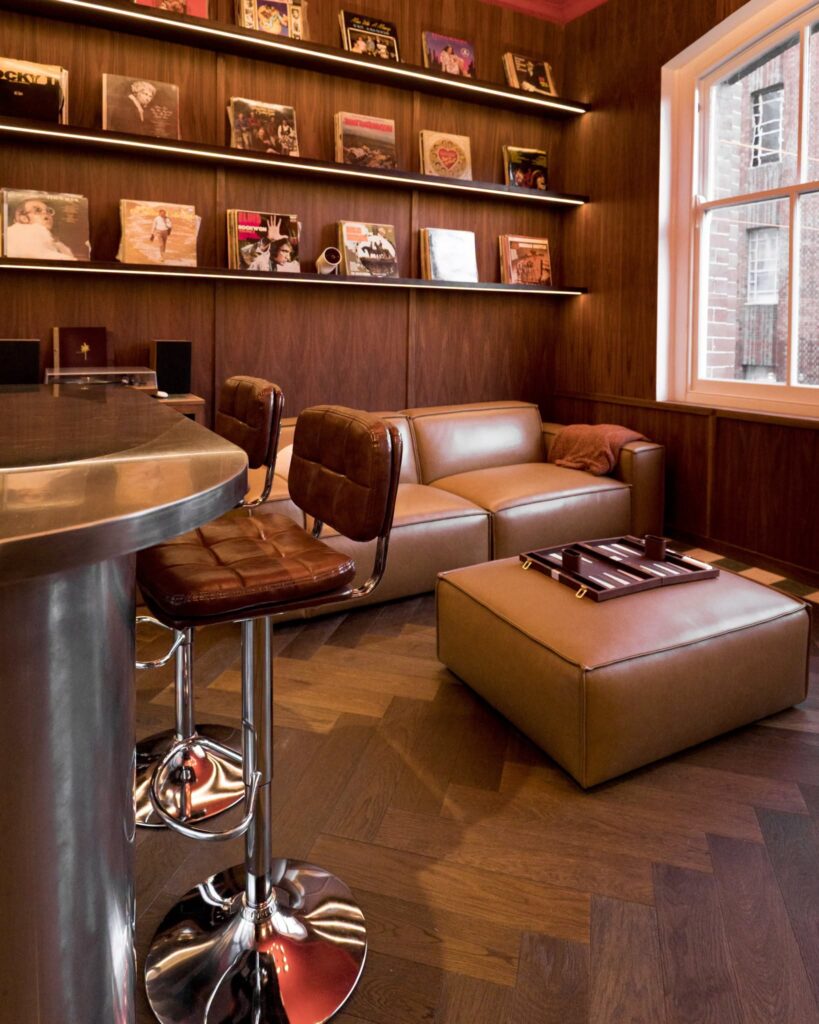
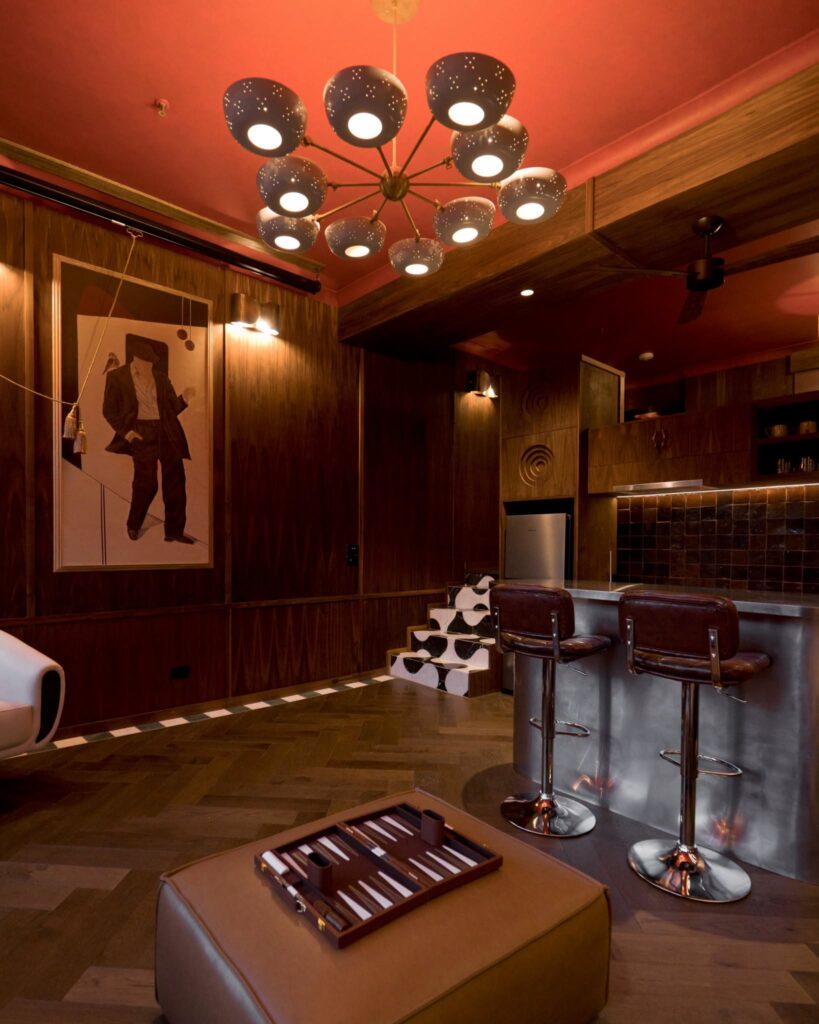
The brief was to dissolve the boundary between boutique accommodation and the familiarity of home. Rather than designing a conventional interior, the team composed an experience where every object, texture and spatial sequence contributes to a feeling of ease. The apartment unfolds as a series of interconnected settings, allowing moments of gathering and solitude to exist within the same compact footprint.
Custom joinery anchors the plan, integrating storage with display so books, records and collected objects become architectural elements rather than decoration. Each transition feels deliberate, encouraging movement through layered perspectives that gradually reveal the next space instead of exposing everything at once.
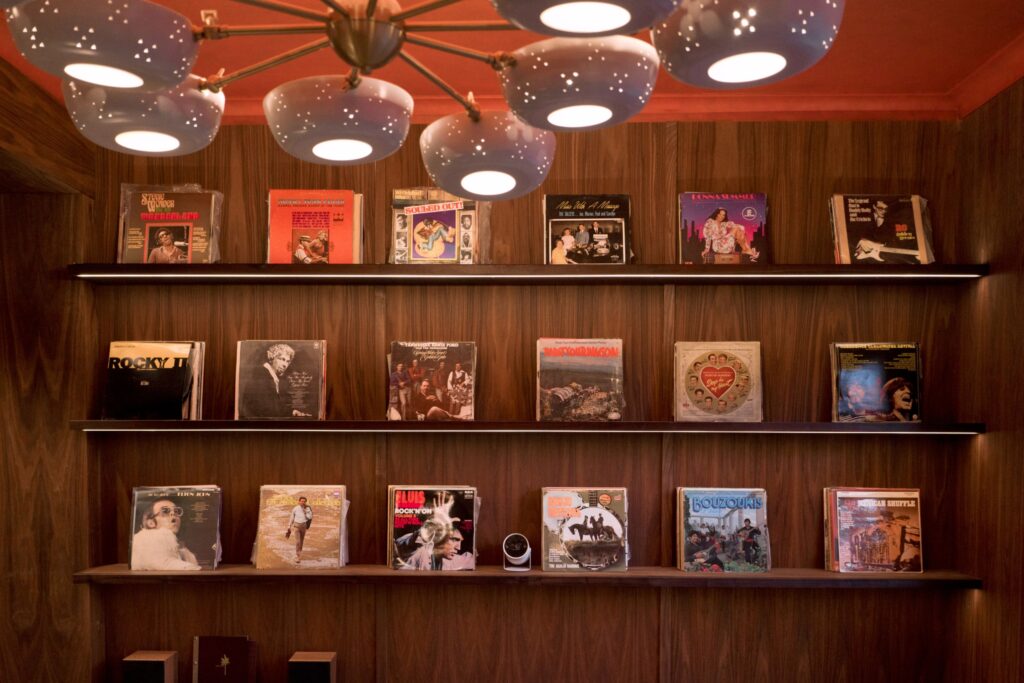
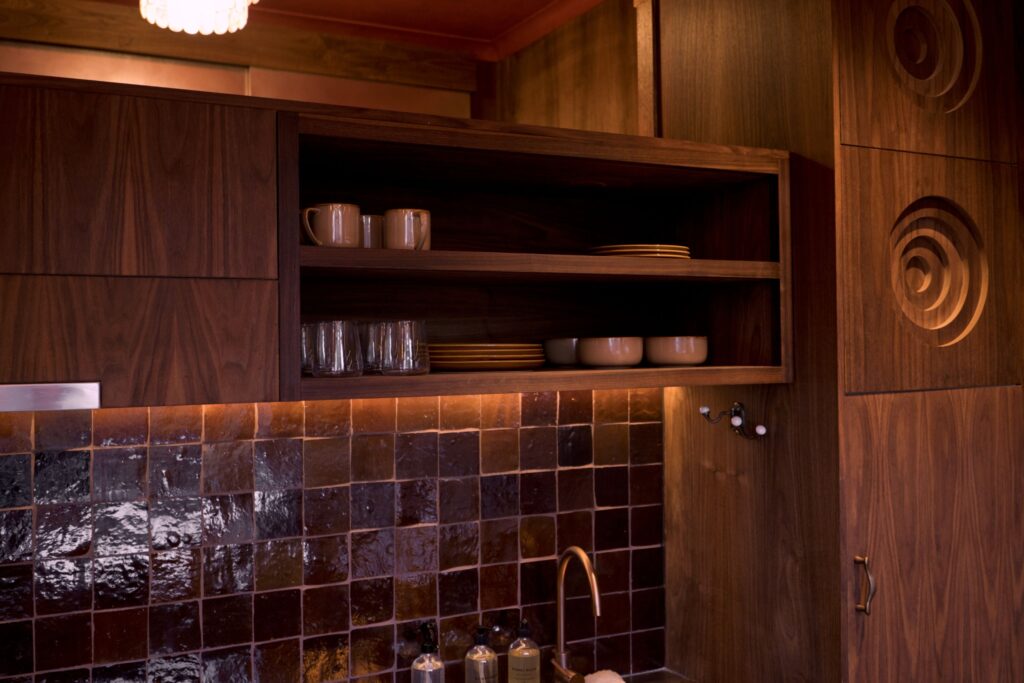
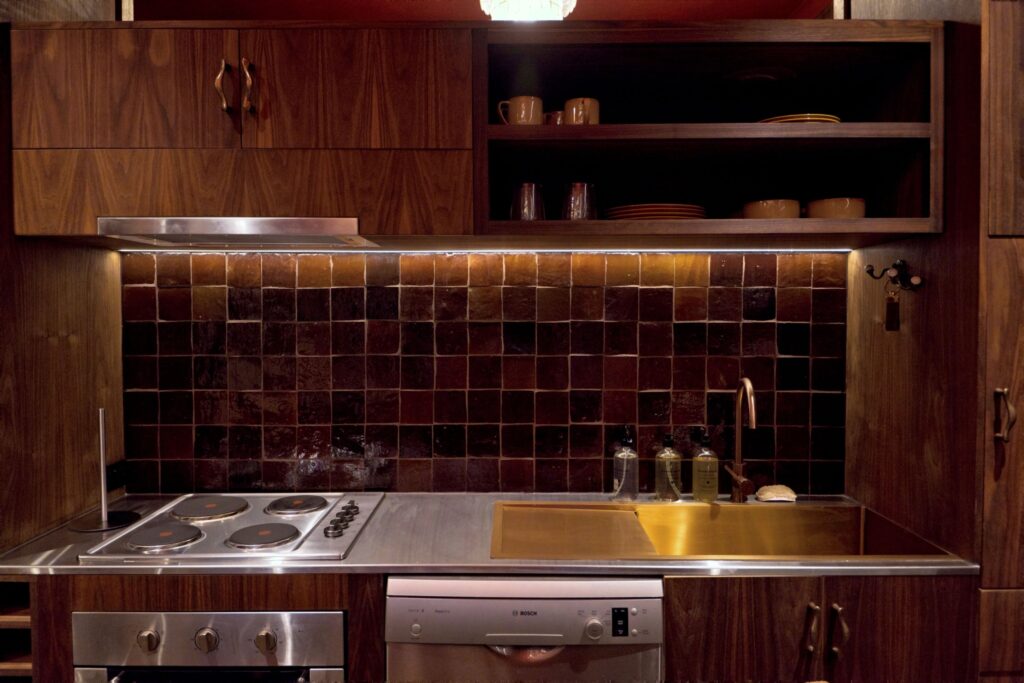
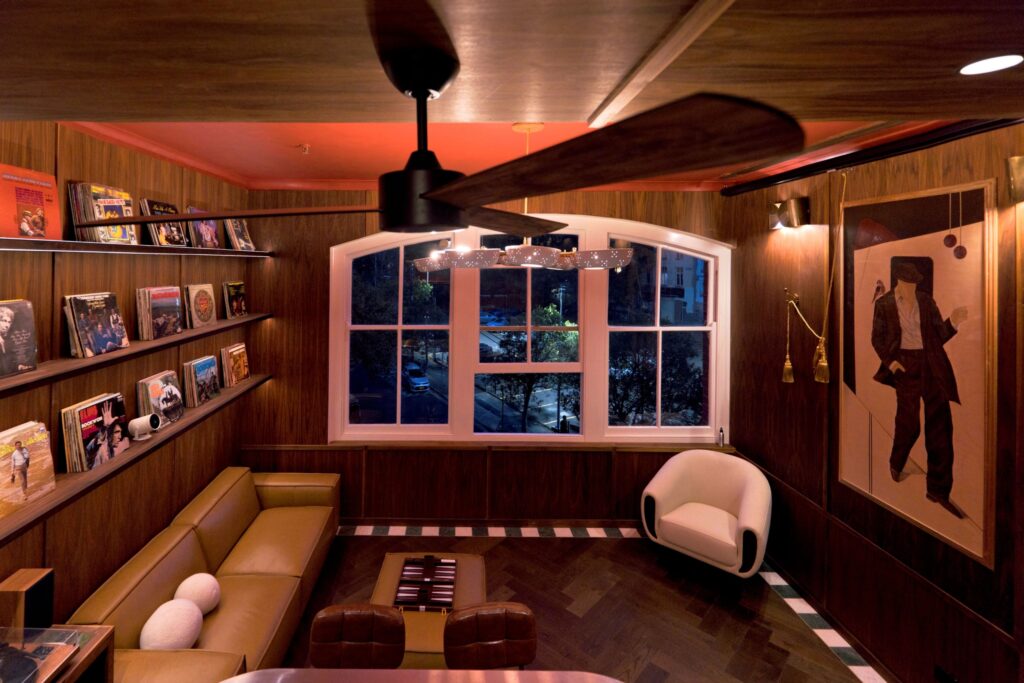
Music remains the project’s quiet protagonist. Floating shelves carry a carefully curated vinyl collection beside a bespoke dry bar centred around a record player, while subtle references continue throughout the apartment, including speaker-inspired forms integrated into the kitchen. Rather than functioning as visual statements, these gestures reinforce the apartment’s identity as a place where listening becomes part of the architecture itself.
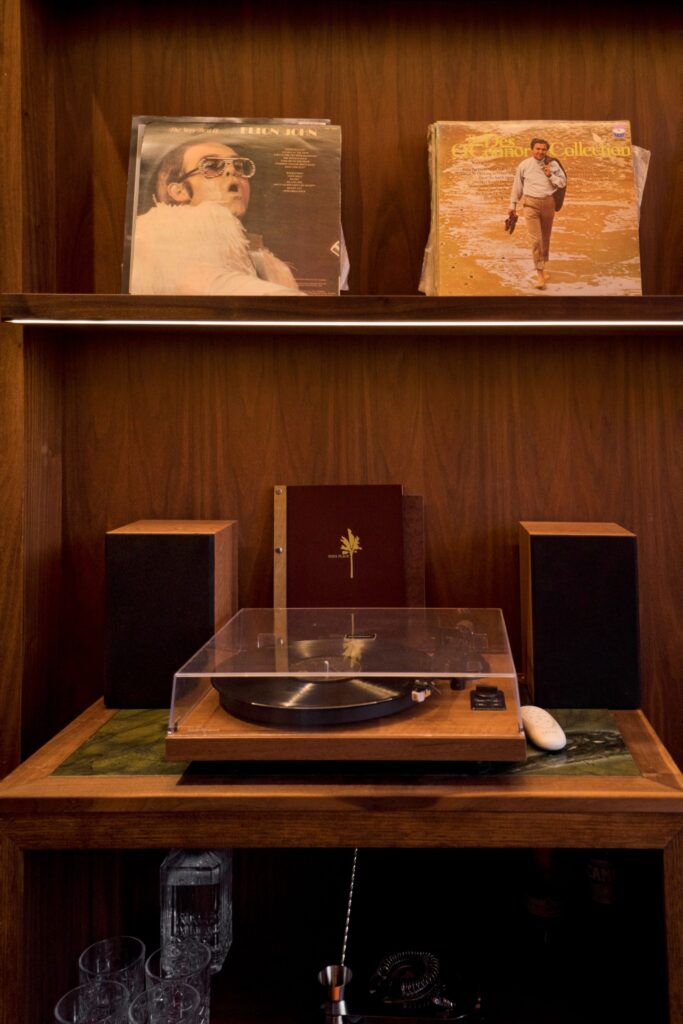
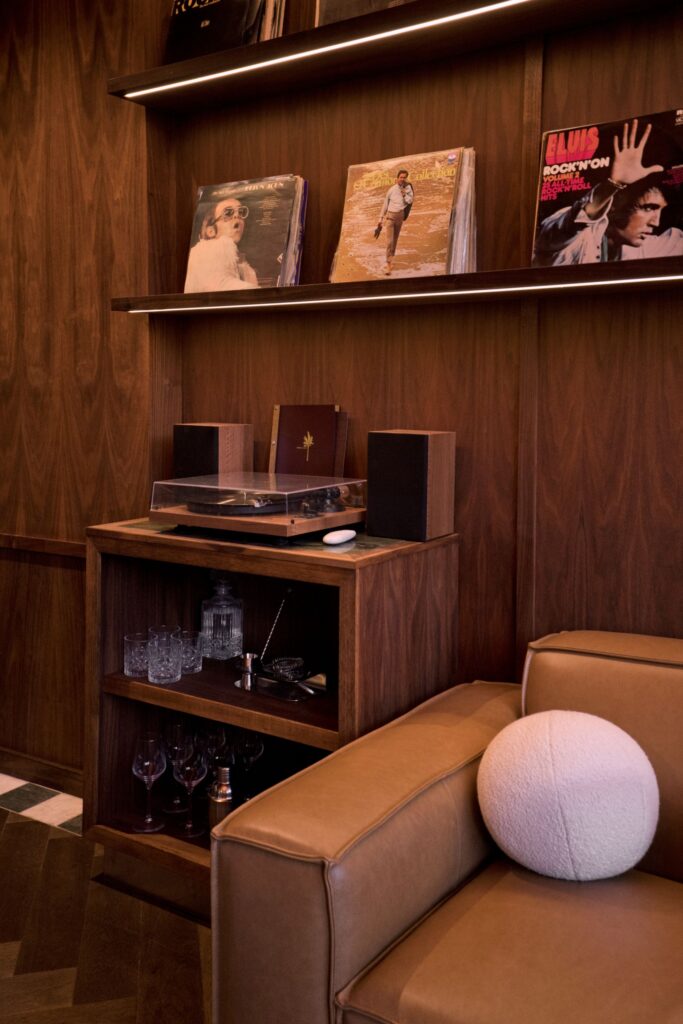
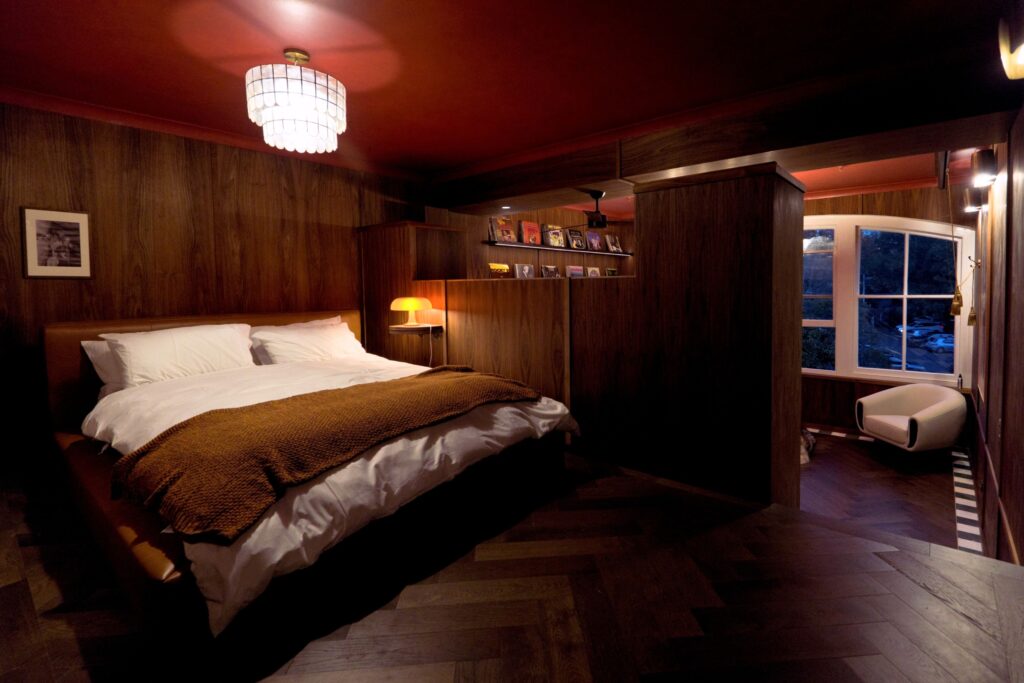
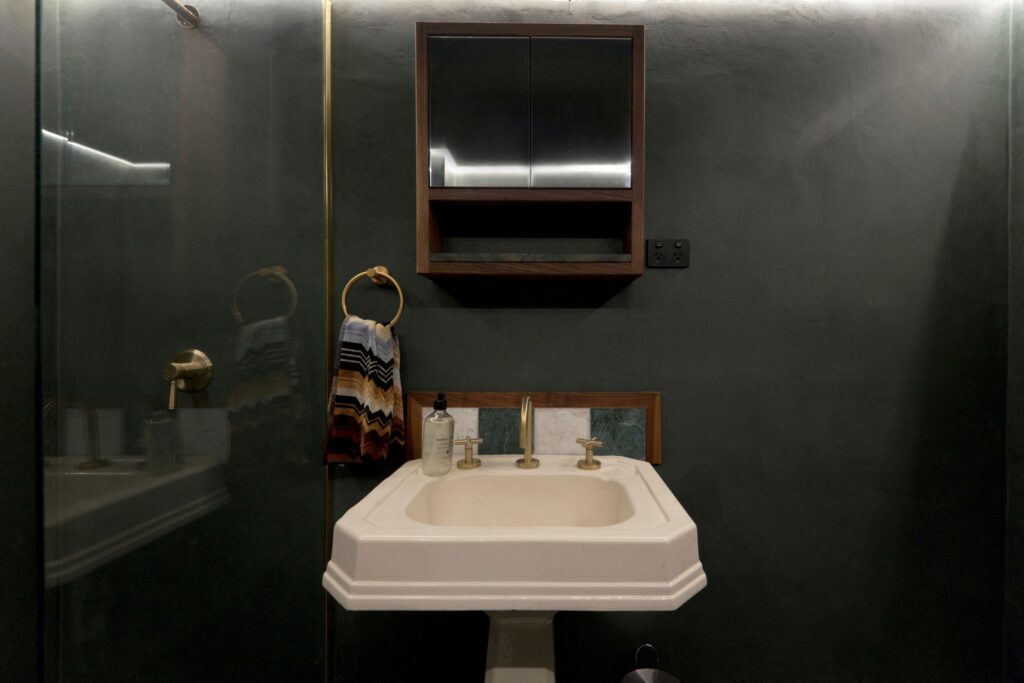
The interior draws much of its character from its restrained yet deeply tactile palette. Dark mahogany surfaces, parquet flooring and timber panelling establish a sense of intimacy, while a deep crimson ceiling introduces an unexpected theatrical note reminiscent of underground listening rooms and late-night jazz bars. Cognac leather, burnished metals, richly glazed burgundy tiles and natural stone add depth without overwhelming the compact interior, balanced by polished stainless steel and graphic chequered details that sharpen the composition.
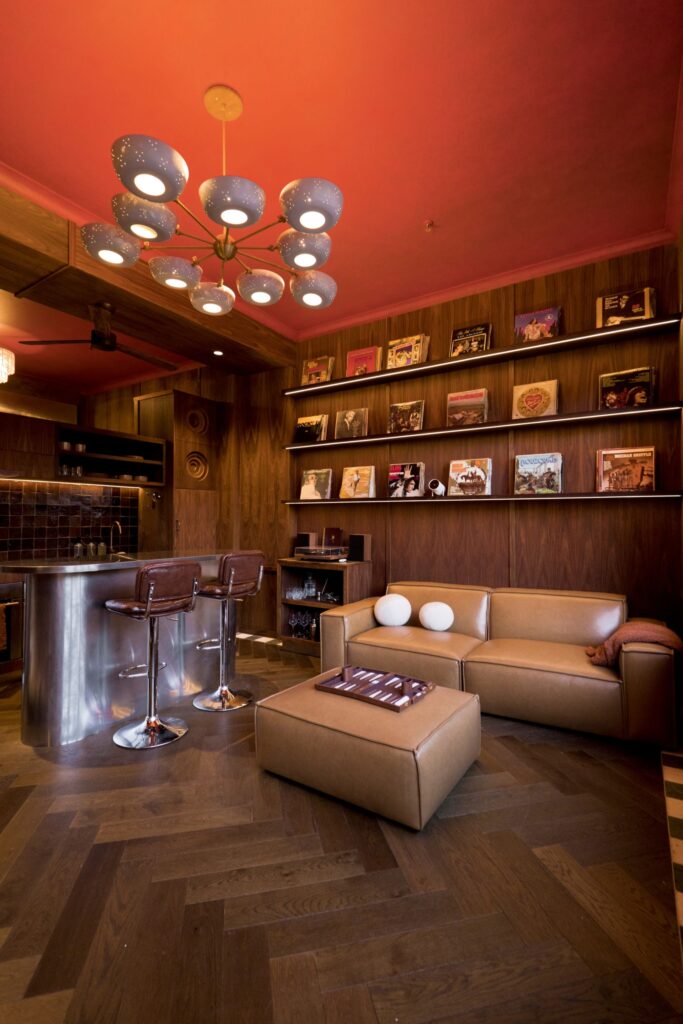
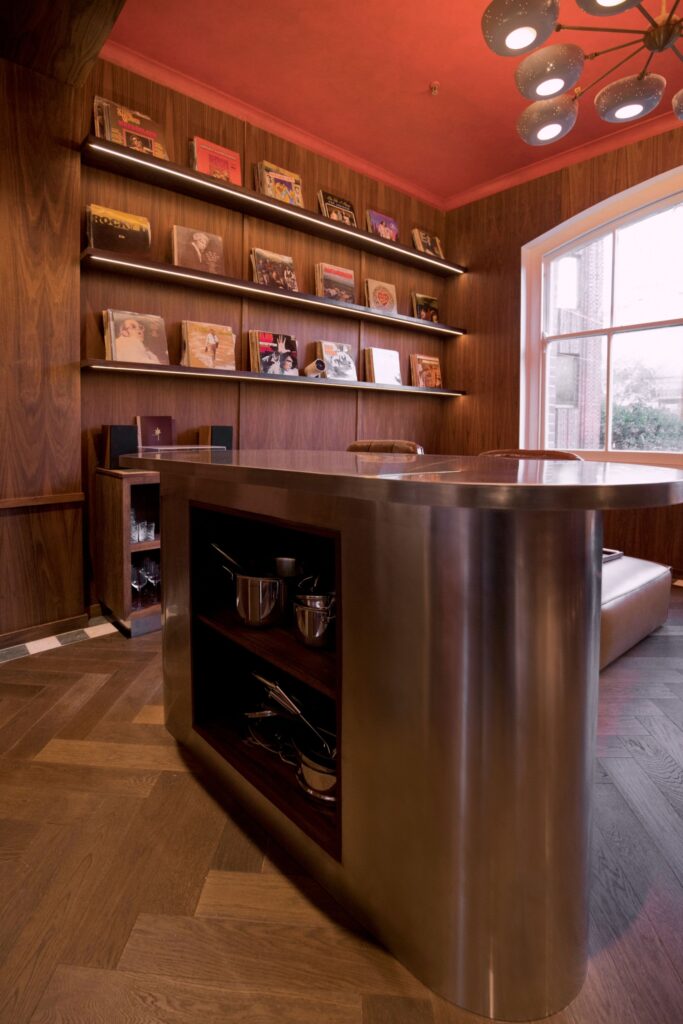
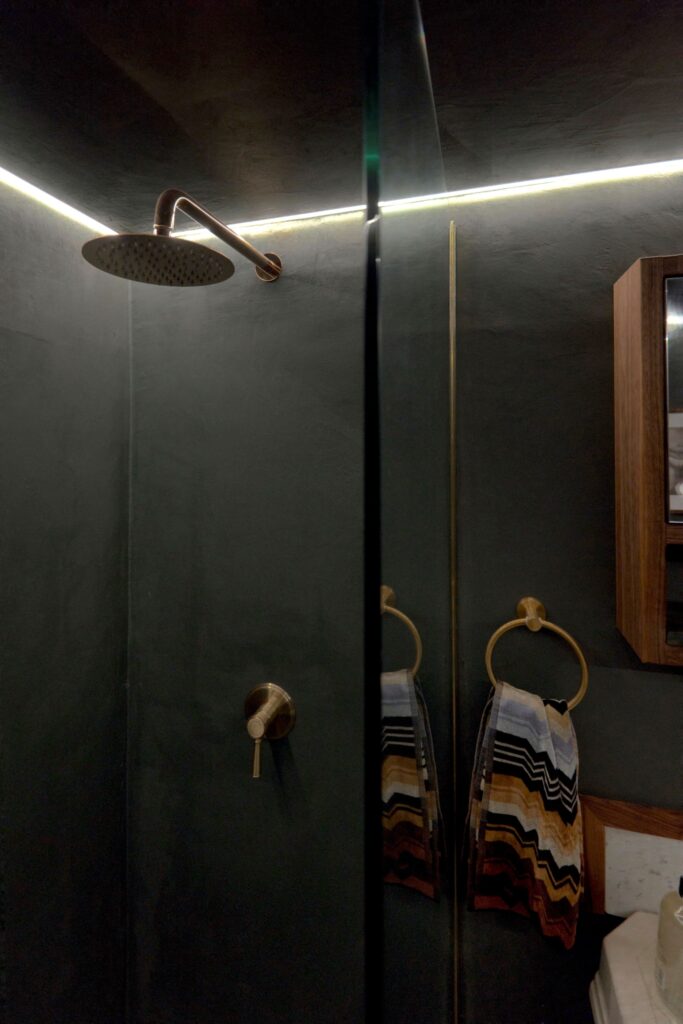
Lighting is treated with equal precision. Pools of warm illumination isolate individual moments throughout the apartment, allowing materials and objects to emerge gradually from the surrounding darkness. Sculptural brass fixtures punctuate each room, while references to Art Deco, Art Nouveau and mid-century furniture create a layered visual language that feels collected rather than prescribed.
Despite its modest dimensions, Sona Place never feels constrained. Instead, it demonstrates how density can become an advantage when every decision serves a clear architectural purpose. The apartment offers visitors more than accommodation; it offers a slower rhythm built around records, craftsmanship and sensory detail.
In a city increasingly defined by accelerated living, Sona Place embraces the enduring appeal of analogue culture, proving that intimacy, texture and carefully orchestrated atmosphere remain some of architecture’s most compelling luxuries.
More about Jform on:
Website
Instagram
Photo: (c) Jform