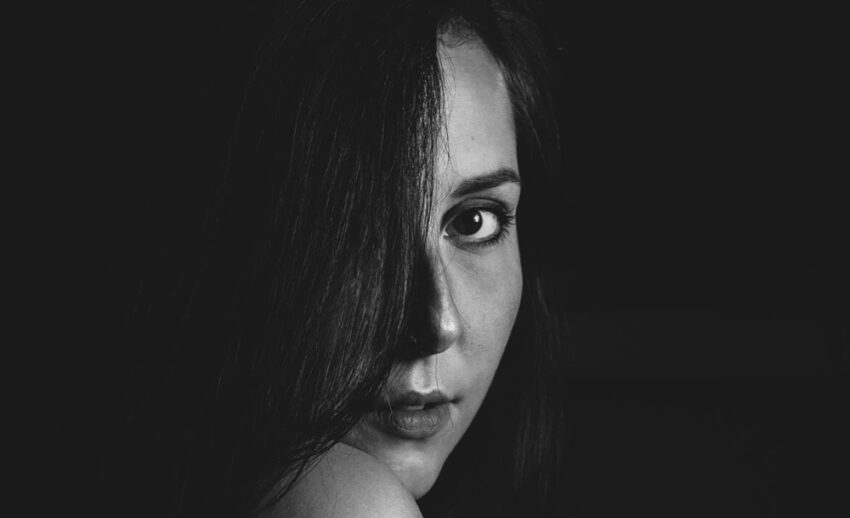
Diana Boariu has spent a decade learning to see, first through a camera lens, then, more recently, on the page. Trained as a photographer and currently studying psychology, she has built a body of work that moves fluidly between capturing the world and processing it from within.
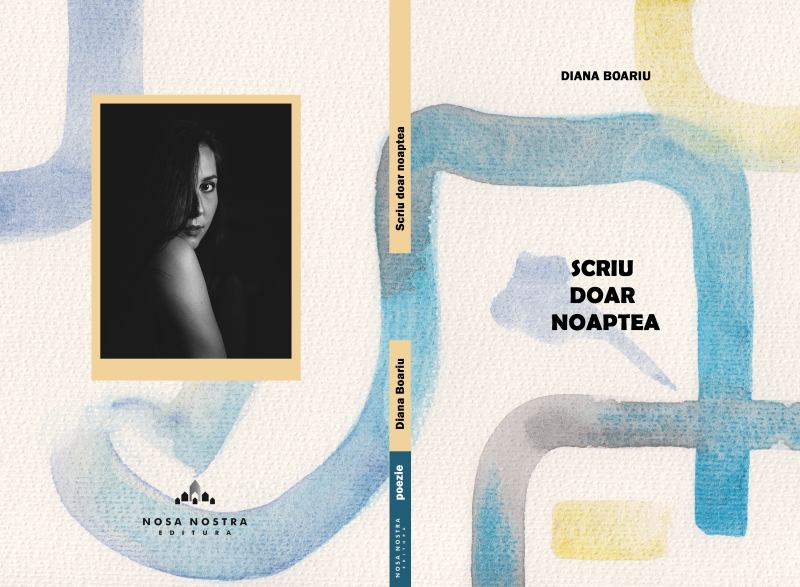
Her debut poetry collection, “Scriu doar noaptea” (“I Only Write at Night”), was born from exactly that instinct: quiet, nocturnal, and unafraid of vulnerability. We spoke to Diana about the ritual of writing after dark, the invisible threads her hometown left in her work, and what comes next for an artist who refuses to stay in just one medium.
You split your creative life between a camera and a notebook. Which one did you fall in love with first?
Honestly, I fell in love with the instinct to create first, with the art as a whole. Since childhood, I was torn between two dreams: becoming a veterinarian because of my love for animals, or being an artist (and joke’s on me, I’m also studying psychology at the moment).
Growing up, I went to an art high school where I discovered so many ways of expressing myself through art, eventually choosing photography as my major. Writing, however was always in my blood and the notebook was an inheritance from my mother. She wrote some poetry herself, but also loved to read and would sometimes recite poetry to me.
I like to think that the camera captured the outside of me, while writing became my way of mapping the inside of my mind and heart.
Your debut poetry collection, “Scriu doar noaptea”, has a title that already tells us something about your habits. What does a typical night look like when you’re writing?
My writing nights are more about processing than just writing. It always starts with reading…that sometimes might be a novel, or some poetry and sometimes my own daily notes, which are filled with details from my walks or little observations on everyday life. Night brings me the silence and the coolness I need to focus and dig deep inside my heart. With just the glow of my desk lamp, a scented candle and a cup of tea, I get into this cozy, isolated mood. Once the external noise fades, the notebook opens.
Cluj has a strong creative scene right now. How has the city shaped the way you see and make things?
Cluj definitely has a vibrant cultural scene, but I’ve never been one for crowded spaces or those events where everyone gathers. For me, the city’s influence is much quieter. I find my true inspiration in its green sanctuaries, places like the Botanical Garden, Iuliu Prodan Park, and the landscapes just outside the city limits. Cluj shapes the way I see things by providing that exact contrast: a bustling creative hub that still offers hidden, silent places where I can disconnect and create.
When you’re shooting photography for work versus writing for yourself, does it feel like switching between two different people, or is it the same instinct wearing two outfits?
I’d say it’s the same instinct, just with a different focus. Both photography and writing are deeply rooted in observing the environment around me. To me, art is always half observation and half talent and skill. You have to notice the world first before you can create anything out of it.
When I’m shooting, that instinct is turned outward, capturing the light, the moments, and the surface of the world around me. But when I write, that very same instinct turns inward, digging deep to process what’s happening within. It doesn’t feel like being two different people; it just feels like breathing in when I take a photo, and breathing out when I write.
If someone who has never read your poetry picked up your book, what’s the one thing you’d want them to feel by the last page?
Based on the feedback I’ve received so far from my readers, what moved me the most was seeing how the book acts like a mirror and how everyone found a different fragment of their own life in it. And honestly, that was exactly my goal. By leaving my raw vulnerability on the paper, I wanted to show people that it’s completely okay to be vulnerable.
By the last page, I want them to feel a quiet sense of relief. I want them to see that our pain, our healing, and our growth follow the same patterns, and for them to look at their own scars and realize that we are all walking the same paths, just living different stories, under the same sky.
You grew up in Bistrița before your creative path took you further. Is there a piece of that place that still shows up in your work, even without you noticing?
Yes, absolutely. For me, Bistrița is about the people who shaped my foundation. A piece of that place always shows up in my work through the wisdom I gathered there, first at the “Corneliu Baba” art high school, where my teachers taught me the basics of art in all its forms, and secondly, that was the place where I experienced some of the greatest moments of my life alongside some amazing people.
Bistrița also gave me a core relationship of mentorship and friendship. The writer Alexandru Uiuiu guided me along this path and encouraged me to finish this book. I’m incredibly grateful to him, and his influence is definitely an invisible thread running through my pages.
What’s a small, ordinary moment recently that you wanted to photograph and write about at the same time?
I wouldn’t call it small, but it is somehow ordinary, even though, to me, it’s a real wonder. I’m talking about my nephews; I’m an aunt. Lately, I’ve been deeply inspired by the younger one, who is just a little over a year old. Watching him discover the world makes me want to experience it through his eyes all over again.
There is this raw innocence to him, a wild curiosity and laughter mixed with so much pure love. It’s an everyday reality, but it inspires me immensely, both to capture those moments with my camera and to process that profound innocence in my notebook.
Do you have a ritual, a coffee, a specific chair, a certain kind of light, that you need before you can create?
True to the title of my book, my main ritual is the night itself. I need the warm glow of my lamp and some instrumental background music that matches my state of mind, helping me stay locked into a specific mood.
When it comes to where I sit, I can’t do the classic desk setup. I need to be curled up on the couch, notebook in hand. Writing requires me to go inward, so my body needs to feel completely relaxed and protected before the words can come out.
Looking at your photography portfolio, there’s a strong pull toward landscapes and quiet architecture. Does that same quiet show up in your poems, or is your writing the louder side of you?
I’d say the same quiet rhythm runs through both. In my photography, I’m always chasing compositions, the play between light and shadow, and raw emotion. I try to find a story in every frame that I capture. My writing works the same way, just with a different canvas. Instead of capturing a physical landscape, I try to build a story out of every feeling and emotion I experience.
So, my writing isn’t the louder side of me, it’s just the place where the quiet observations of my inner world become visible. Both forms of art are just my way of listening to the world and to myself, without making any unnecessary noise.
What’s next for you, are you staying with poetry for a while, or is there a photography project pulling at you too?
I never like to limit myself to just one medium. I love creating art in all its forms, from painting and graphics to photography. Right now, I really want to bring those worlds together by experimenting with photography collages, and I’m actually thinking of weaving some of my verses into them.
On the literary side, while a second poetry book is definitely on the horizon, my immediate plan is to translate my current poems into English for an e-book release. And a project that is very close to my heart right now is a children’s book I hope to bring to life by the end of the year. It will be a collection of short stories with subtle life lessons, and I’m really hoping to collaborate with a dear friend of mine for the illustrations.
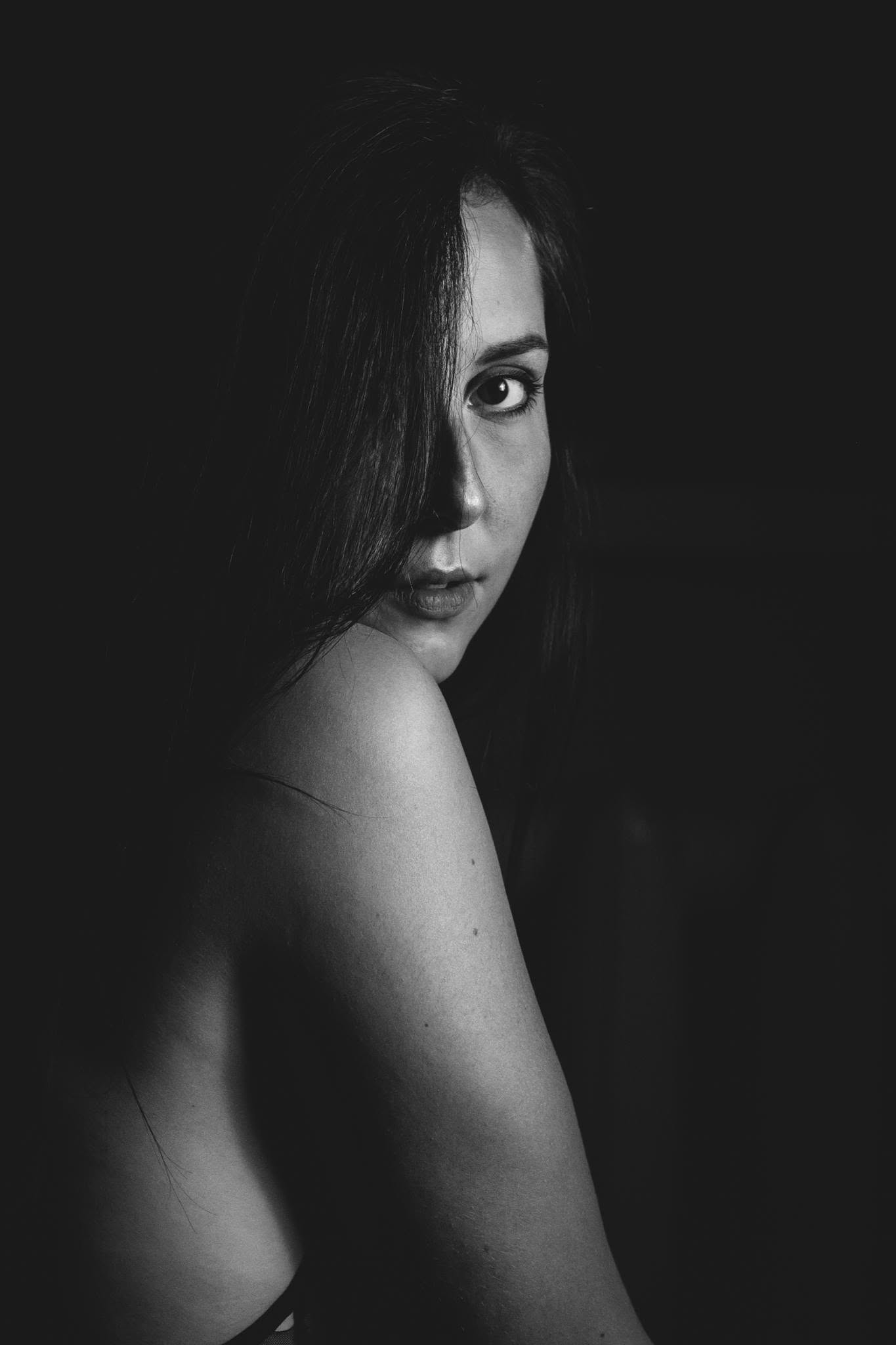
More about Diana Boariu on:
Facebook
Instagram