
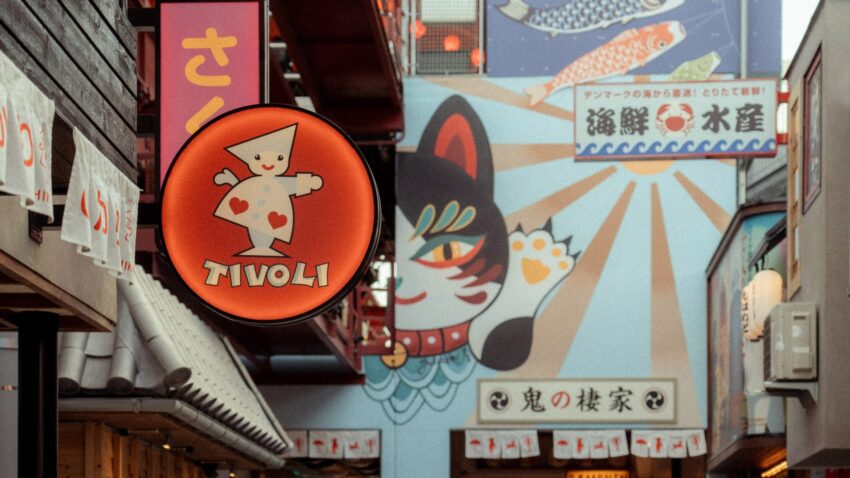
Copenhagen’s historic Tivoli Gardens has opened Hikari, a new 2,000-square-metre district shaped by the architecture, streetscapes and visual culture of Japan. Set beside the park’s existing Japanese garden and pagoda, the new area draws from Tokyo, Kyoto and Osaka while developing its own architectural language within Tivoli’s century-spanning landscape.
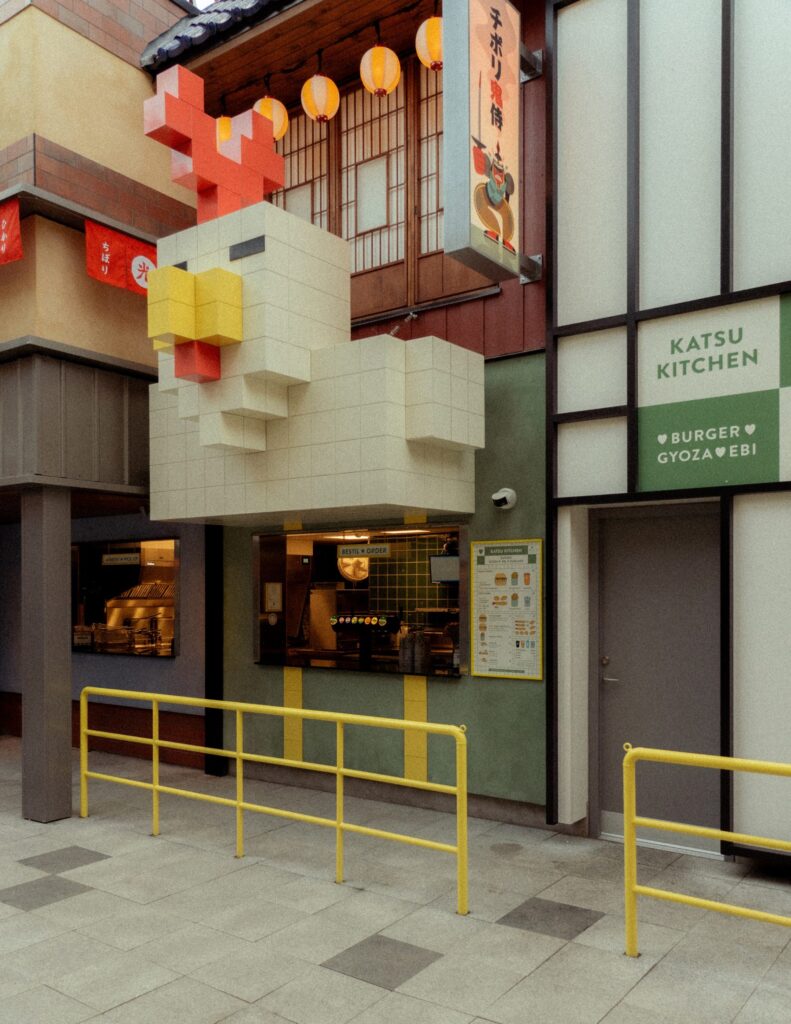
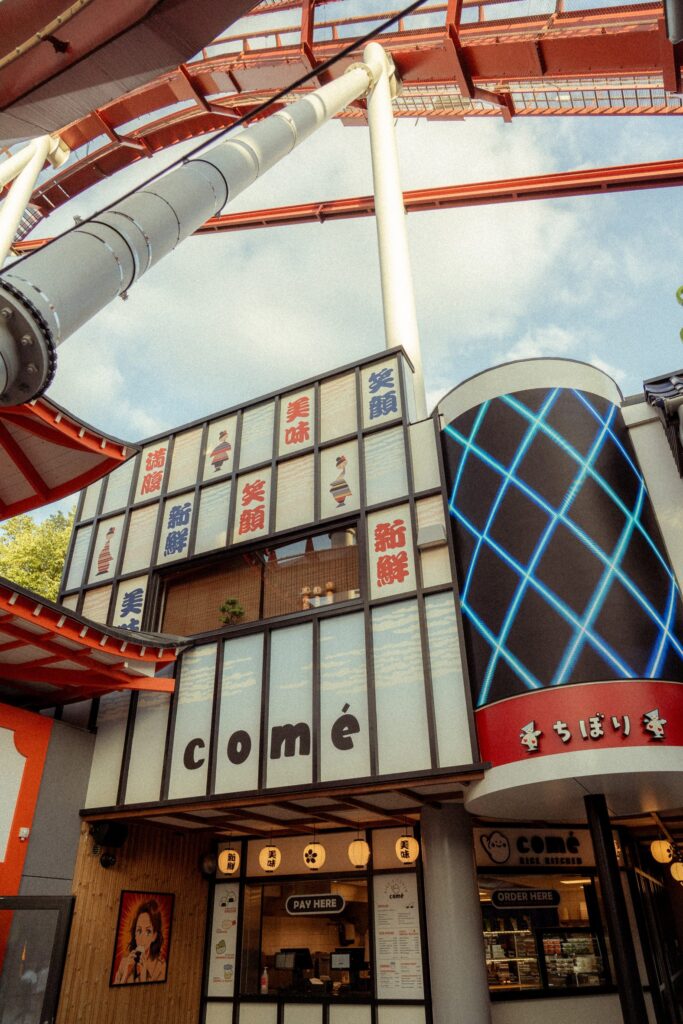
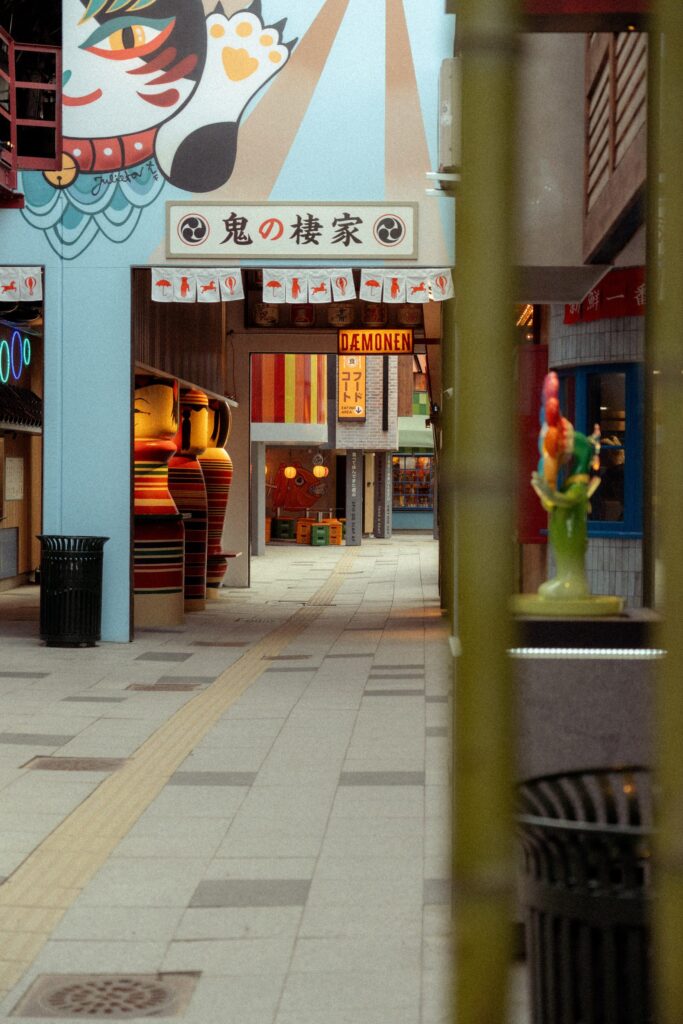
The project brings together narrow streets, Japanese-inspired buildings, shops, restaurants and attractions, including the new Hotel Hikari fun house. Rather than reproducing a single Japanese neighbourhood, Tivoli’s design team approached the area as a composition of different architectural periods, materials and colours. Each building has its own character, allowing the district to feel assembled over time rather than designed as one uniform backdrop.
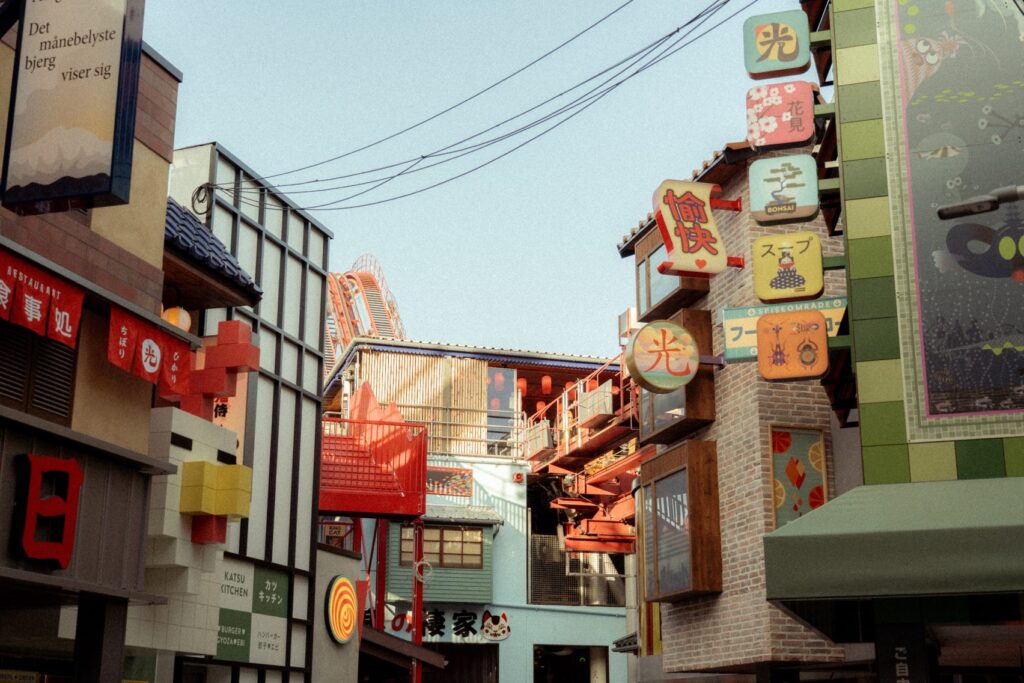
That approach extends to the details. Tivoli sourced around 60 tonnes of bricks from Japan, together with approximately 200 wooden windows and doors, sake barrels and kokeshi dolls. Japanese movie posters, cherry blossoms, cats and pagodas appear throughout the district, while the signage was developed with the help of a Japanese graphic designer.
At the centre of Hikari’s visual identity is an artwork by Japanese artist Takashi Murakami, whose flower motif connects naturally with Tivoli’s long relationship with gardens and horticulture. The work introduces a contemporary Japanese presence into an environment otherwise shaped by architectural references and traditional craft.
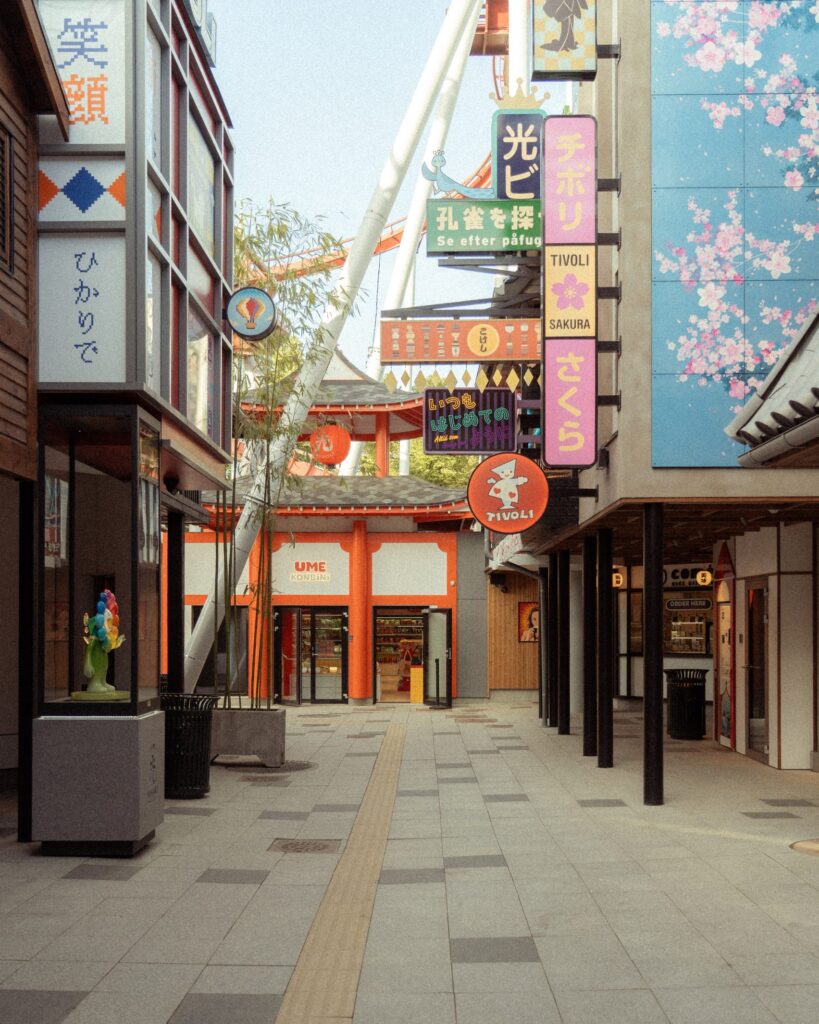
The district also adds a new attraction to Tivoli’s line-up. Typhoon’s Eye is a spinning ride enclosed by an exterior inspired by shoji screens, turning its structure into part of the surrounding streetscape. Its position was carefully considered within the relatively compact site, allowing the ride to function both as an attraction for visitors and as a visual element for people moving through the Gardens.
Hikari’s development took five years, with Tivoli working alongside Danish and Danish-Japanese specialists, Japanese consultants and creative partners. The team also travelled to Japan while researching architecture, materials, products and visual references for the project.
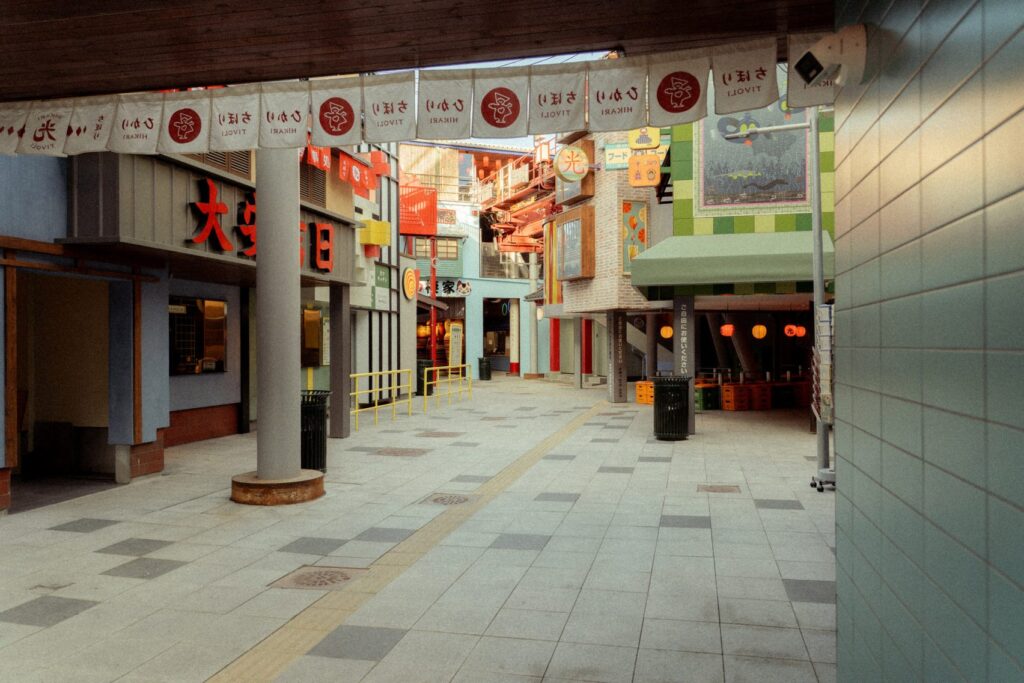
That process was particularly important given the fine line between architectural interpretation and cultural imitation. Tivoli’s intention was to create its own reading of Japan rather than reproduce an existing place in Copenhagen. The result draws from several Japanese cities and periods while remaining firmly embedded in the park’s own architectural history.
Hikari also continues a much older Tivoli tradition. Since its opening in 1843, the Gardens have repeatedly absorbed architectural influences from elsewhere, from the Chinese-inspired Pantomime Theatre to the Moorish character of Nimb. Japan becomes the latest cultural reference to enter that ongoing architectural conversation.
The opening arrives during a period of growing interest in Japanese culture and travel across Denmark, giving the project an obvious contemporary relevance. But Hikari has been conceived with a longer lifespan in mind: a permanent district intended to evolve into another familiar part of Tivoli rather than function as a temporary attraction.
With its combination of imported materials, contemporary artwork, food, architecture and amusement, Hikari expands Tivoli’s geography without leaving Copenhagen.
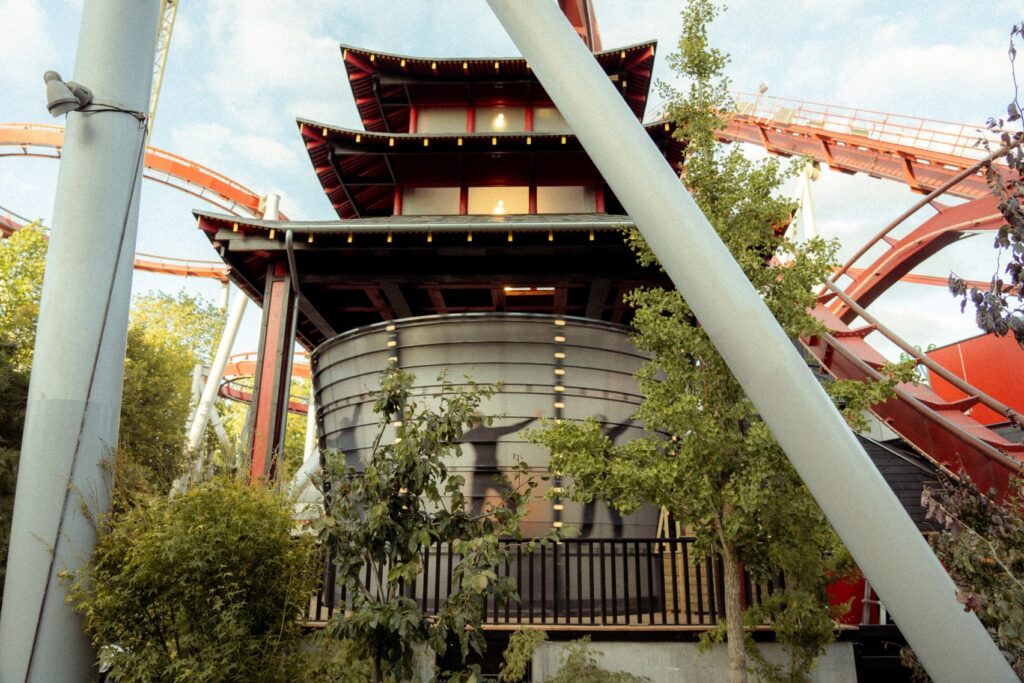
Photo: (c) Anne-Sophie Rosenvinge