
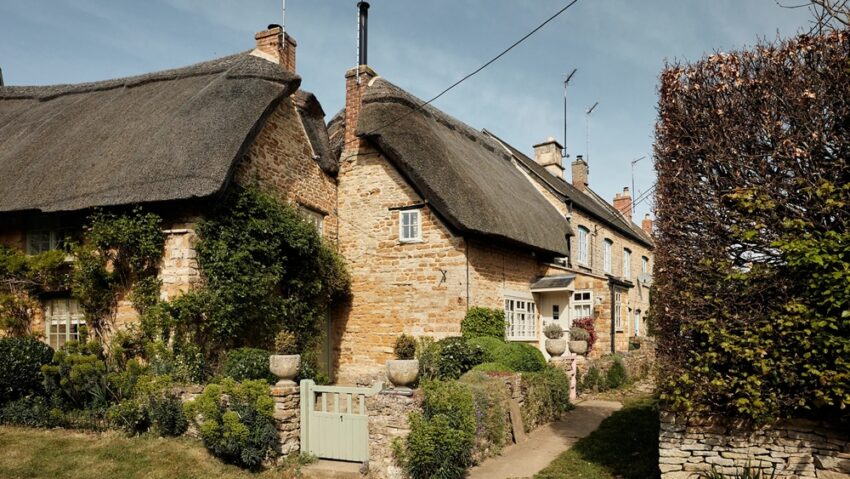
Tucked within the Cotswolds village of Kingham, this centuries-old cottage has been thoughtfully reimagined by interior designer Victoria Barker as a richly layered retreat where traditional English charm meets an instinctive, deeply personal approach to decoration. Dating back roughly 450 years, the modest Grade II-listed home began life as a humble rural dwelling, its tiny proportions and practical limitations reflecting a very different era of domestic life. Today, those same imperfections have become its greatest allure.
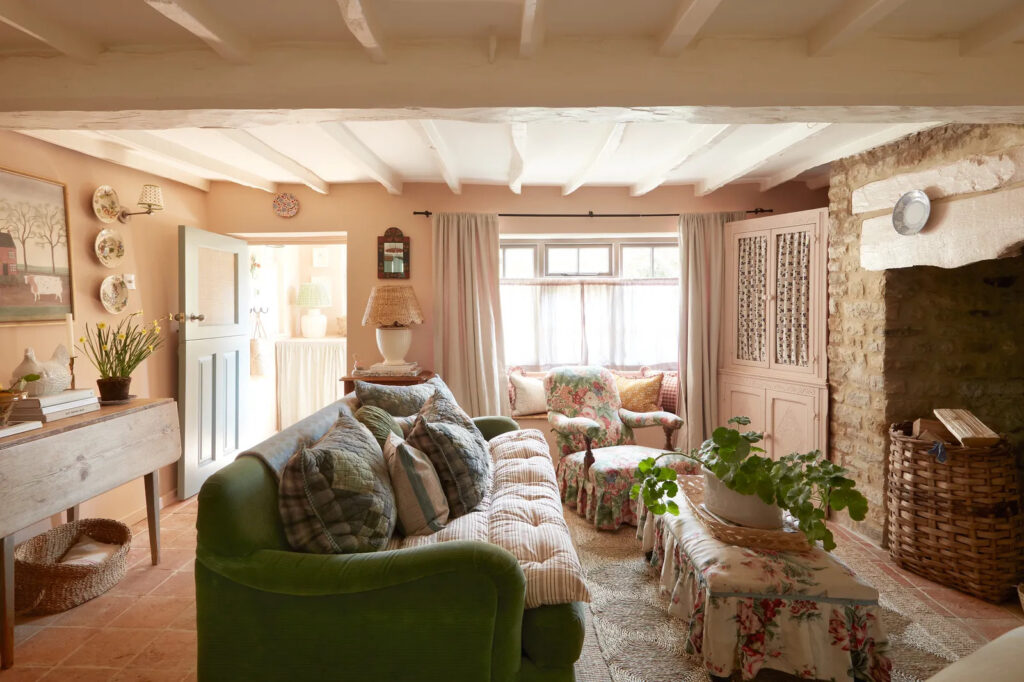
When Barker, founder of Studio Faeger, discovered the property, much of its original character had been obscured by an unsympathetic late-20th-century renovation. Period details had been concealed behind false ceilings and boarded walls, original surfaces replaced with generic finishes, and the house had lost much of the architectural warmth that once defined it. Rather than imposing a dramatic transformation, the renovation focused on uncovering what had been hidden and restoring the building’s essential spirit. Original beams were revealed, lath-and-plaster walls carefully preserved, and reclaimed materials introduced to reestablish a sense of age and authenticity.
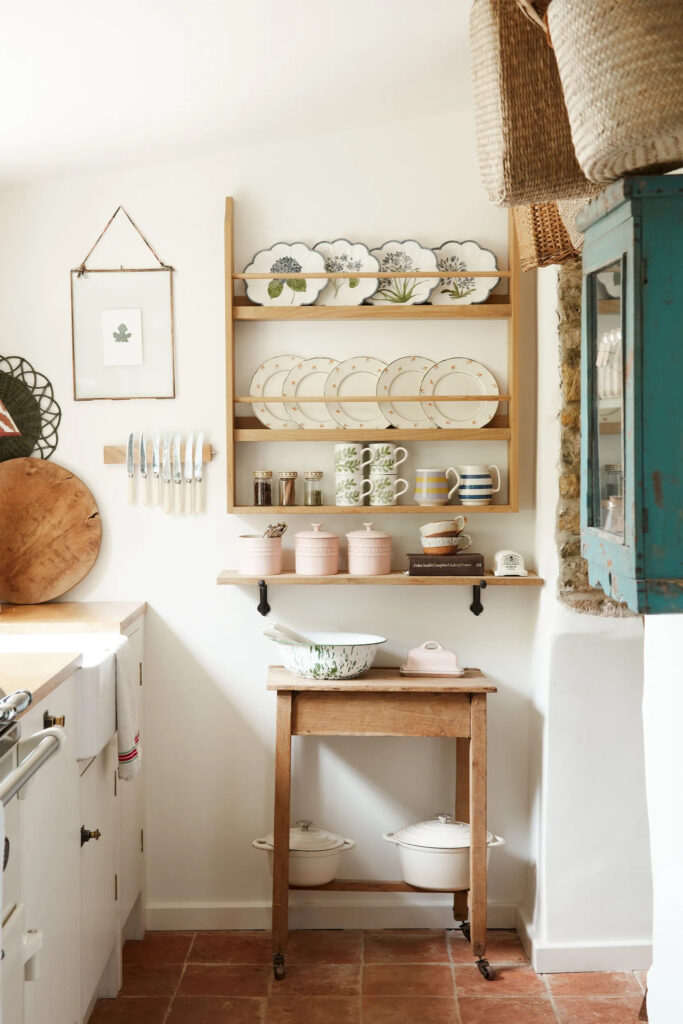
A modest extension at the rear resolved the practical shortcomings of the original footprint, incorporating a compact kitchen and an indoor bathroom while preserving the cottage’s intimate proportions. Upstairs, the attic-like upper level was reconfigured into two bedrooms, making the house functional both as a private countryside escape and a guest retreat.
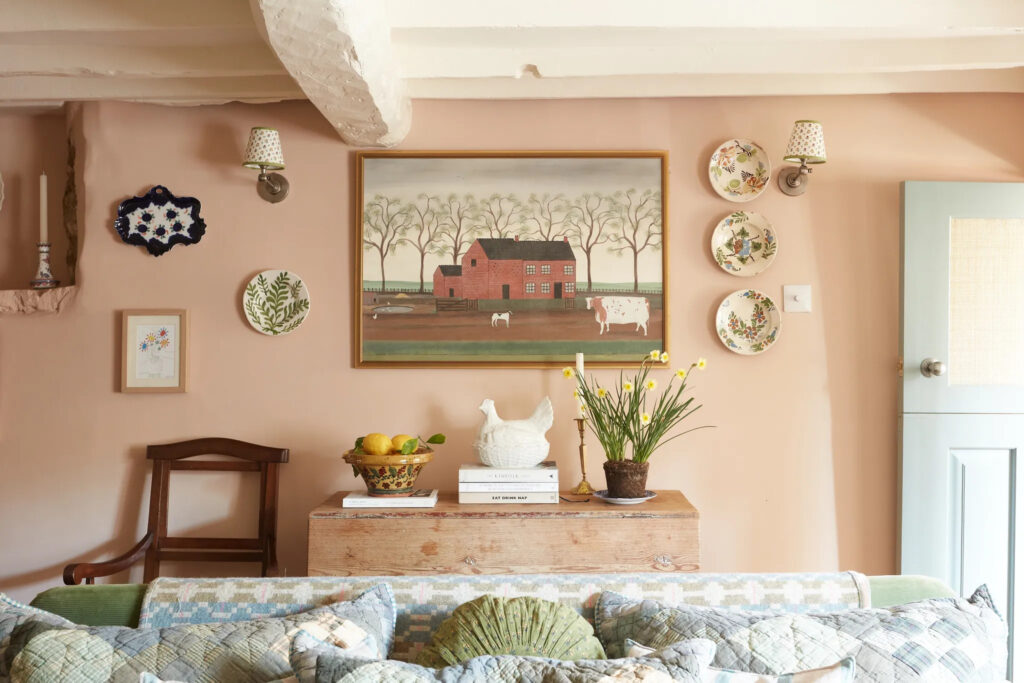
The interiors embrace what might be described as an elevated version of classic English country decorating, warm, inviting, and deliberately unprecious. Barker’s approach avoids sterile perfection in favor of layered comfort, combining vintage finds, inherited furniture, custom-designed pieces, and tactile fabrics in a composition that feels collected rather than styled. Soft pink-toned plaster walls create warmth in the low natural light, while deeper pigments in darker rooms introduce intimacy rather than attempting to fight the building’s natural limitations.
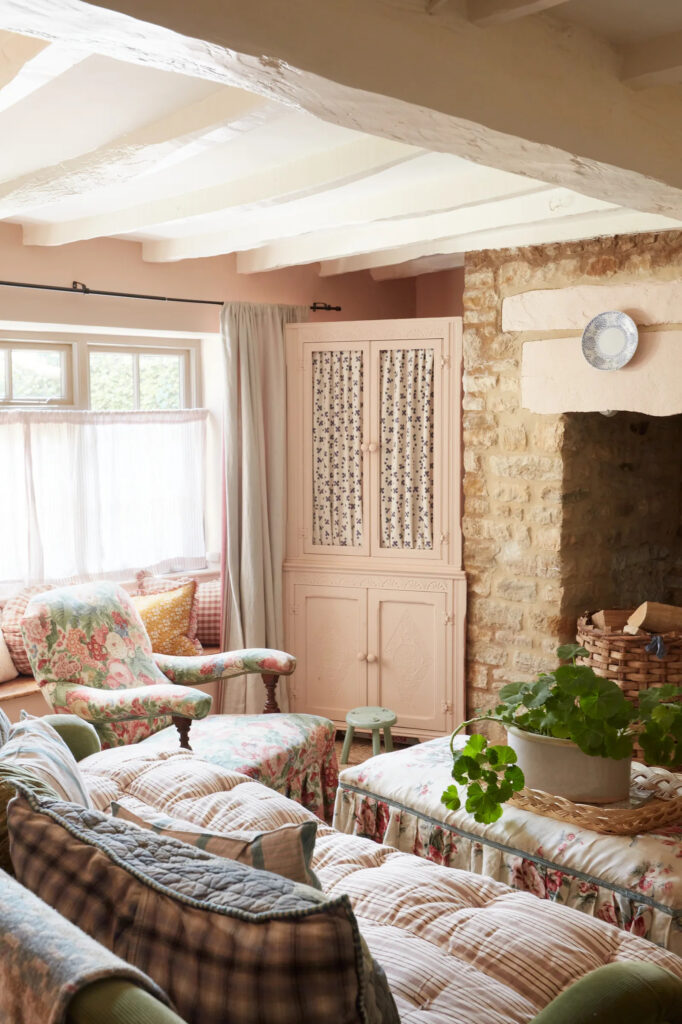
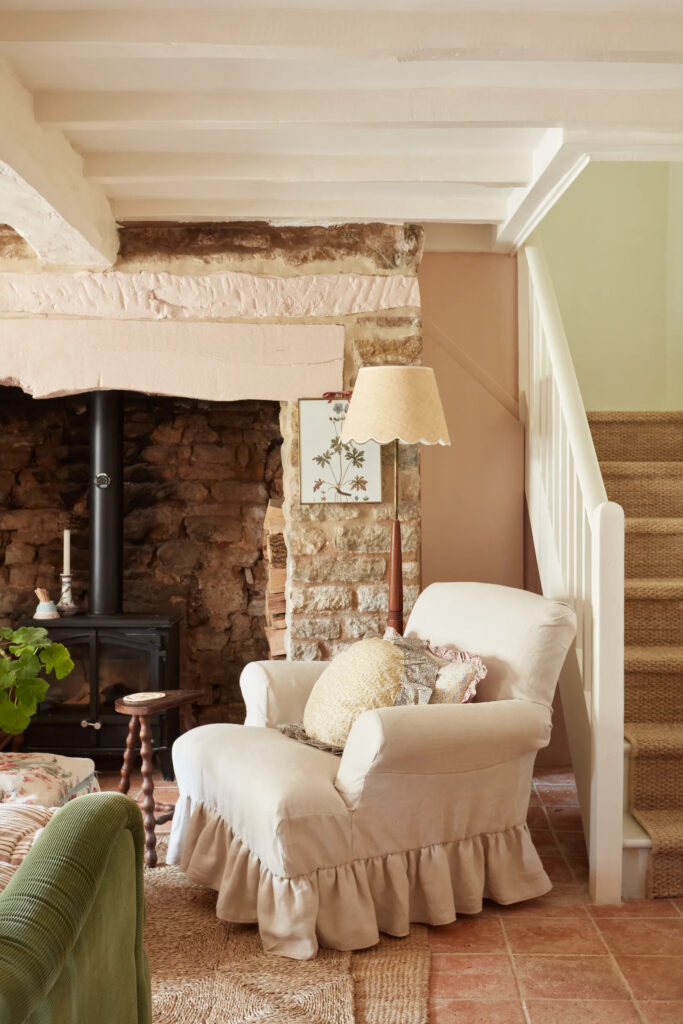
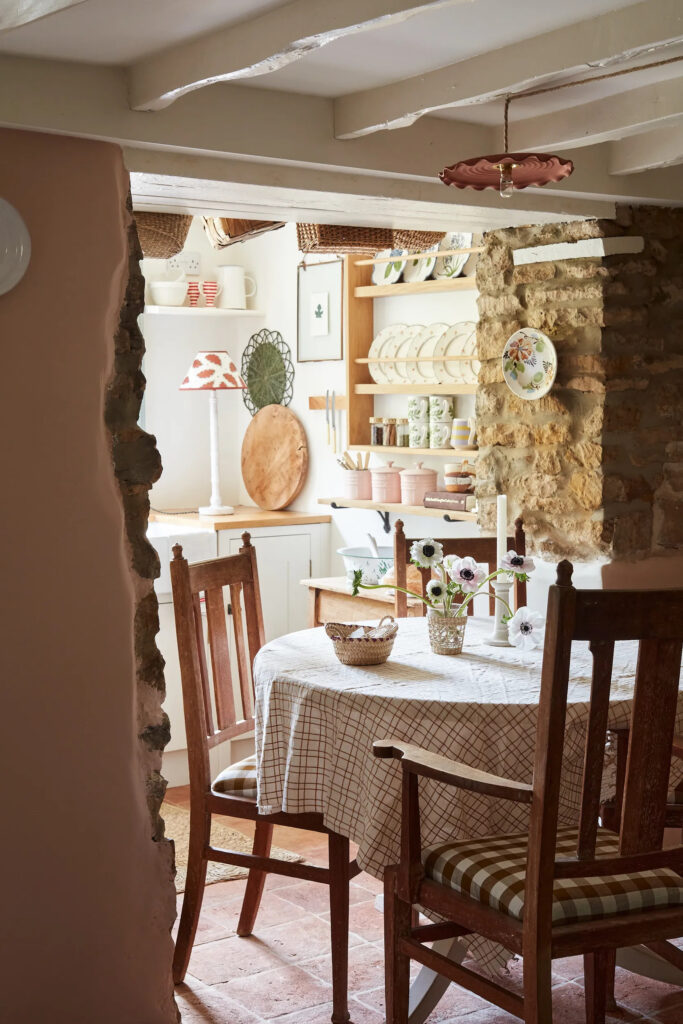
Pattern and texture are used with restraint but confidence. Floral wallpapers, gingham textiles, antique ceramics, folk-inspired decorative objects, and softly upholstered furnishings contribute to a quietly romantic atmosphere without slipping into caricature. Even the smallest practical solutions become part of the visual language, open shelving, hanging baskets, exposed storage, and improvised cabinetry reinforce the cottage’s informal, lived-in sensibility.
Spatial quirks remain entirely intact, but this only strengthens the house’s charm. Low ceilings, narrow passages, awkward corners, and limited storage are not treated as flaws to be erased, but as part of the home’s identity. Rather than forcing contemporary perfection onto the structure, the design works with its eccentricities, turning constraints into atmosphere.
Outside, a small courtyard garden extends the same sensibility into the landscape, offering a simple but inviting setting for outdoor dining, planting, and quiet retreat. Seasonal shifts only deepen the cottage’s appeal, equally suited to summer lunches in the garden or winter evenings gathered beside the inglenook fireplace.
What makes the project especially compelling is its emotional authenticity. This is not a country house designed to perform nostalgia, but a genuinely personal interpretation of English rural living, one where practicality, sentiment, imperfection, and beauty coexist with remarkable ease.
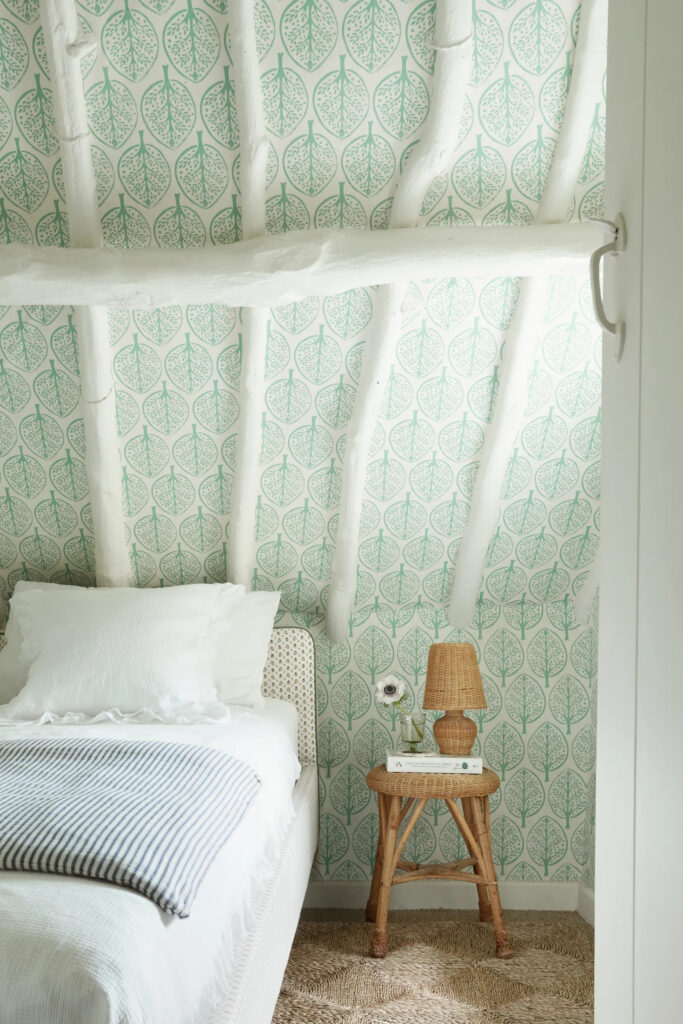
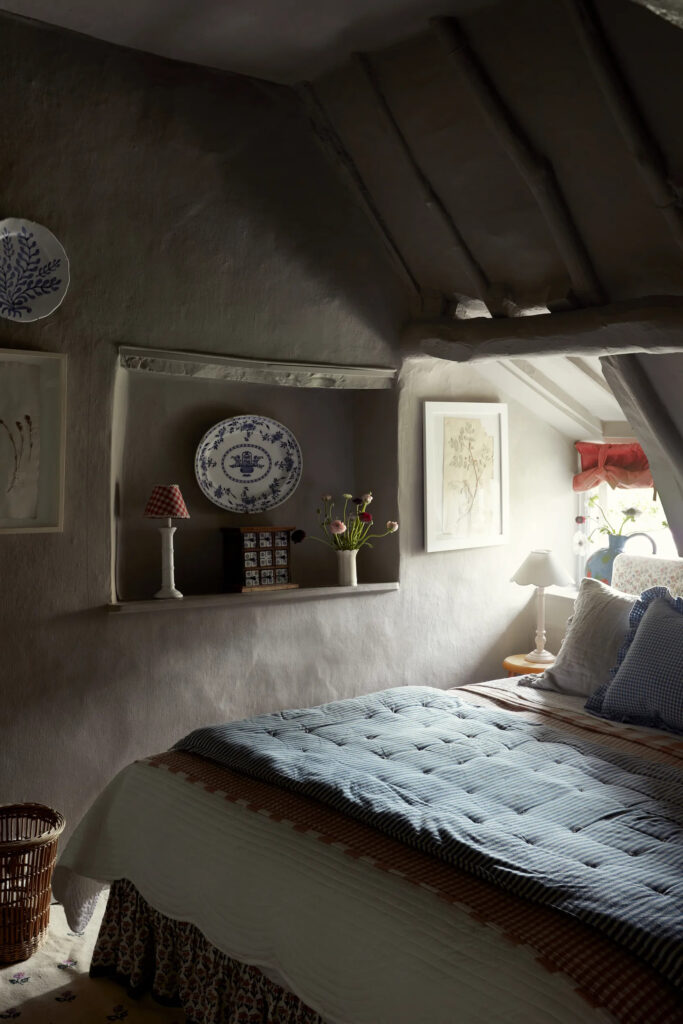
Photo: (c) Tom Griffiths