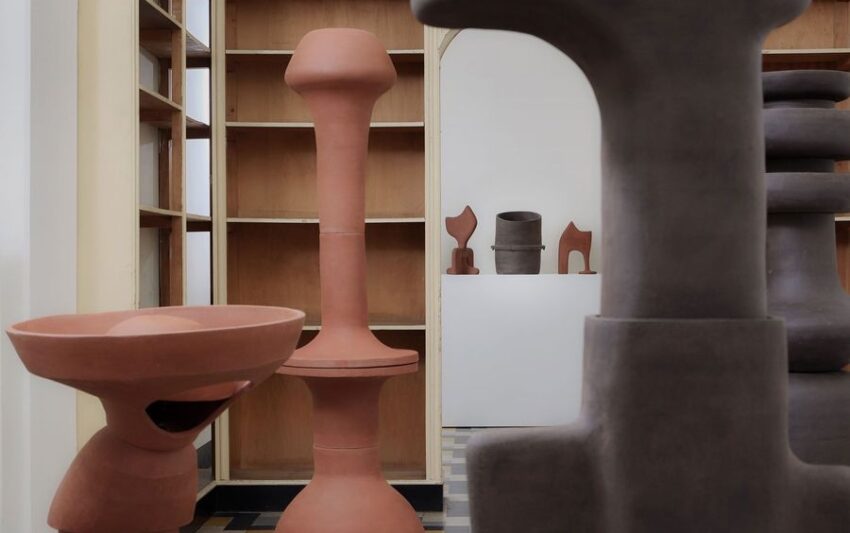
Harry Rigalo approaches collectible design less as a problem-solving discipline and more as an intuitive exploration of form, material, and emotion. His solo exhibition Forms Without Briefs, curated by Joy Herro and presented at The Great Design Disaster in Milan, brings together a new body of ceramic furniture and sculptural objects that deliberately blur the boundary between utility and abstraction.
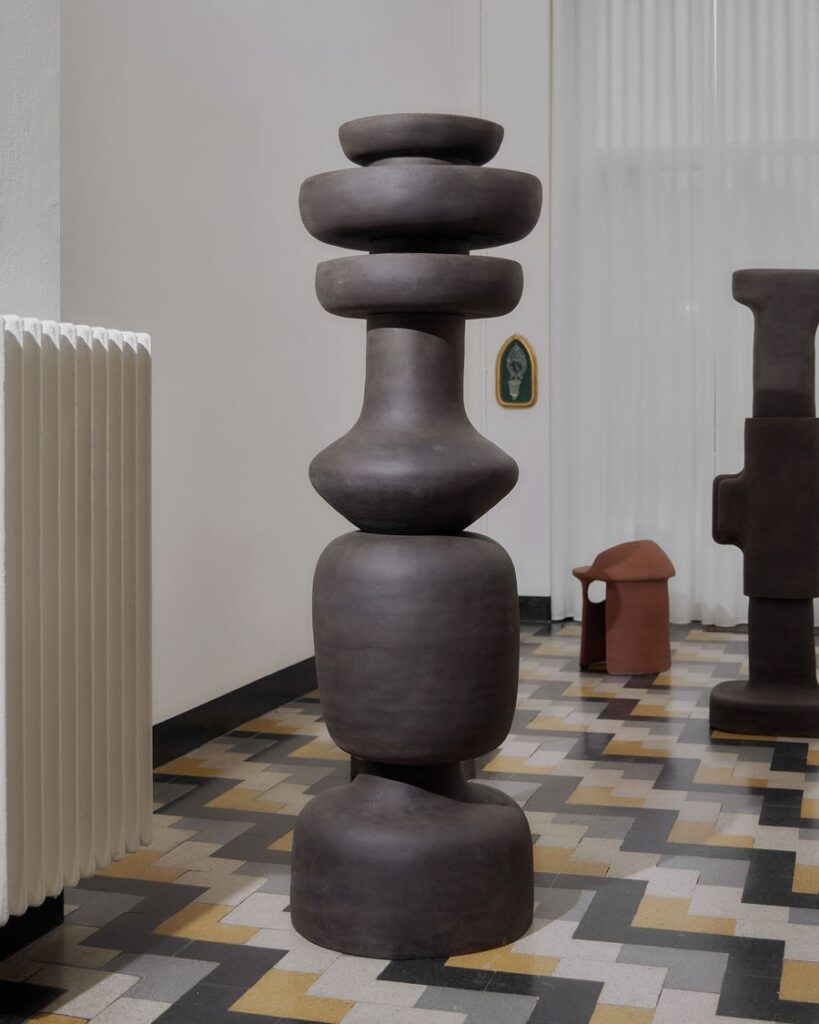
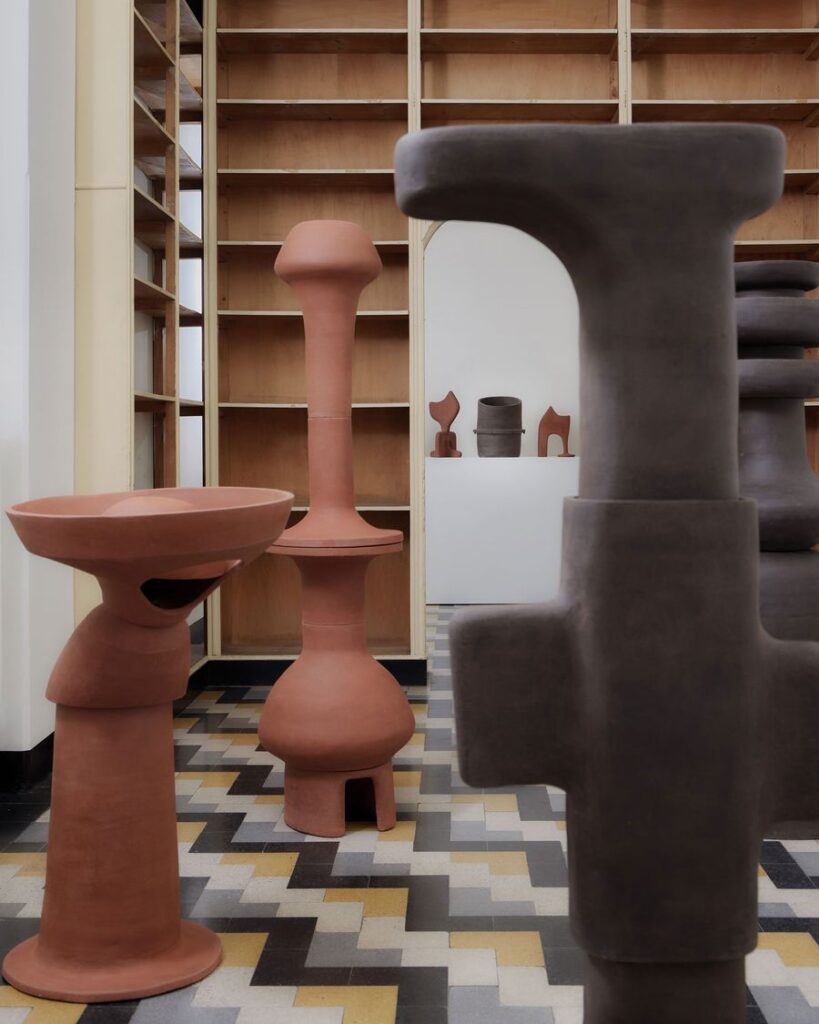
Presented within the gallery’s intimate Via della Moscova space, a former antiquarian bookshop transformed into a contemporary creative hub, the exhibition unfolds almost like an archaeological discovery. Totemic structures, irregular stools, sculptural side tables, and clay floor lamps occupy the rooms like unearthed relics from an unknown civilization, balancing familiarity with ambiguity.
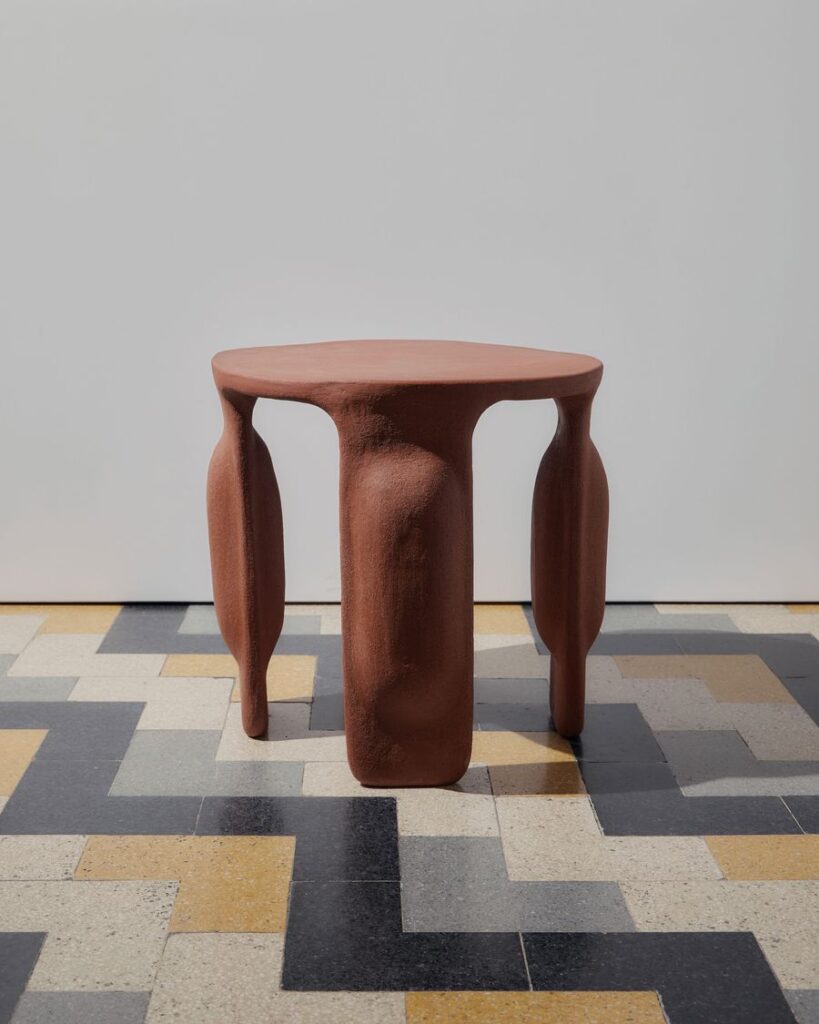
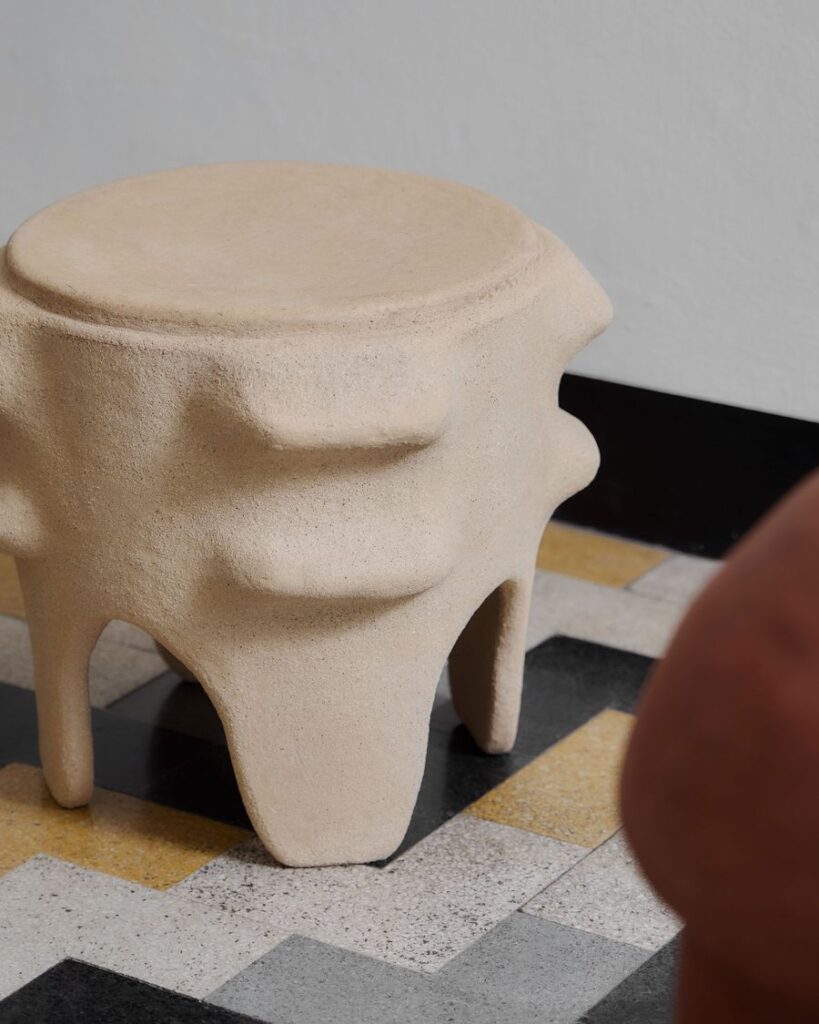
Rigalo’s path into design developed outside traditional academic routes. Growing up in Athens during the city’s intense construction boom leading up to the 2004 Olympic Games, he spent his early years working on building sites, an experience that shaped his understanding of balance, weight, structure, and imperfection. Later studies in music technology introduced another layer of influence, particularly around rhythm, repetition, and composition, qualities that continue to quietly inform the proportions and spatial cadence of his objects today.
Before turning to clay, Rigalo worked extensively with found industrial fragments and marble, assembling hybrid pieces that merged sculptural instinct with structural logic. With Forms Without Briefs, however, he embraces clay for the first time, allowing the unpredictability of the material to fundamentally reshape his process.
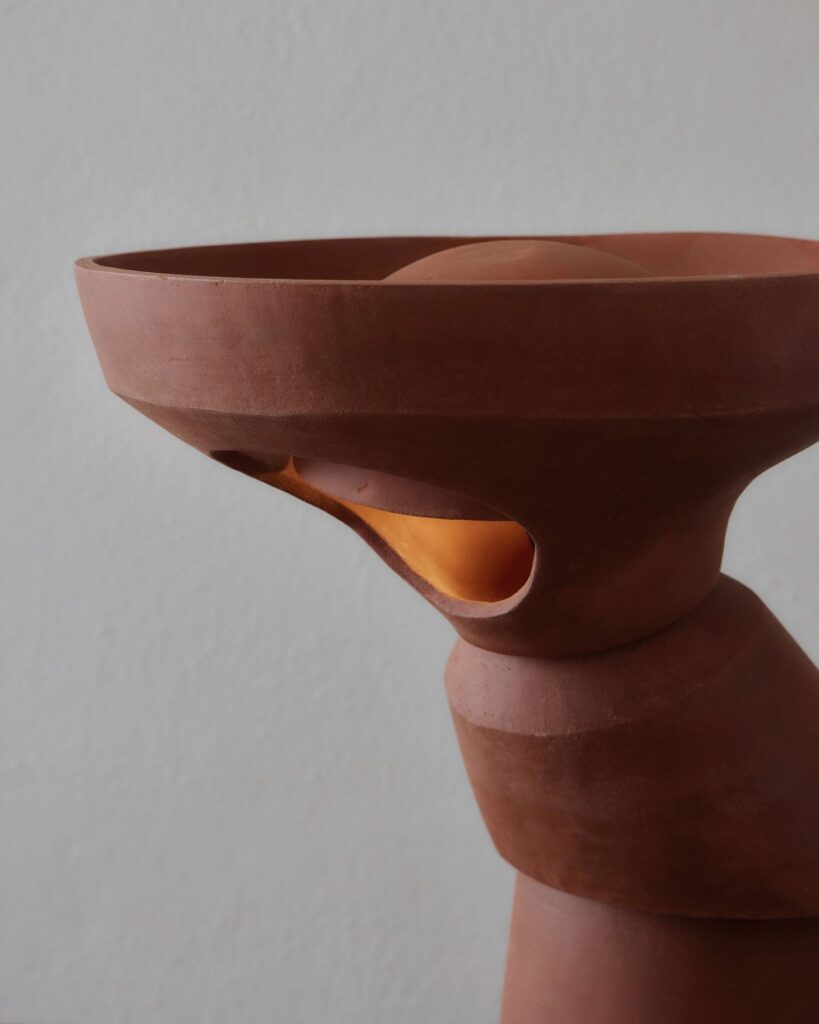
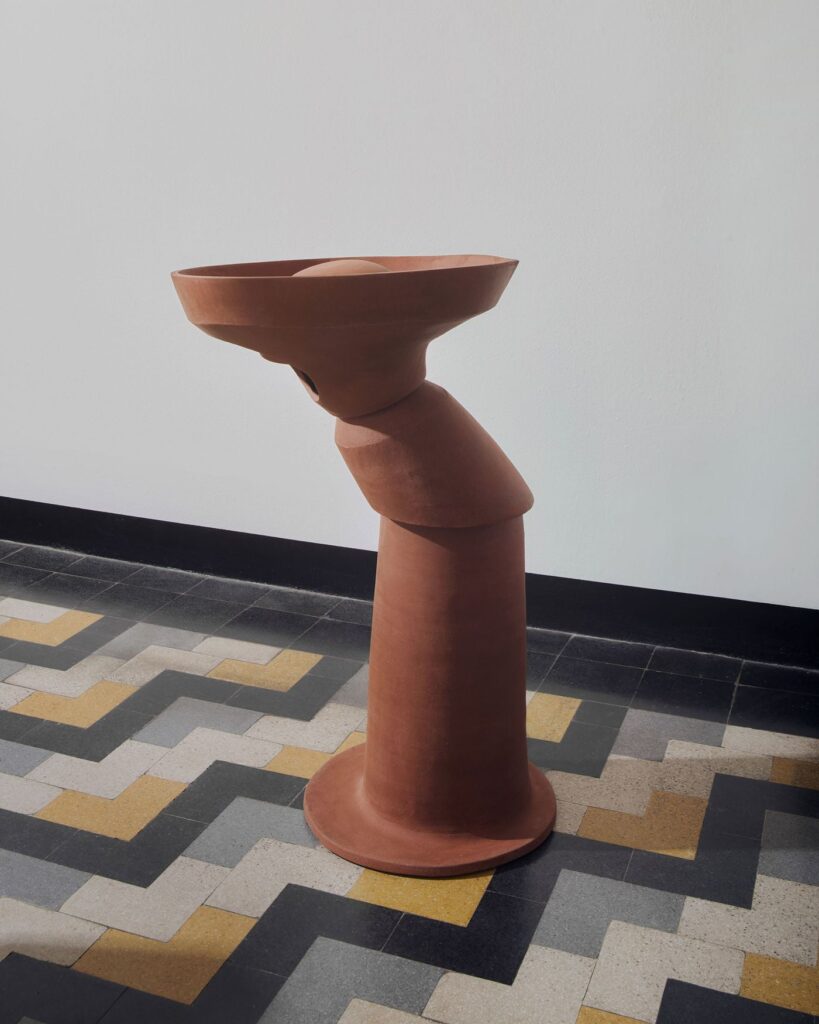
Working with high-grog stoneware, each object was built manually through coiling, stacking, and intuitive shaping rather than strict formal planning. Temporary support systems and improvised braces were often required to sustain the weight and instability of the forms during construction. Left unglazed, the finished surfaces preserve fingerprints, gestures, and traces of physical interaction, emphasizing the direct relationship between maker and material.
The resulting pieces feel simultaneously archaic and contemporary. Some forms resemble fragments of industrial piping assembled through exposed joints and modular elements, subtly referencing Rigalo’s construction background. Others evoke ritualistic artifacts or ceremonial objects, where function becomes secondary to atmosphere and emotional resonance. Throughout the exhibition, recognizable typologies, tables, stools, lamps, remain present, yet they constantly drift toward sculpture and abstraction.
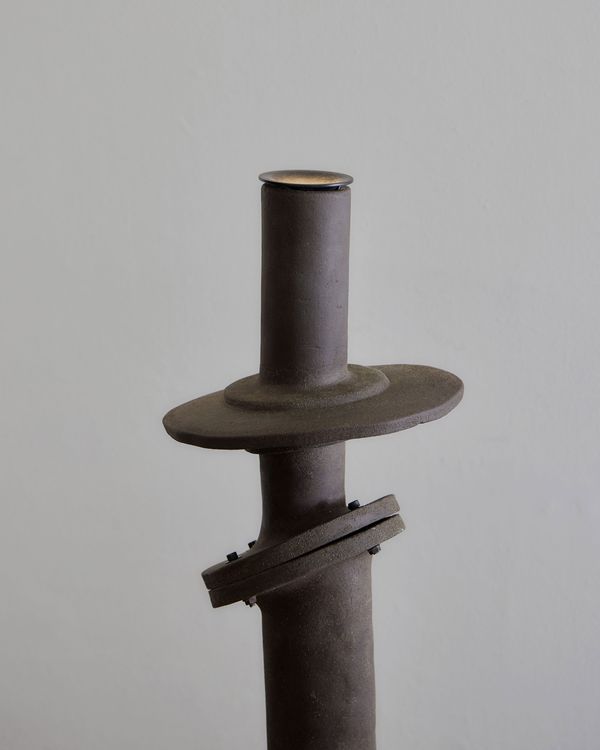
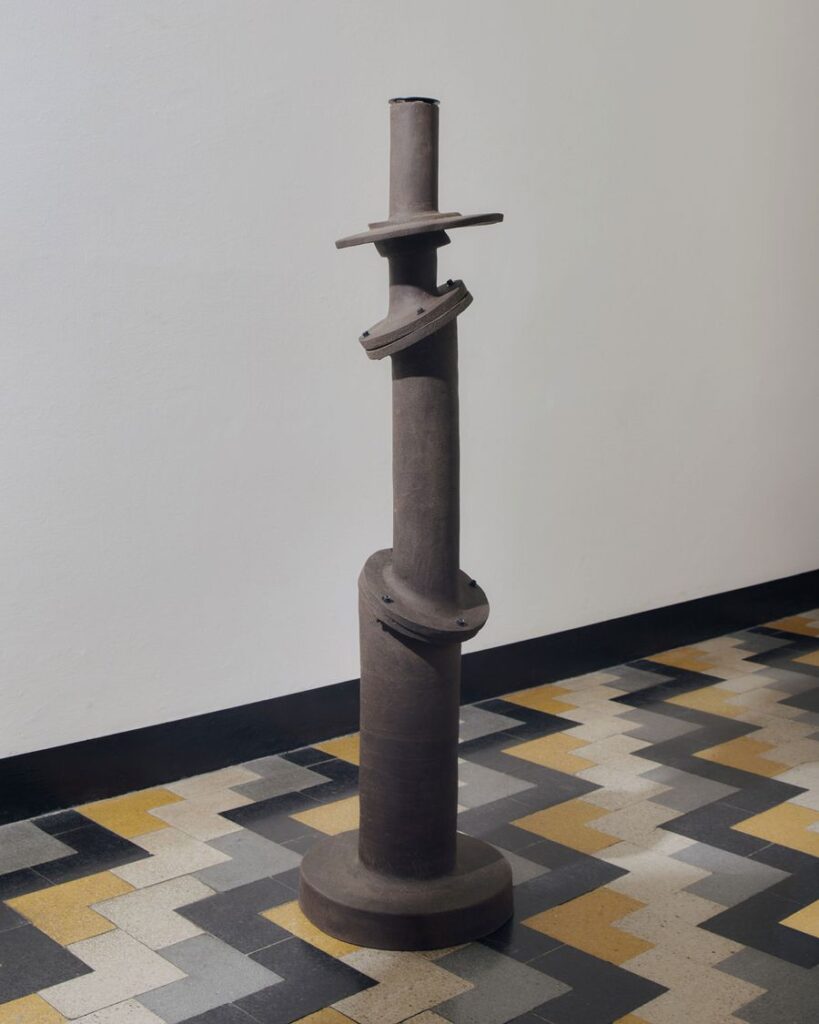
This tension between object and artwork aligns closely with the ethos of The Great Design Disaster, a gallery focused on fostering dialogue between craftsmanship, experimentation, and collectible design. Within this context, Rigalo’s work becomes less concerned with clarity or usability and more invested in ambiguity, instinct, and tactile presence.
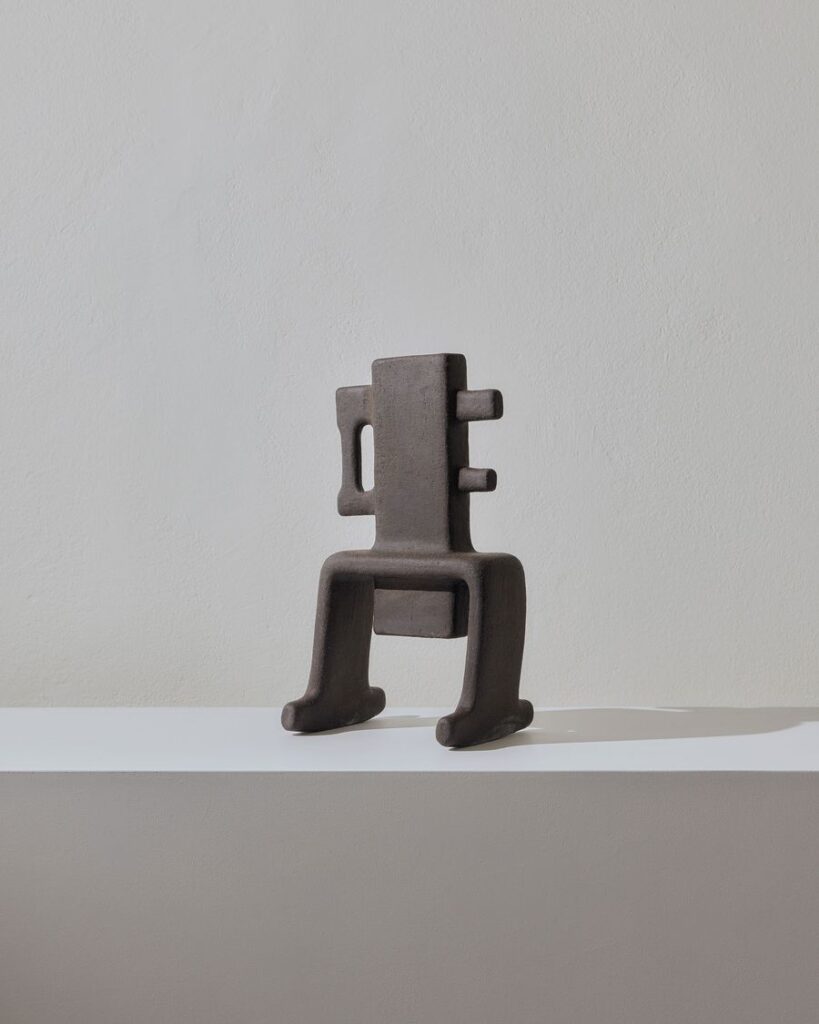
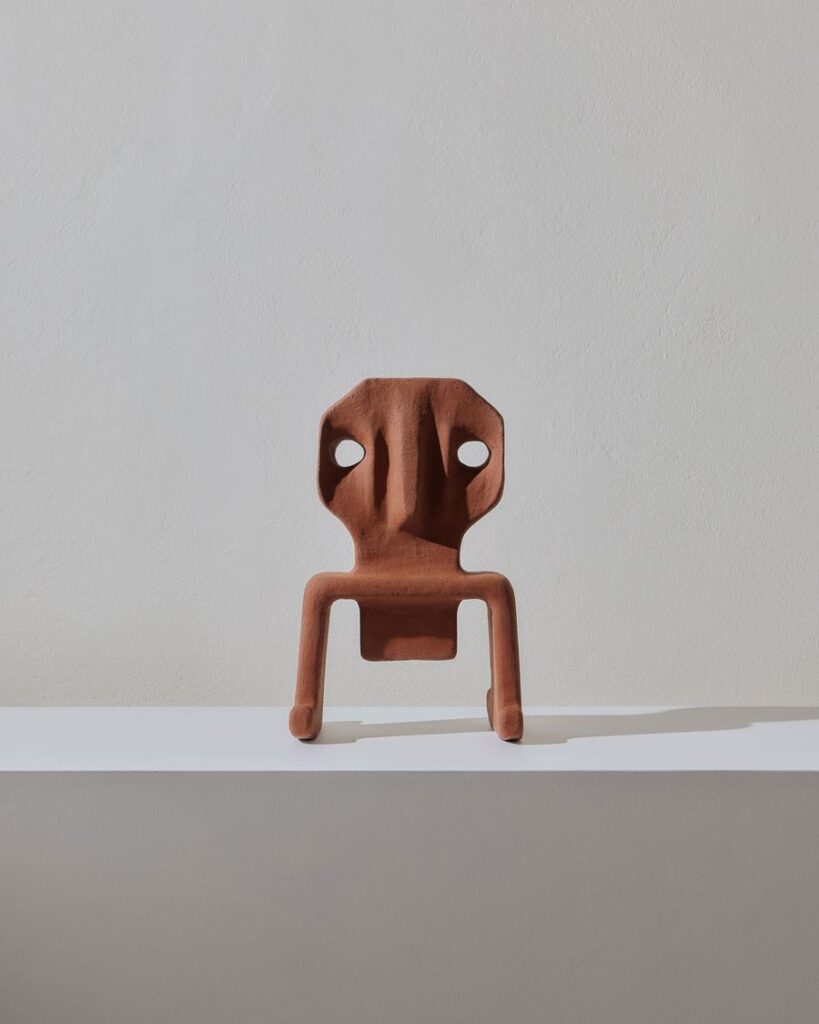
Rather than offering definitive answers about where design ends and sculpture begins, Forms Without Briefs embraces uncertainty itself. Through raw clay surfaces and imperfect forms, Harry Rigalo proposes a vision of design rooted not in strict functionality, but in emotion, memory, and the physical experience of making.
More about Harry Rigalo on:
Instagram
Photo: (c) Luigi Fiano
Video: (c) Antonis Agrido, Euridice