
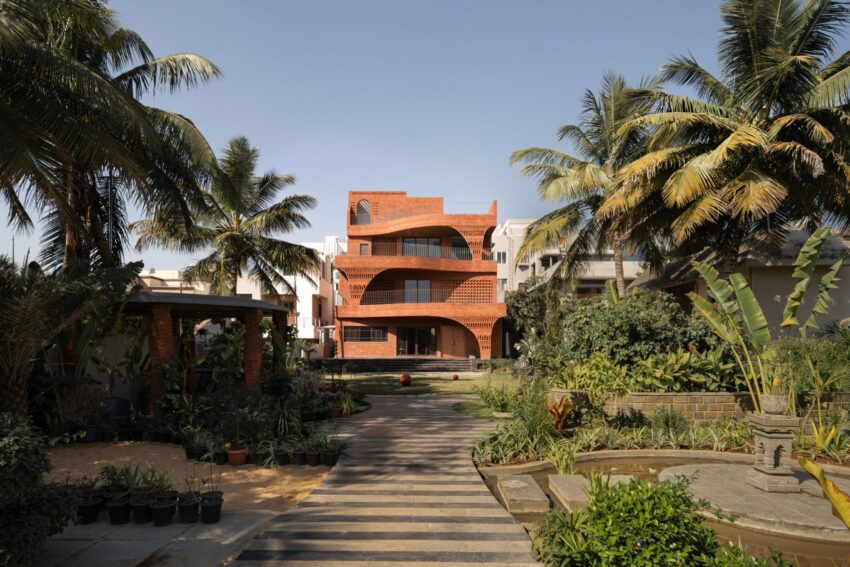
In the city of Ahilyanagar, Maharashtra, Kaushal Tatiya Architects has completed “The Anthill”, a residence that draws inspiration from one of nature’s most efficient climate-control systems. Rather than referencing the form of an anthill as a literal architectural gesture, the project explores the environmental intelligence behind these structures, translating their principles into a contemporary family home designed for India’s hot and arid climate.
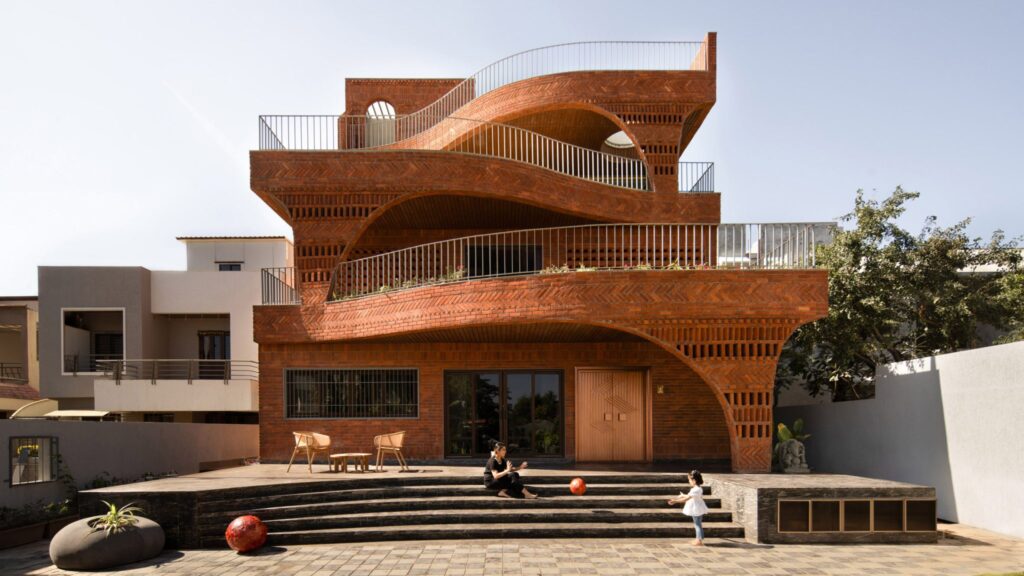
Spanning approximately 650 square metres, the house is organized around a double-height living space that acts as its social and environmental core. Around this central volume, a series of interconnected rooms and semi-open spaces create a network of sheltered chambers that encourage natural airflow while maintaining privacy and thermal comfort throughout the year.
The design challenges conventional ideas of domestic planning. Instead of relying on clearly defined rooms and corridors, the architecture unfolds through a sequence of carved volumes, shaded transitions and layered spaces. Deep balconies, recessed openings and protected outdoor areas blur the boundary between inside and outside, creating a more fluid relationship with the surrounding environment.
Natural light enters the home through a cluster of circular skylights positioned above the central void. These openings draw daylight deep into the building, illuminating the living areas below while enhancing the sense of vertical connection between floors. Along one side of the house, an open-air passage accompanied by a cascading water feature contributes to passive cooling and reinforces the project’s connection to natural elements.
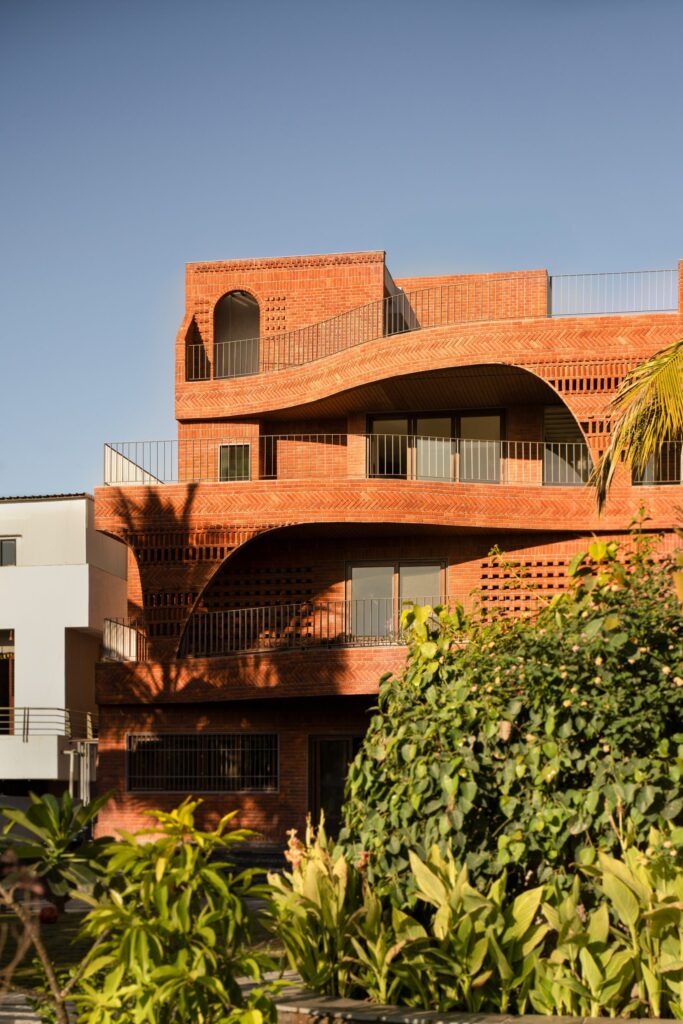
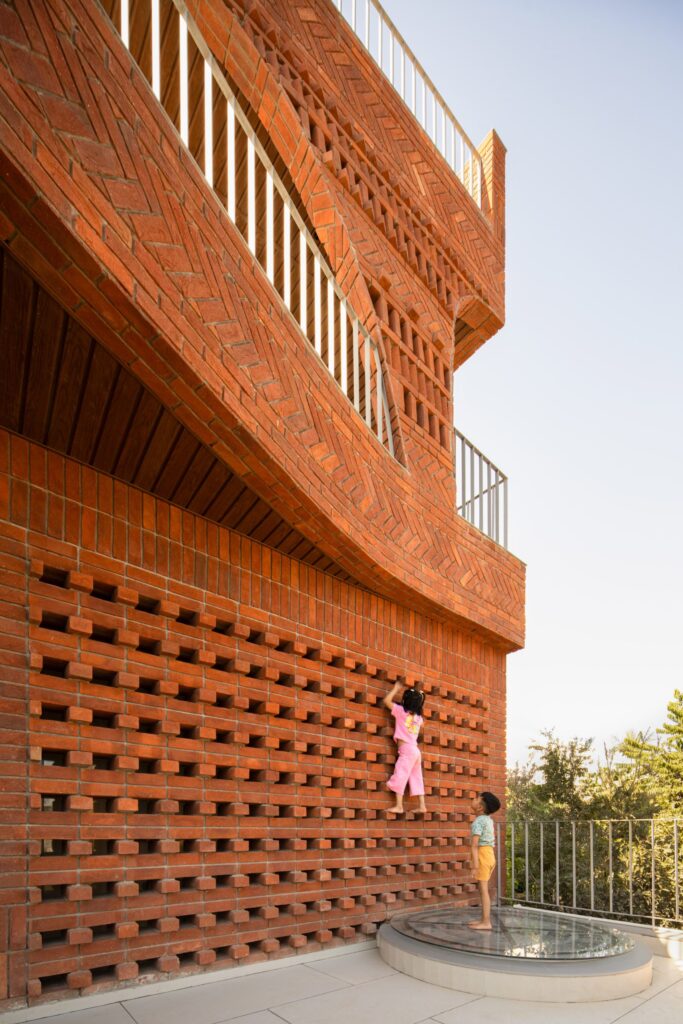
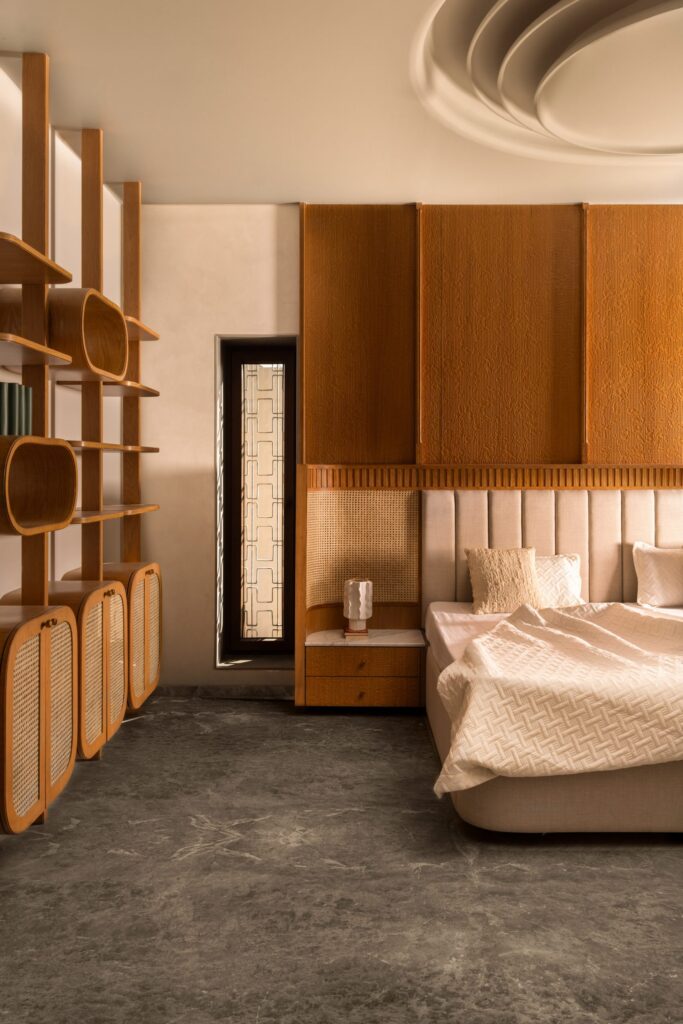
The more private areas of the residence are positioned along the perimeter, where bedrooms benefit from shaded balconies and carefully calibrated openings. Perforated metal screens and strategically placed windows allow fresh air to circulate while protecting interiors from direct sunlight, reducing the need for mechanical cooling systems.
Materiality plays a key role in reinforcing the concept. A palette of exposed brick, lime plaster and terracotta tones gives the house a warm, tactile character rooted in the local landscape. The curved façade is articulated through varied brick patterns, while perforated brickwork inspired by traditional jali screens filters sunlight and encourages cross-ventilation.
Movement through the house is designed as a gradual spatial experience. Narrow shaded passages open unexpectedly into larger volumes filled with light, while courtyards, terraces and skylit spaces create moments of pause and discovery. The architecture prioritizes atmosphere and environmental performance, demonstrating how passive design strategies can shape both comfort and daily life.
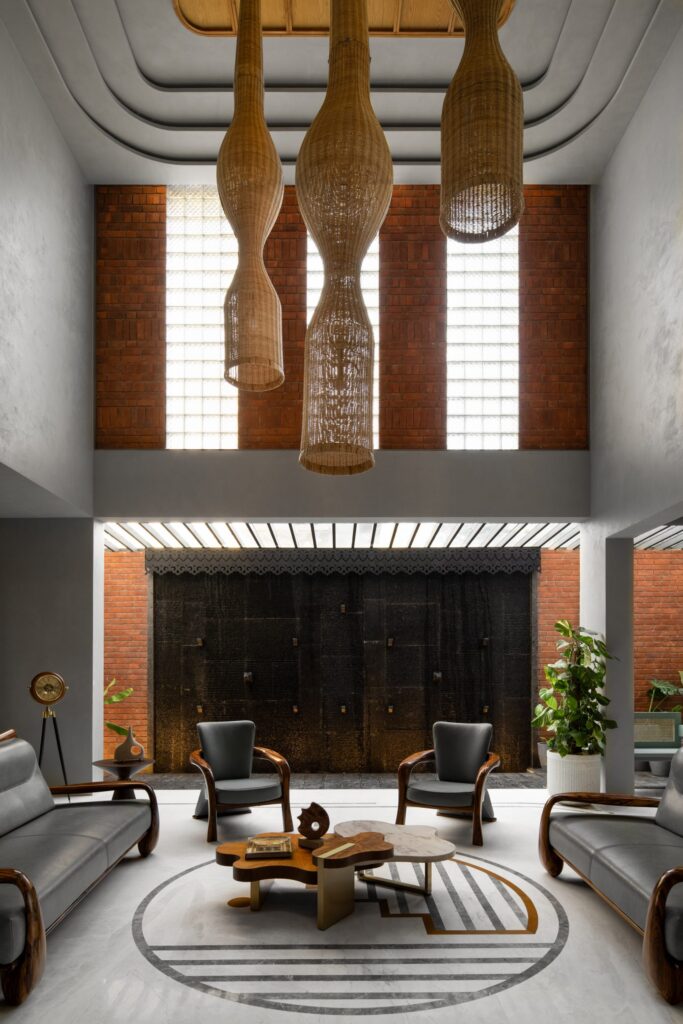
Set within a generous garden landscape, “The Anthill” is approached through a stone-paved pathway that leads across lawns and water features toward the residence. More than a visual reference to nature, the project reflects a deeper investigation into how architecture can learn from natural systems to create resilient, climate-responsive living environments.
More about Kaushal Tatiya Architects on:
Instagram
Photo: (c) Kaushal Tatiya Architects