
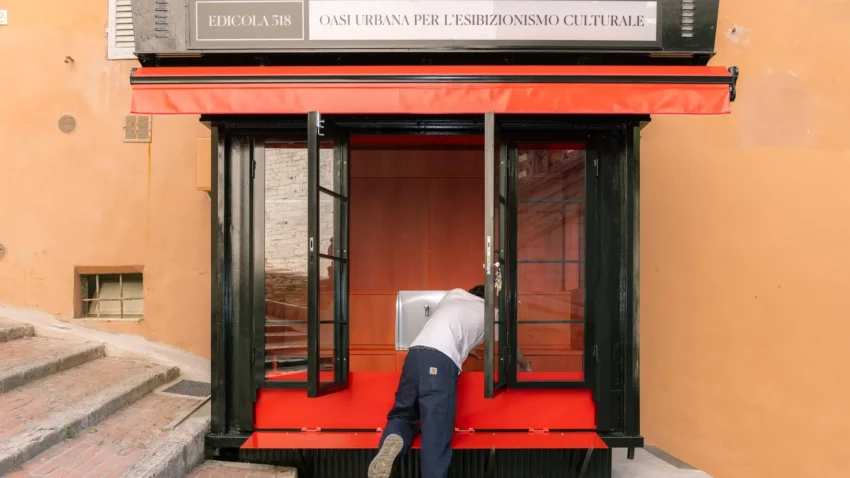
Across Italy, thousands of newsstands remain scattered through city streets like fragments of another urban era. Once essential points of exchange, where newspapers, conversation and everyday life intersected, many now stand abandoned, their structures intact but their original purpose long dissolved. Few have been given a meaningful second life. In Perugia, Edicola 518 offers a compelling alternative.
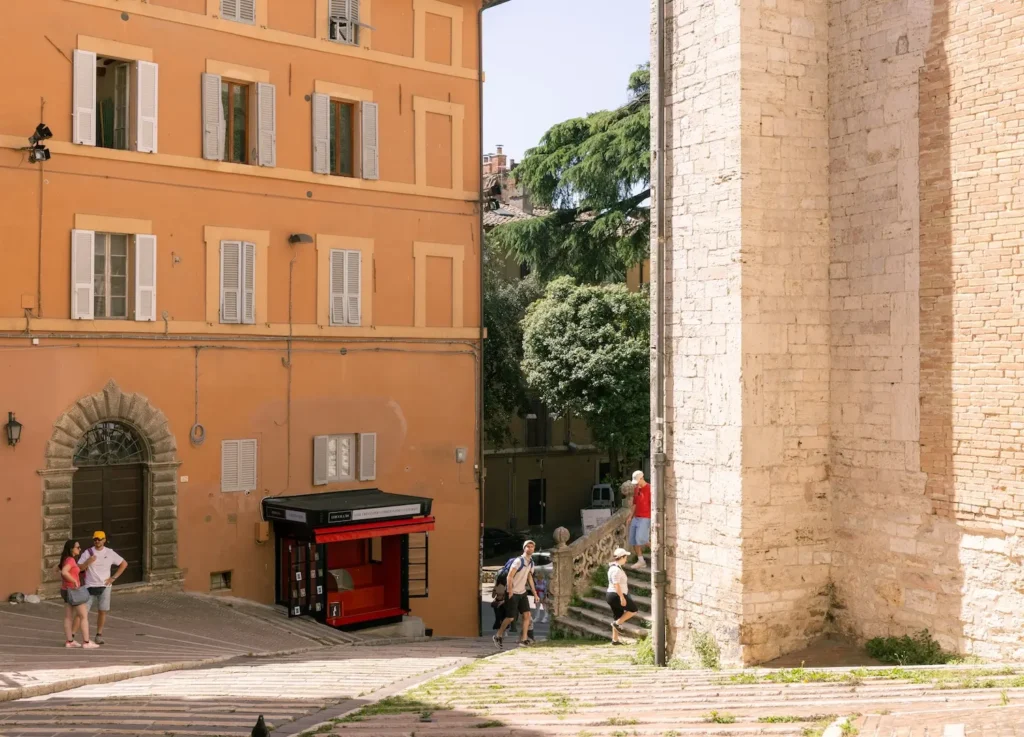
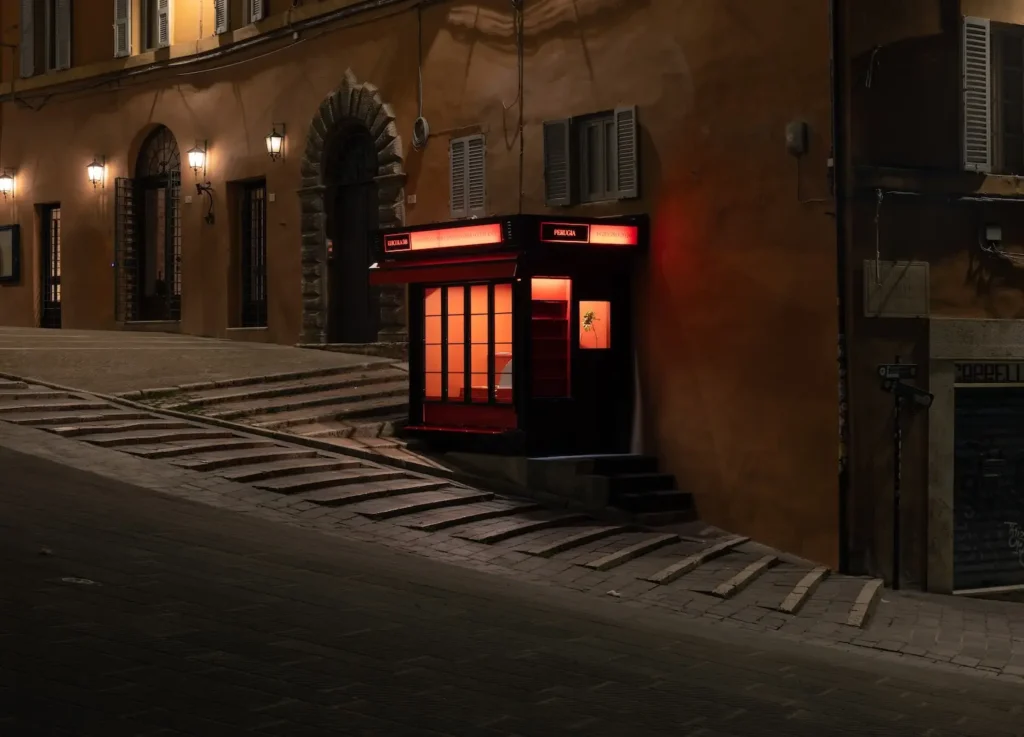
Established a decade ago as an independent kiosk dedicated to books, magazines and small-scale publishing, Edicola 518 has always occupied an unusual position within the city. Perched along the historic staircase of Sant’Ercolano, a place deeply rooted in local memory, it gradually evolved beyond the conventional role of a newsstand, becoming a meeting point for readers, artists and independent cultural initiatives.
A new chapter began after the project secured support through Laboratorio di Creatività Contemporanea, an initiative promoted by the Italian Ministry of Culture’s Directorate-General for Contemporary Creativity. Developed in collaboration with designer Giuseppe Arezzi, and supported by Seed Festival and Umbra Acque, the transformed kiosk reopened on 1 June 2026 as an open civic space rather than a commercial venue. Arezzi describes it as an urban oasis for cultural exhibitionism, a place where participation, visibility and everyday encounters naturally converge.
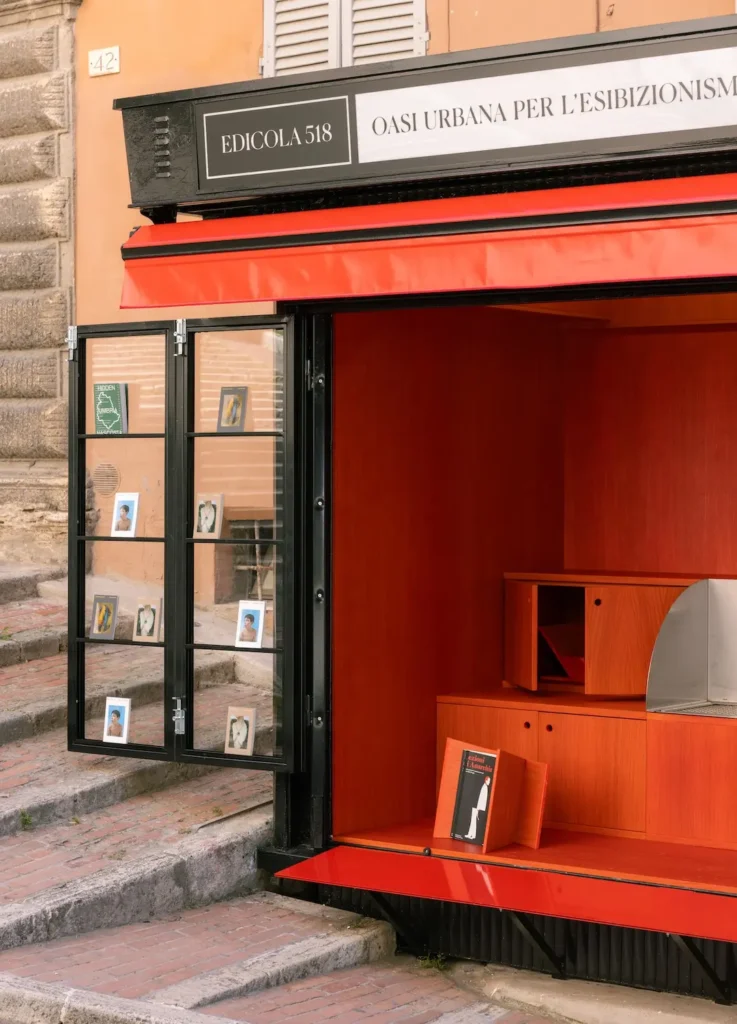
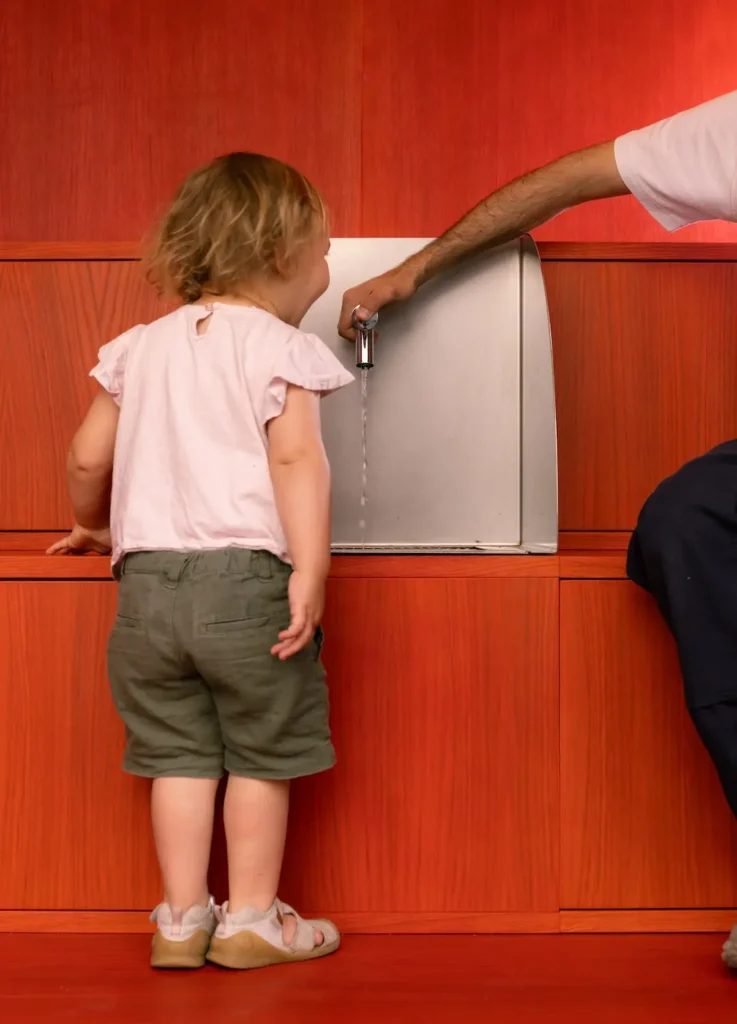
What distinguishes the project is not only its architectural transformation, but the way its new identity was shaped. Before any drawings were produced, the collective behind Edicola 518 spent months listening to the city. Public boards invited residents to imagine what they wished to find in a shared urban space, while radio broadcasts, improvised workshops and open gatherings unfolded around the kiosk itself. The resulting programme emerged directly from these conversations, prioritising reading, rest, access to drinking water and spaces for spontaneous interaction. Here, architecture follows the community rather than attempting to define it.
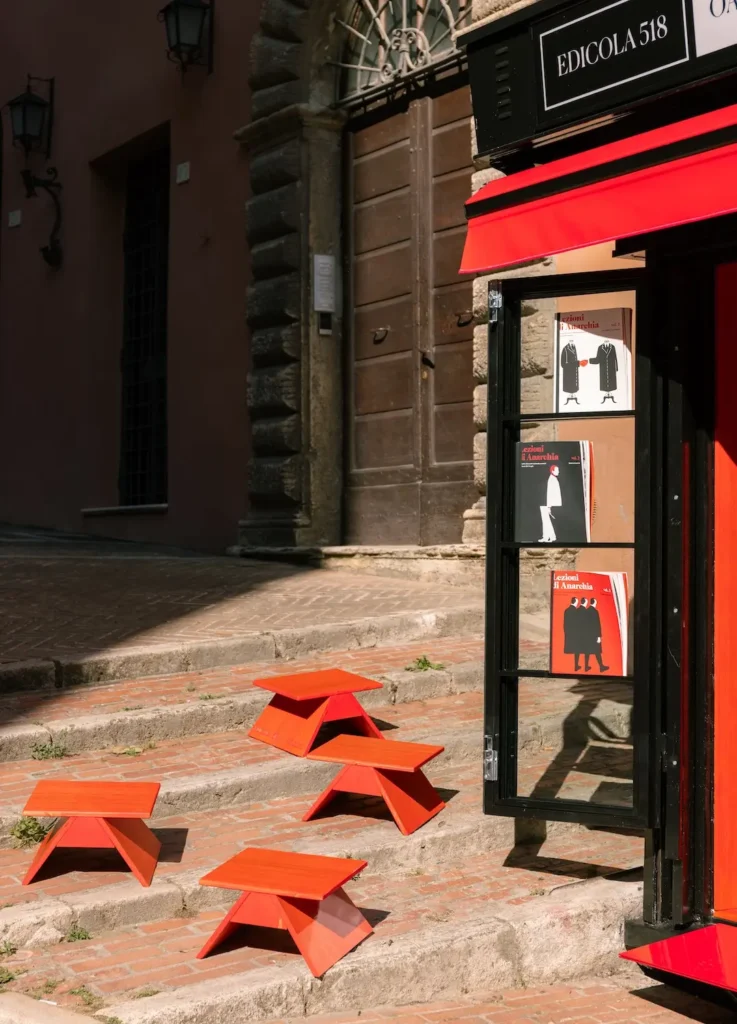
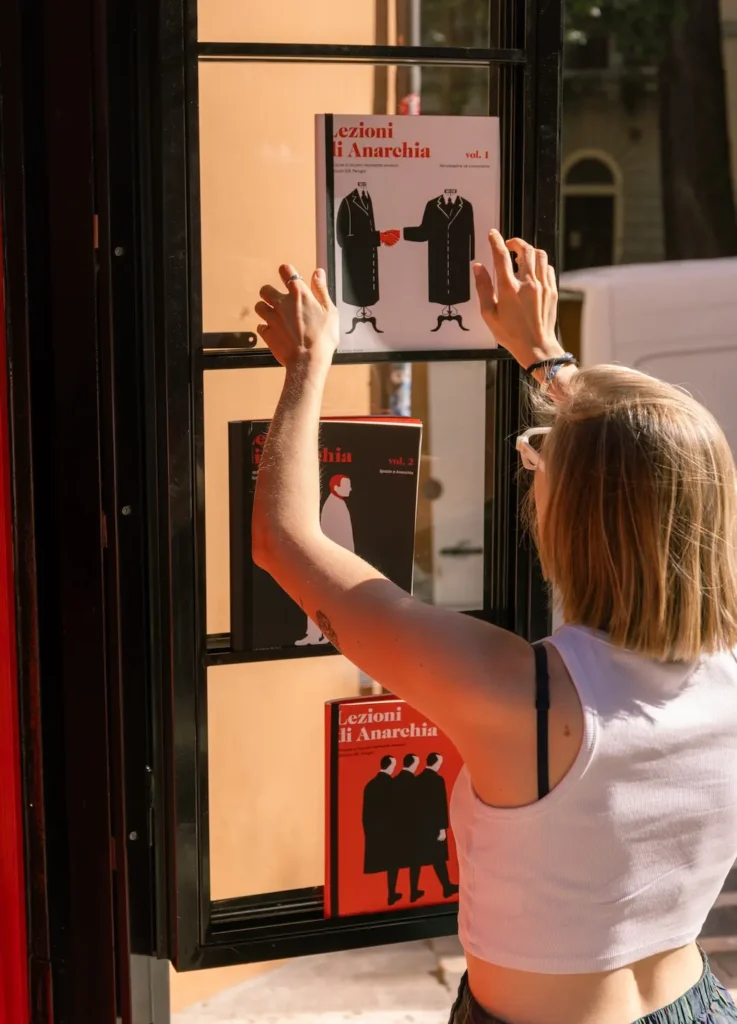
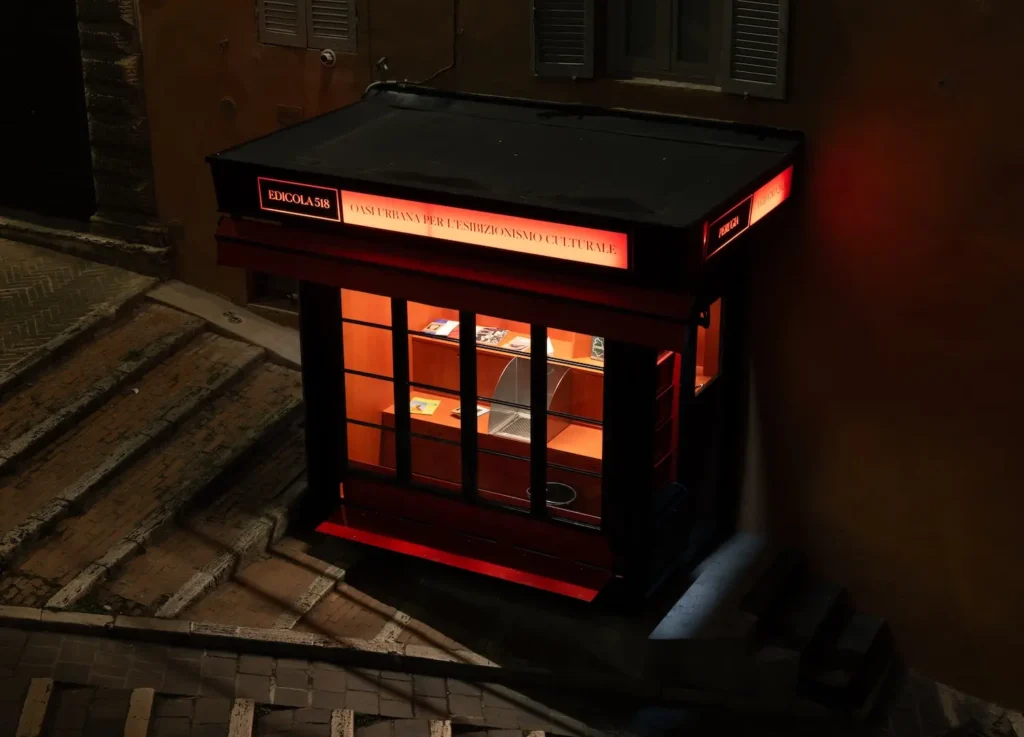
The intervention preserves the kiosk’s recognisable steel frame and projecting canopy while completely rethinking how the space operates. Large folding glass panels open the interior toward the staircase, dissolving the traditional separation between inside and outside. Warm timber cladding in deep red-orange transforms the compact structure into a luminous landmark, particularly after sunset, when the illuminated interior quietly announces itself within Perugia’s medieval streetscape.
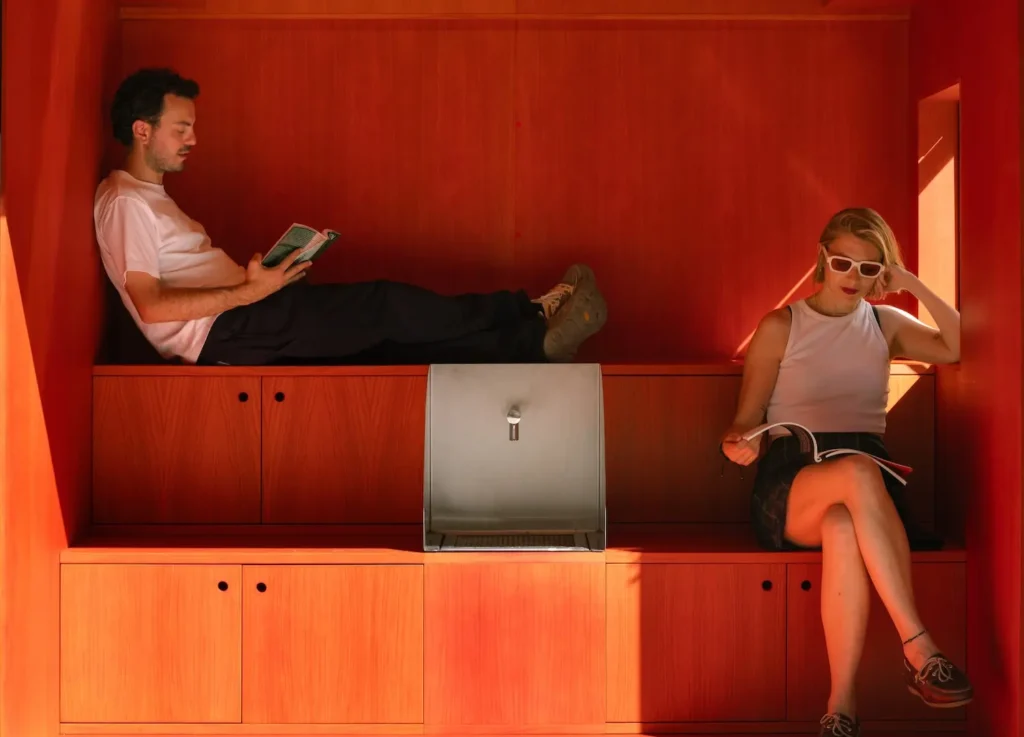
Small but carefully considered additions reinforce the kiosk’s new civic role. A stainless-steel drinking fountain occupies the centre of a built-in seating element, while folding stools stored within the structure can be placed outside, extending the project onto the stone steps beyond. Rather than functioning as furniture attached to architecture, these elements encourage occupation, conversation and pause, restoring a sense of urban hospitality often absent from contemporary public spaces.
The project also acknowledges the site’s historical significance through a mural by artist Nic Alessandrini, painted onto the kiosk’s rolling shutter. Depicting the head of Sant’Ercolano, the work references the city’s patron saint while provoking contemporary discussion, anchoring the intervention within both local history and present-day cultural debate.
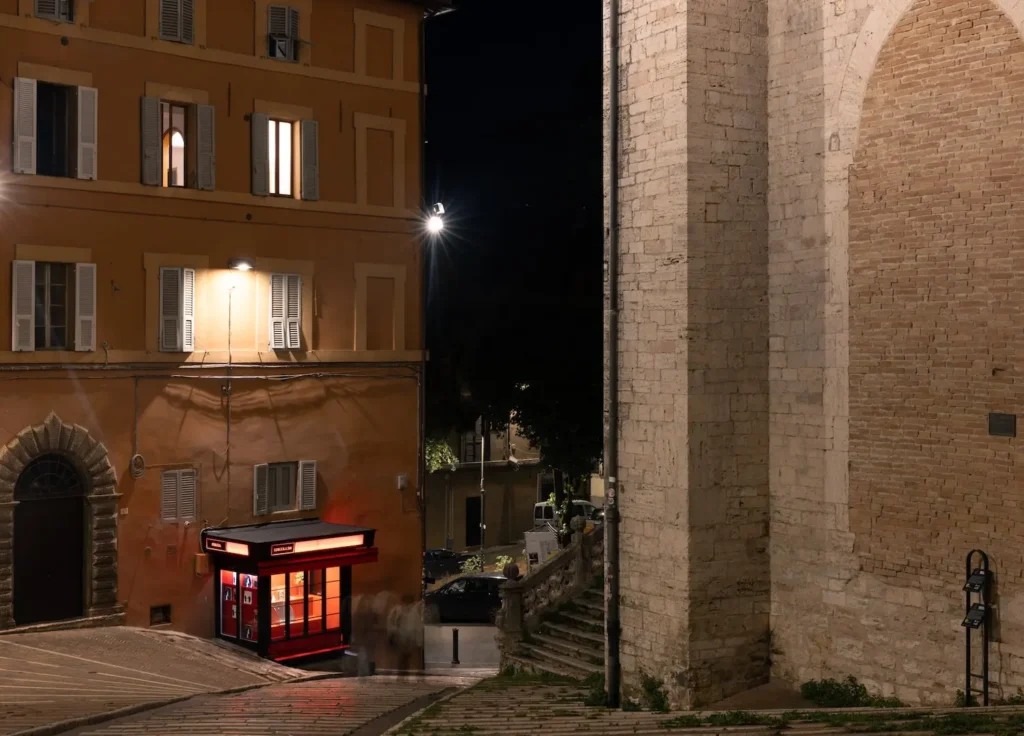
Perhaps the most radical gesture, however, is what the kiosk no longer does. Nothing is sold here. Edicola 518 has abandoned retail entirely, redefining itself as public infrastructure rather than commercial property. The building exists simply as a place to inhabit, meet, read and remain, without the expectation of consumption.
Its transformation arrives at a moment when former kiosks across Italy are increasingly reappearing as cafés, branded pop-ups or temporary retail concepts. While these projects often preserve the physical structures, they frequently replace one commercial function with another. Edicola 518 proposes a different model, suggesting that adaptive reuse gains its greatest relevance when it restores public life rather than commercial activity. In doing so, it demonstrates how even the smallest architectural interventions can quietly reshape the way a city is experienced.
More about Edicola 518 on:
Facebook
Website
Instagram
More about Giuseppe Arezzi Design Studio on:
Facebook
Website
Photo: (c) Giovanni Emilio Galanello