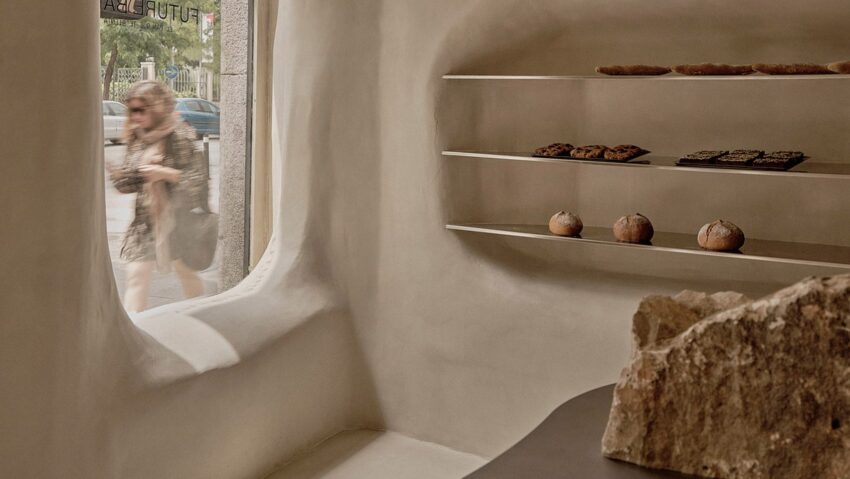
In Madrid’s Chamberí district, FUBA looks as though someone has carved a bakery into the remains of an older, stranger building.
Designed by Spanish studio Isern Serra, the interior of the gluten-free bakery is built around rough, rounded walls, pale lime-washed surfaces and stainless steel furniture. The setting belongs to FUBA’s larger idea of bringing traditional bakery culture into a different kind of food environment, one centred on products without gluten, refined sugars or ultra-processed flours.
FUBA, short for Future Bakery, was founded by chef Fabián León, who wanted to create a place where people with allergies or intolerances could still eat familiar bakery products without treating flavour as an afterthought. León was closely involved in shaping the identity of the space from the beginning.
His initial brief was built around two ideas: origin and future. Serra translated the first through the physical language of the interior, drawing on caves, natural materials and older forms of construction, while the second appears through the furniture, metalwork and technical precision of the details.
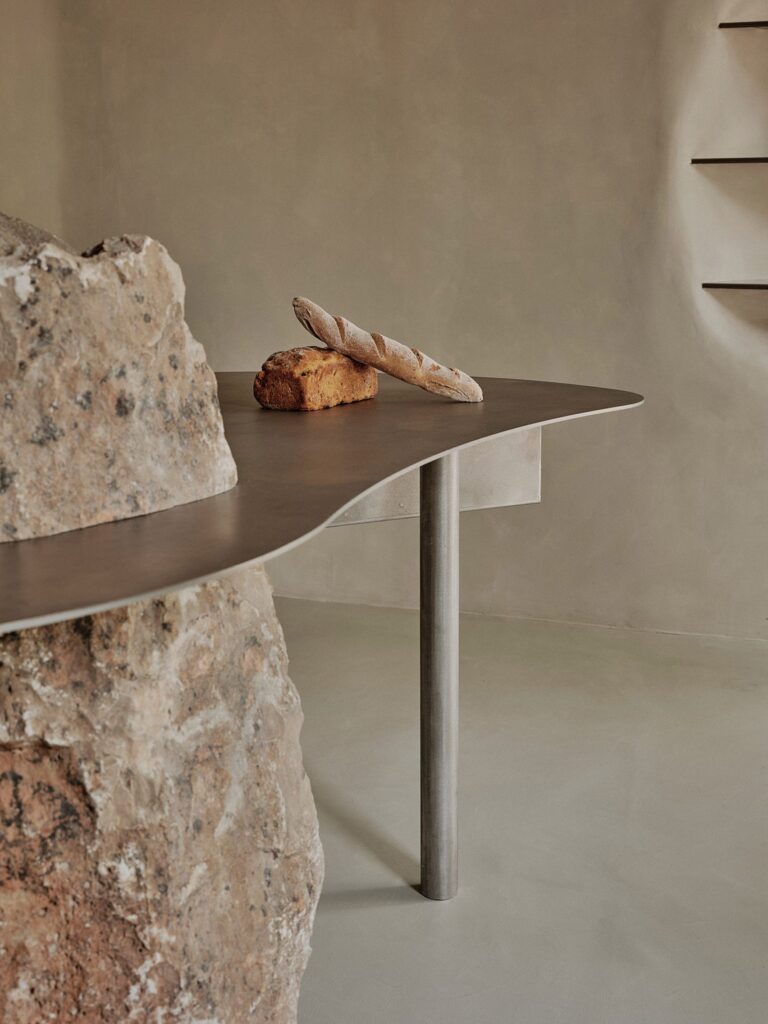
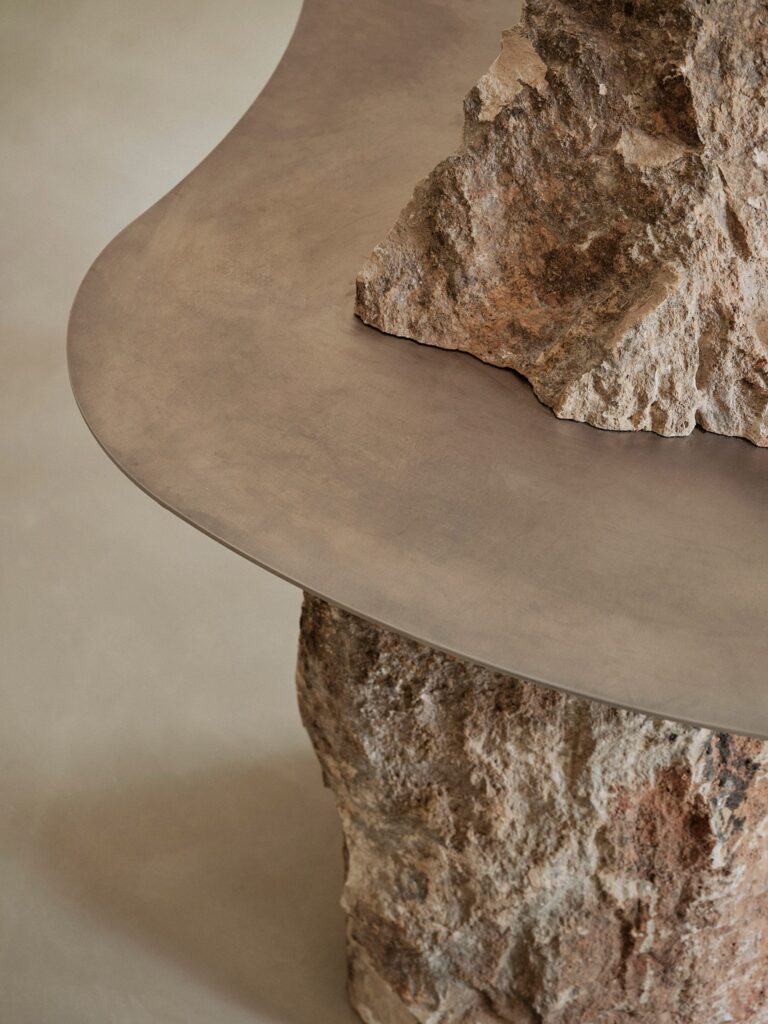
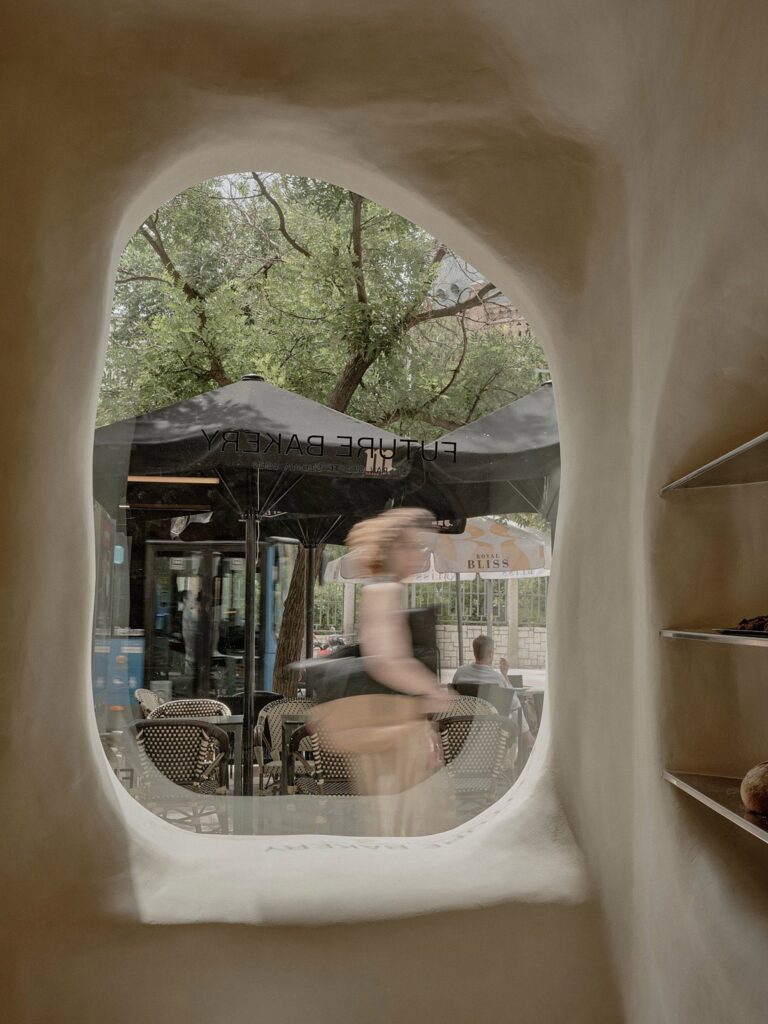
The walls provide the strongest expression of that approach. Plasterboard was shaped into rounded corners and irregular transitions before being finished with lime wash, giving the surfaces the uneven, mineral quality of a weathered interior. Window frames follow the same geometry, making the openings feel as though they have been formed rather than installed.
The furniture introduces a completely different register.
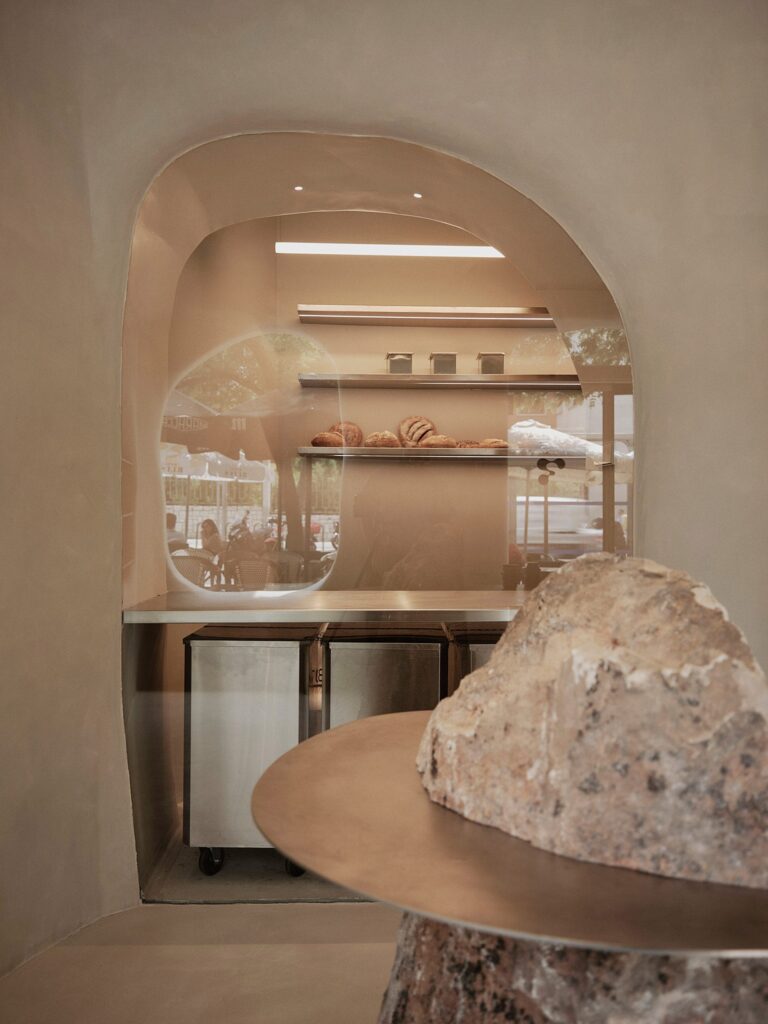
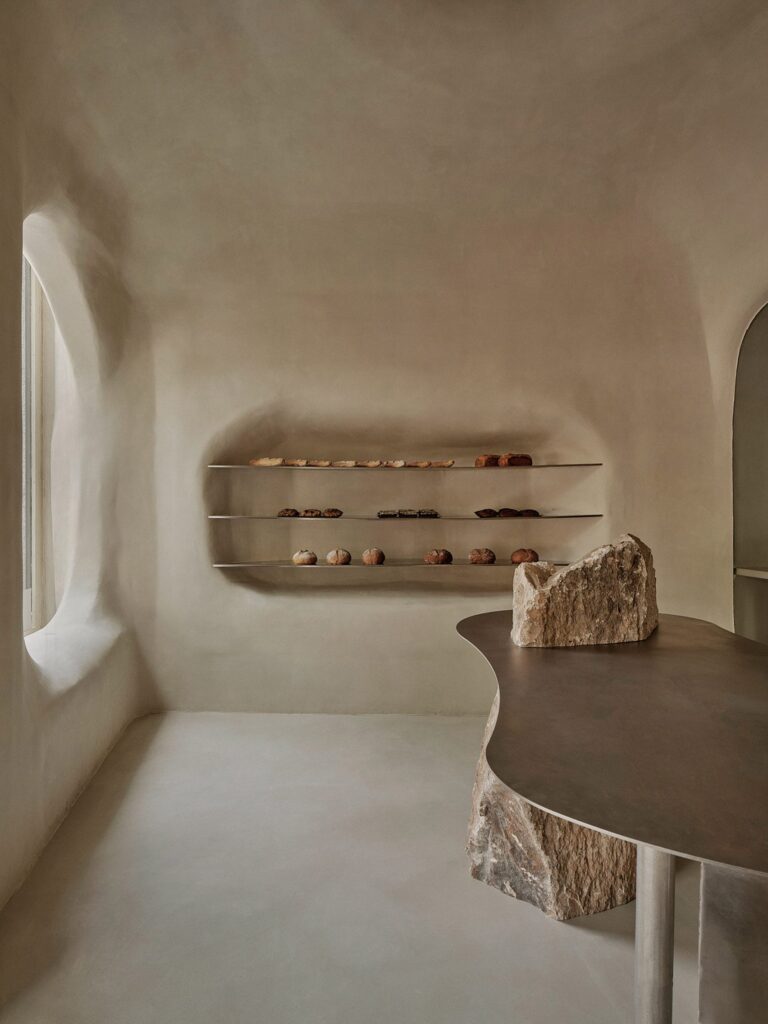
At the centre of the bakery, a large stainless steel table curves through the space, supported at one end by two slender legs and at the other by a rough piece of stone sourced from a quarry near Madrid. The combination brings industrial precision directly against something that still carries the marks of geological time.
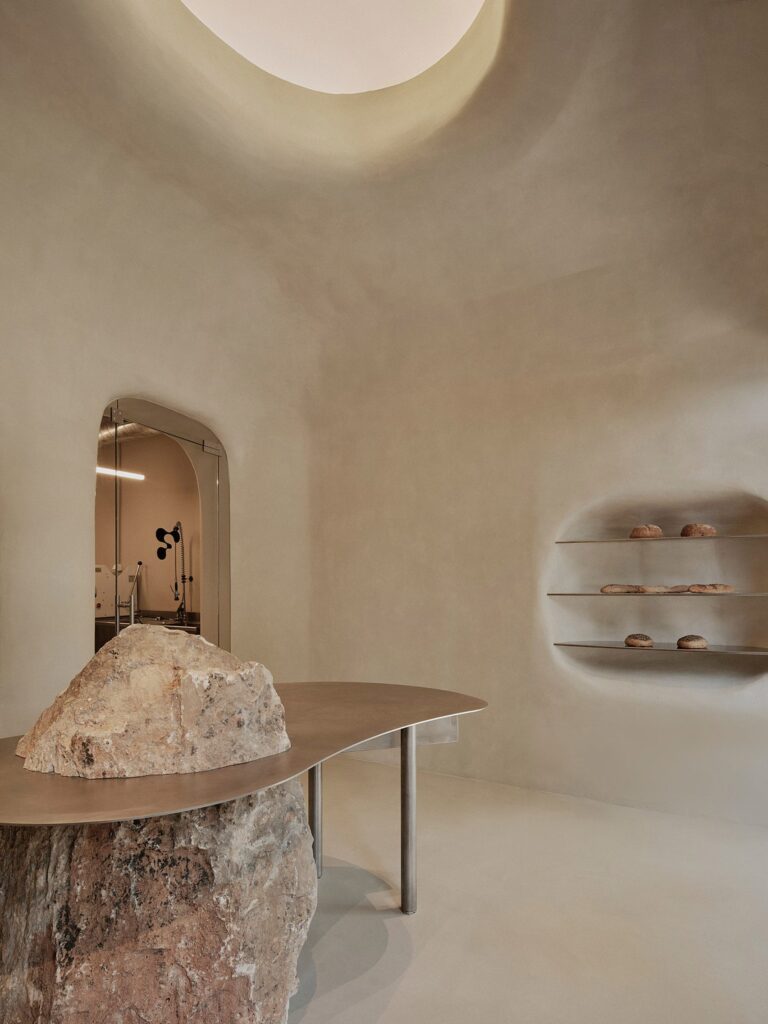
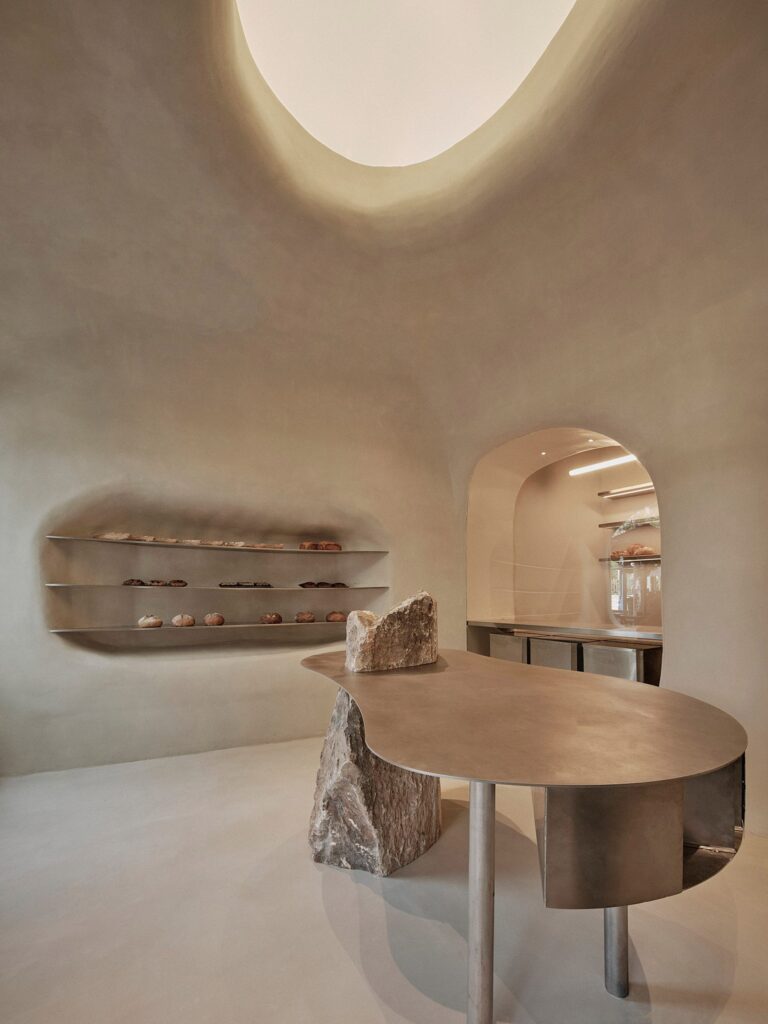
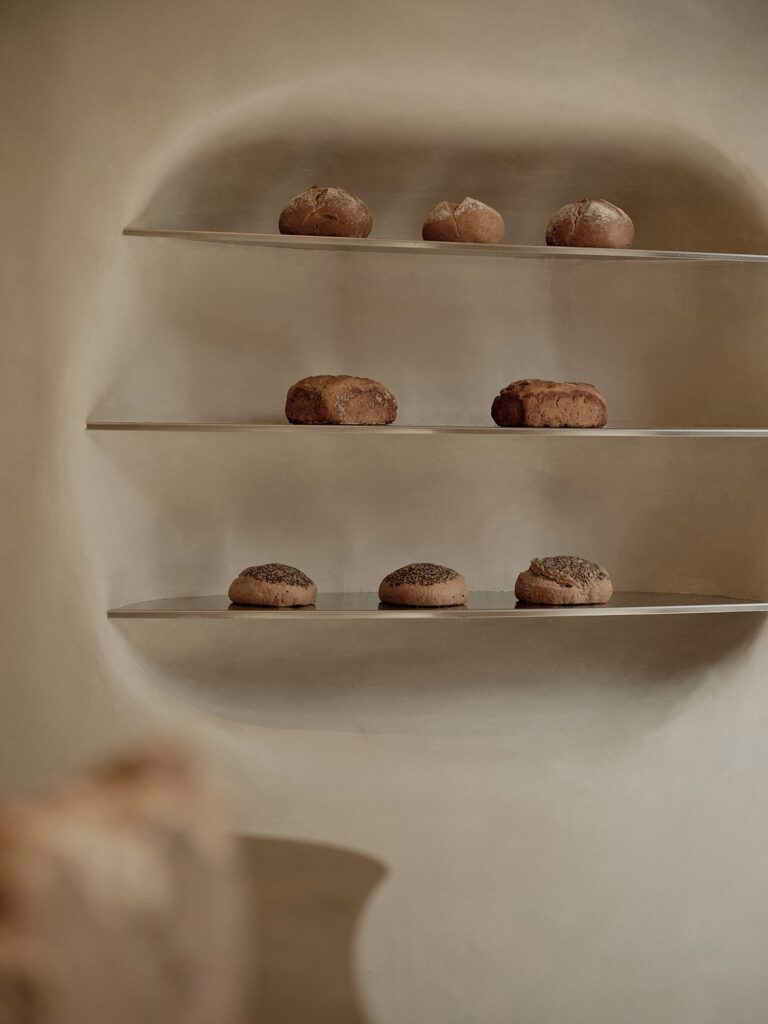
Stainless steel shelves are recessed into niches in the walls, displaying loaves and baked goods within the architecture rather than placing them on conventional retail fixtures. The bread becomes part of the composition, visible against the pale, textured surfaces.
Serra’s treatment of light continues the idea. At the rear, two glazed openings provide a direct view into the kitchen, allowing customers to watch the baking process as it happens. The preparation of food remains visible rather than hidden behind the finished space.
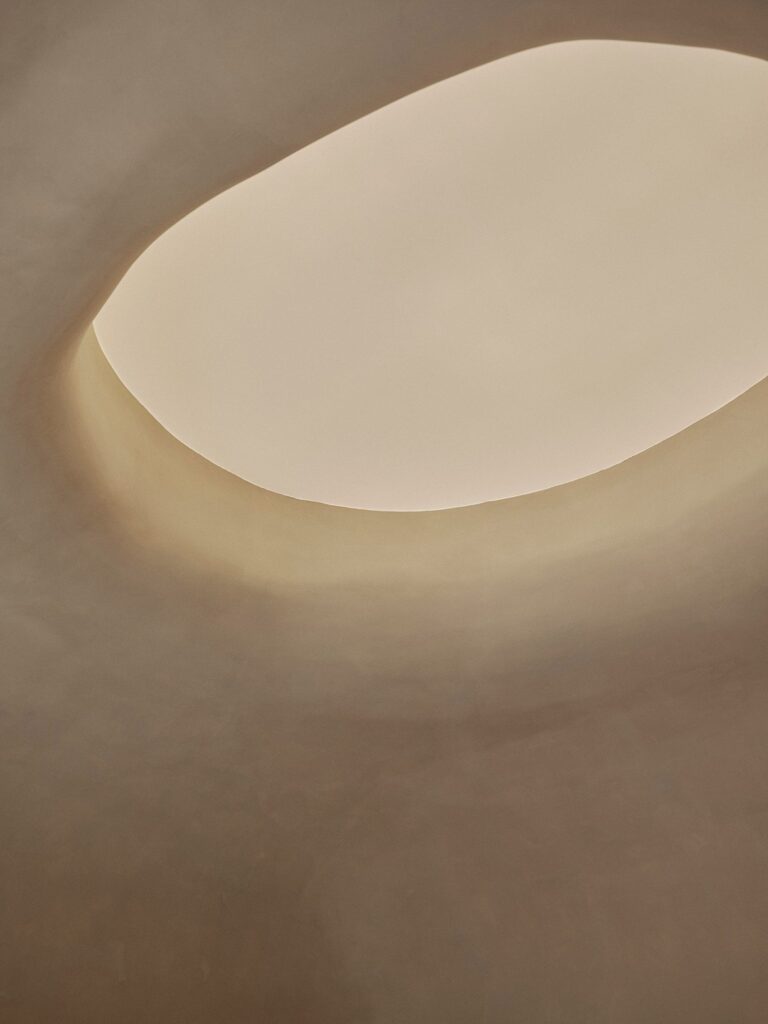
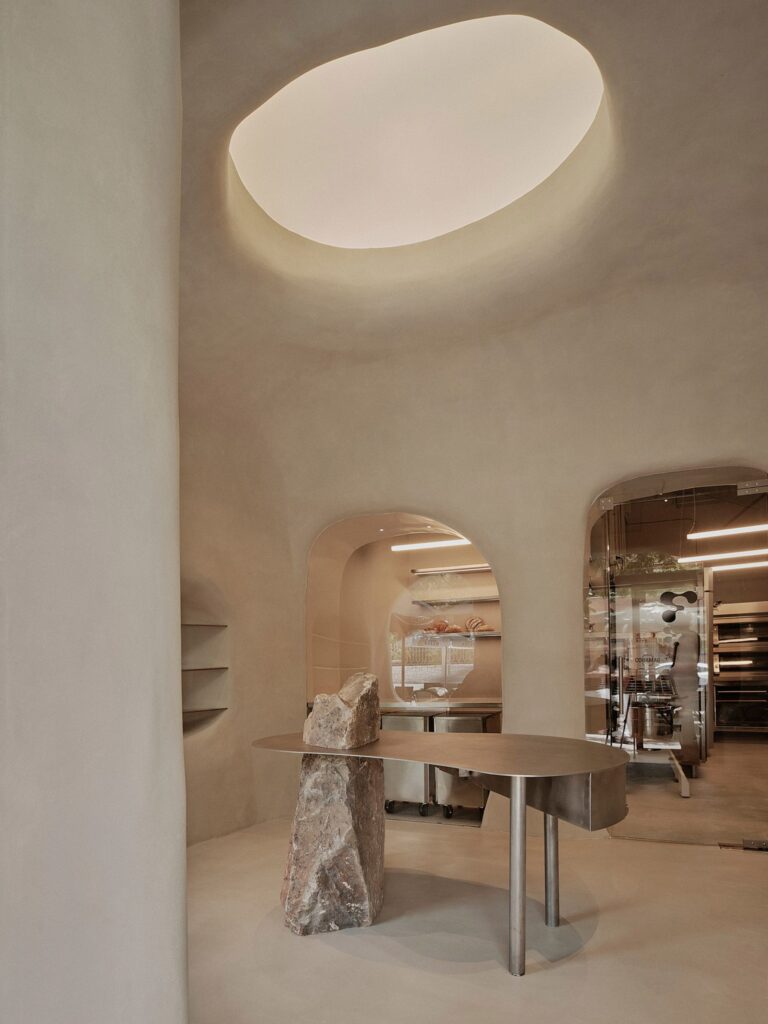
Above, a false lightwell interrupts the ceiling and gives the impression of an opening towards the outside. In an interior designed to resemble a cave, the gesture introduces another layer: the illusion of daylight entering from somewhere beyond the built envelope.
The details are carefully controlled, but the space never becomes overly polished. The lime-washed walls retain their irregularity, the stone remains visibly rough and the steel keeps its reflective surface. Each material is allowed to behave differently.
That tension gives FUBA its particular character. The bakery’s concept is rooted in familiar food traditions, yet the space avoids turning those references into nostalgia. Instead, Serra uses them as raw material for a contemporary interior where bread, stone, steel and artificial light occupy the same small architectural world.
For FUBA, the future is less about abandoning what came before than about changing what can be done with it.
More about FUBA online:
Website
Instagram
Photo: (c) David Zarzoso