
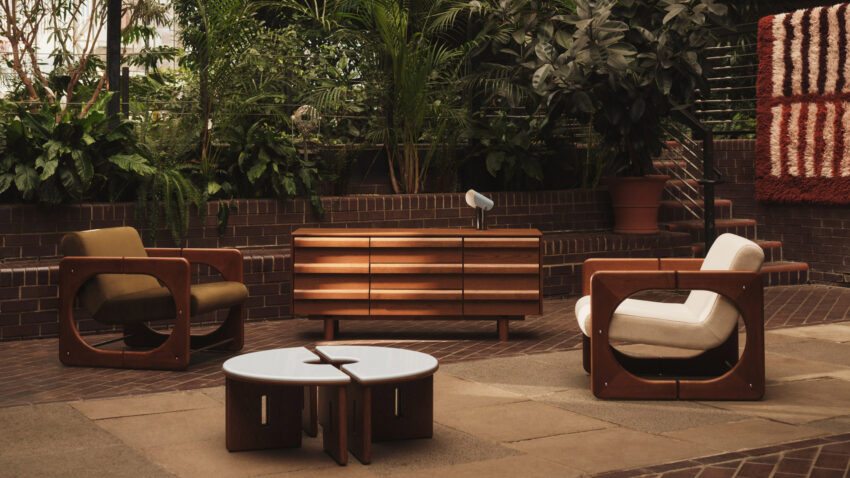
The Barbican Centre has taken one of Britain’s most recognisable brutalist environments beyond its concrete walls. In collaboration with Made.com, the Barbican Shop has launched a 23-piece homeware collection that translates architectural details from the Barbican Estate into furniture, lighting, textiles and accessories.
The collection looks closely at the visual language of the estate: rigid grids, strong geometry, curved forms and the distinctive textures that define its interiors. Rather than reproducing the architecture literally, the designs extract individual details and turn them into objects intended for everyday use.
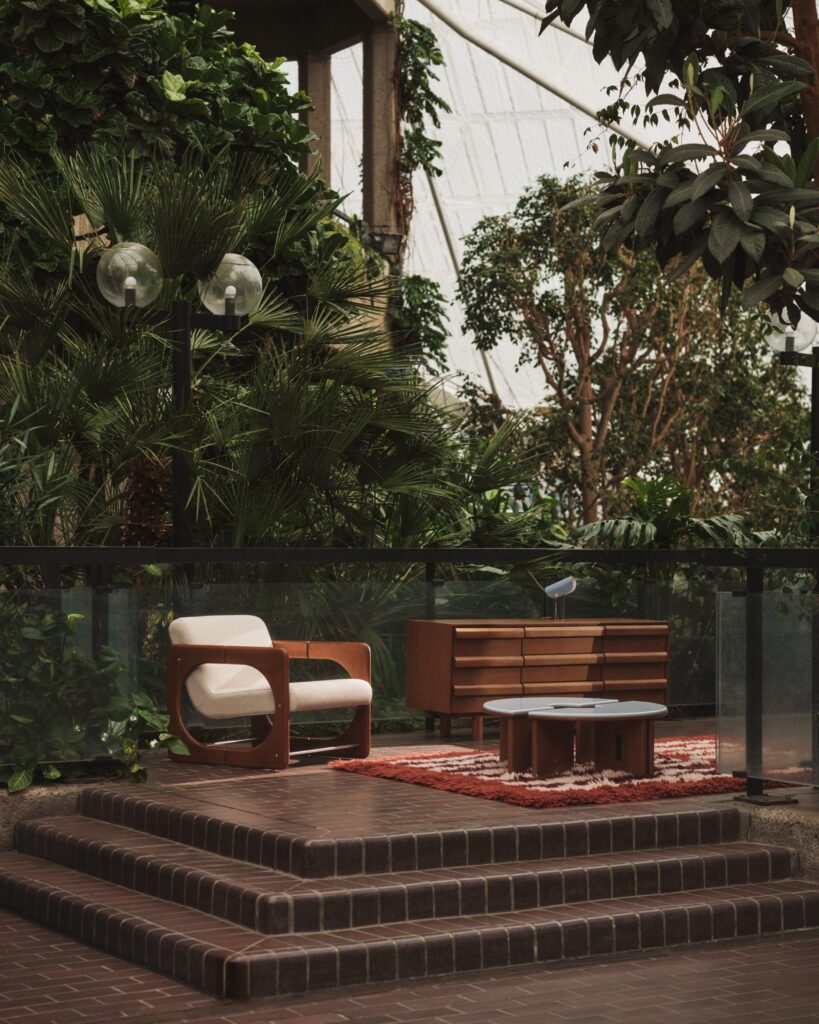
The project began with research into the original apartment layouts of the Barbican Estate, including the work of designer Miriam Howitt, who created five show homes for the complex during the 1960s. That history became an important reference for the collection, particularly in its approach to colour, materials and domestic life.
The range has been conceived as a system rather than a fixed interior. Each piece can stand alone, but the furniture, lighting and textiles are designed to work together within an open living space. Prices begin at £32.
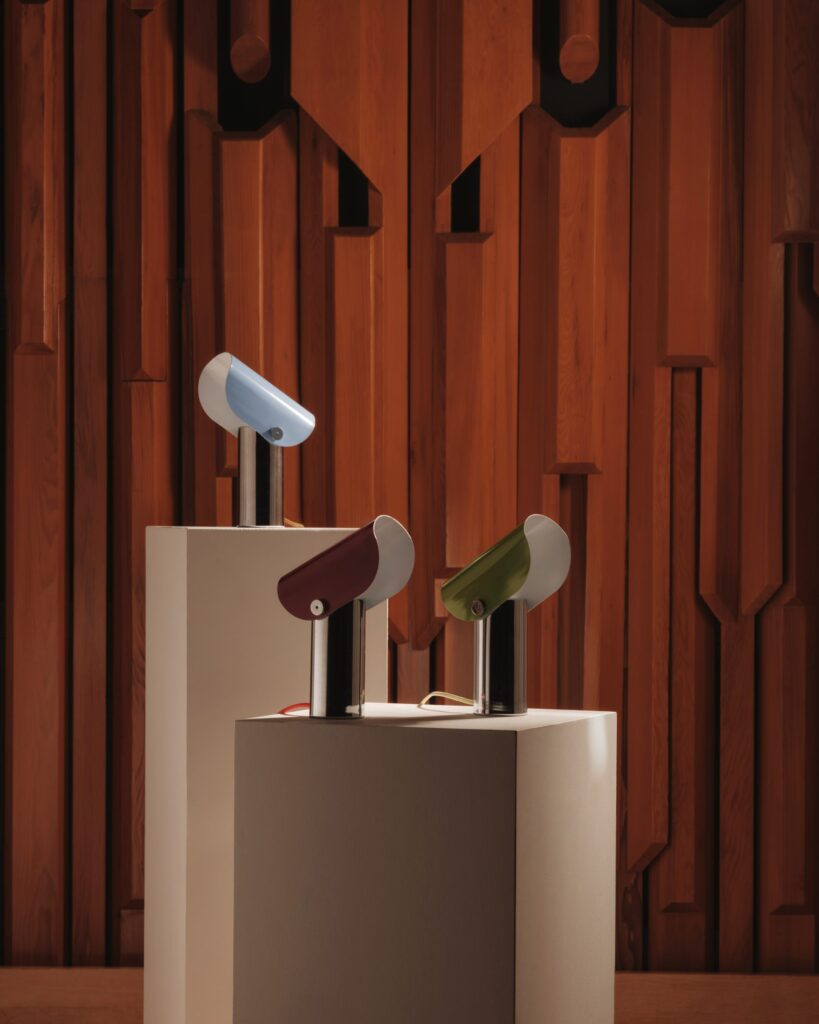
Among the most distinctive pieces are the Curve Table Lamp and Curve Floor Lamp, whose adjustable tubular shades reinterpret the acoustic panels found inside the Barbican’s concert hall. Chrome bases meet shades in burgundy, green and blue, with contrasting fabric cables adding another layer of colour.
Elsewhere, the Coffer ceiling and wall lights take their cues from the estate’s characteristic waffle ceilings, a recurring architectural feature across both its interiors and outdoor spaces.
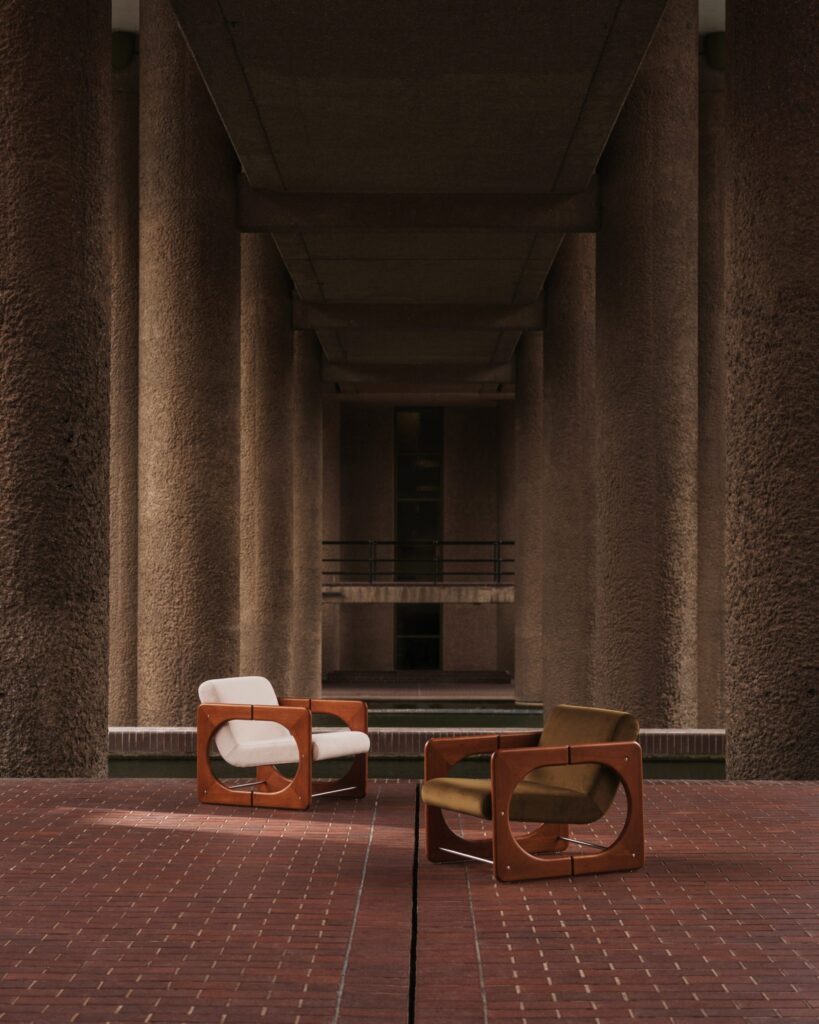
The furniture follows the same process of translating architecture into domestic objects. Dual chairs feature pronounced wooden side panels inspired by the Barbican’s concrete columns, while the modular Plinth coffee table references the sunken seating positioned around the Barbican lake.
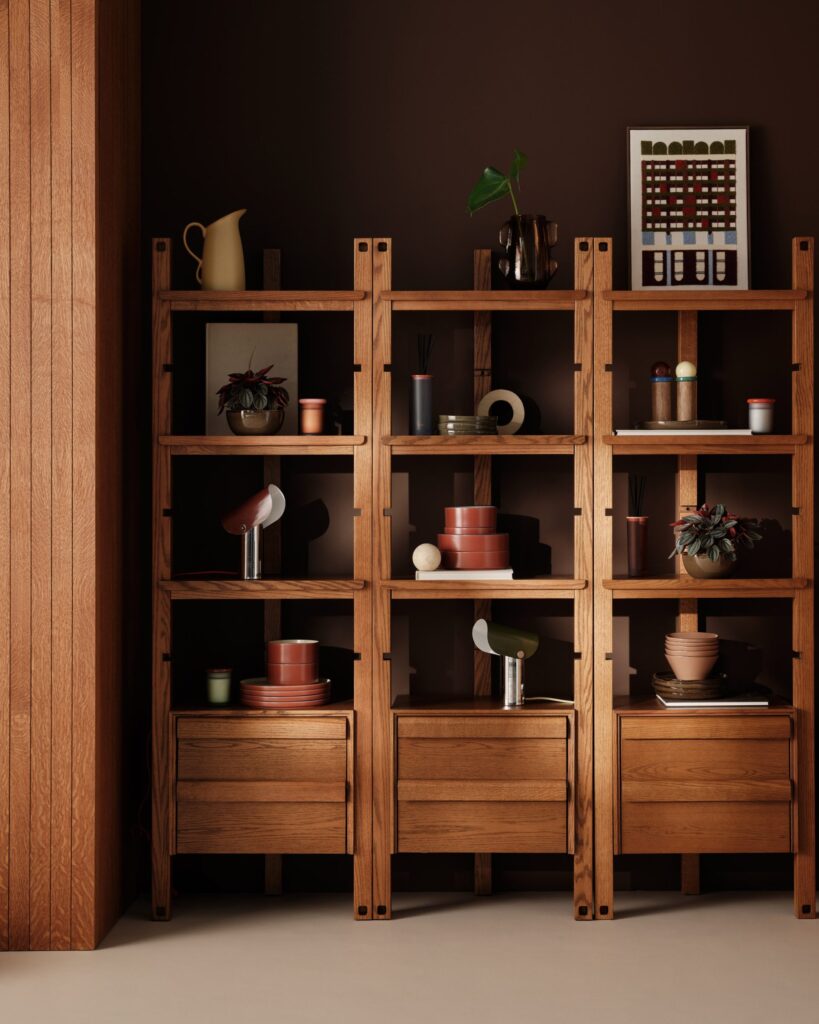
The collection also includes a dining table and chairs, two sofas, shelving and storage pieces, extending the architectural vocabulary across an entire living space.
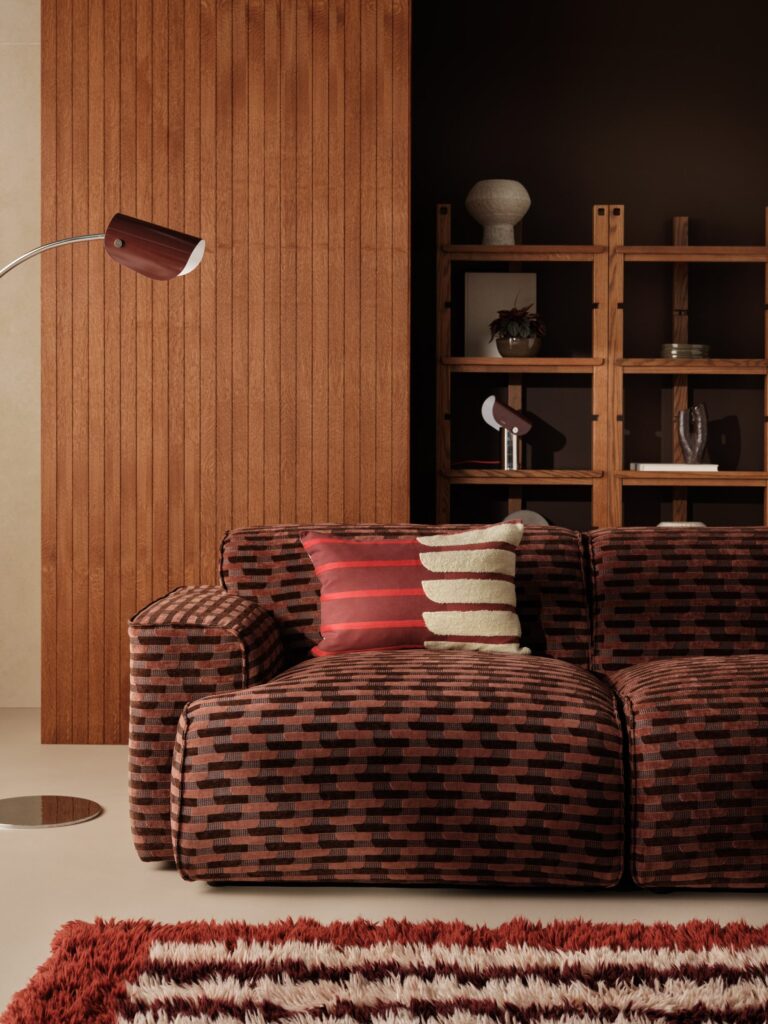
One of the more tactile objects is the Brute Rug, inspired by a 1967 show flat designed by Howitt. Its off-white interiors were paired with boldly patterned carpets, a combination that the new piece revisits through hand-tufted wool and a long shag pile. The result brings a distinctly retro texture into the collection without losing its connection to the original apartment.
The visual language continues across a series of cushions and textile wall pieces depicting elevations and façades from the Barbican Estate. Moss greens, rusty oranges and warm neutrals establish a mid-century palette, while stained ash and chrome introduce sharper material accents.
The Barbican Estate itself was designed by Chamberlin, Powell and Bon in the 1950s and opened in 1982, becoming one of the UK’s defining examples of post-war brutalist architecture. The wider complex incorporates the Barbican Centre, with its theatres, galleries, cinemas, conservatory, library and restaurants, making the estate as much a piece of civic infrastructure as a residential landmark.
For the launch, Made.com will present an installation at the Barbican Centre from 12 September, bringing the new collection together with interiors inspired by homes within the estate.
The result is an unusual form of architectural merchandise: less about putting a famous building on a cushion and more about asking what happens when its proportions, textures and domestic history are allowed to leave the building and enter someone’s home.
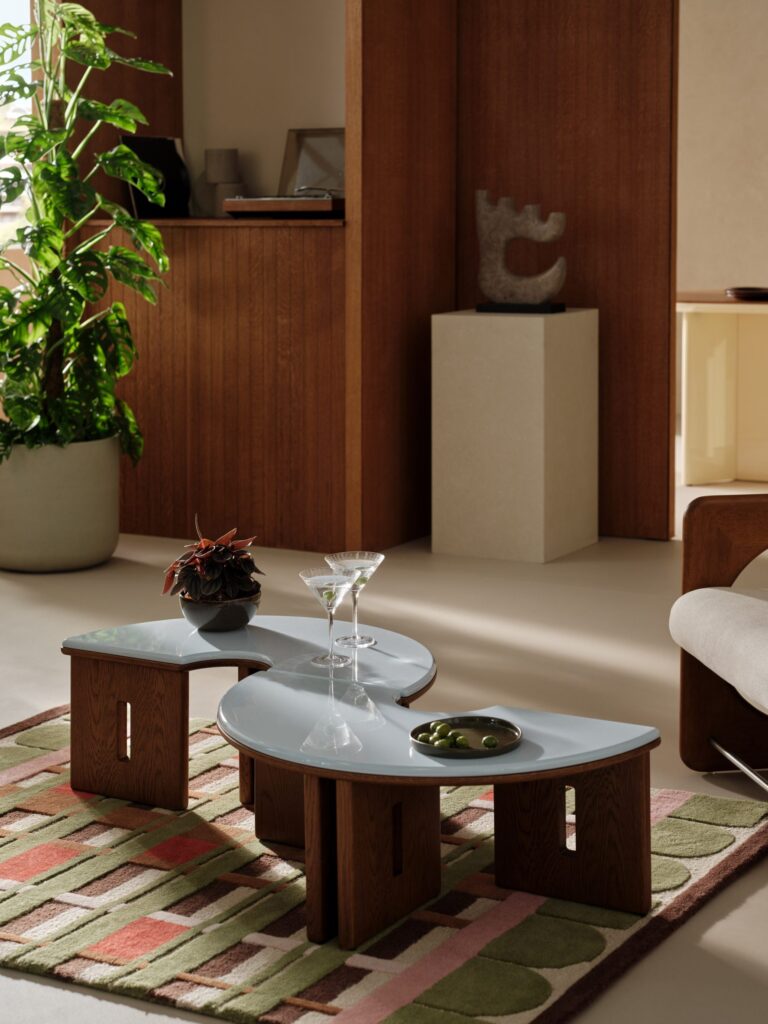
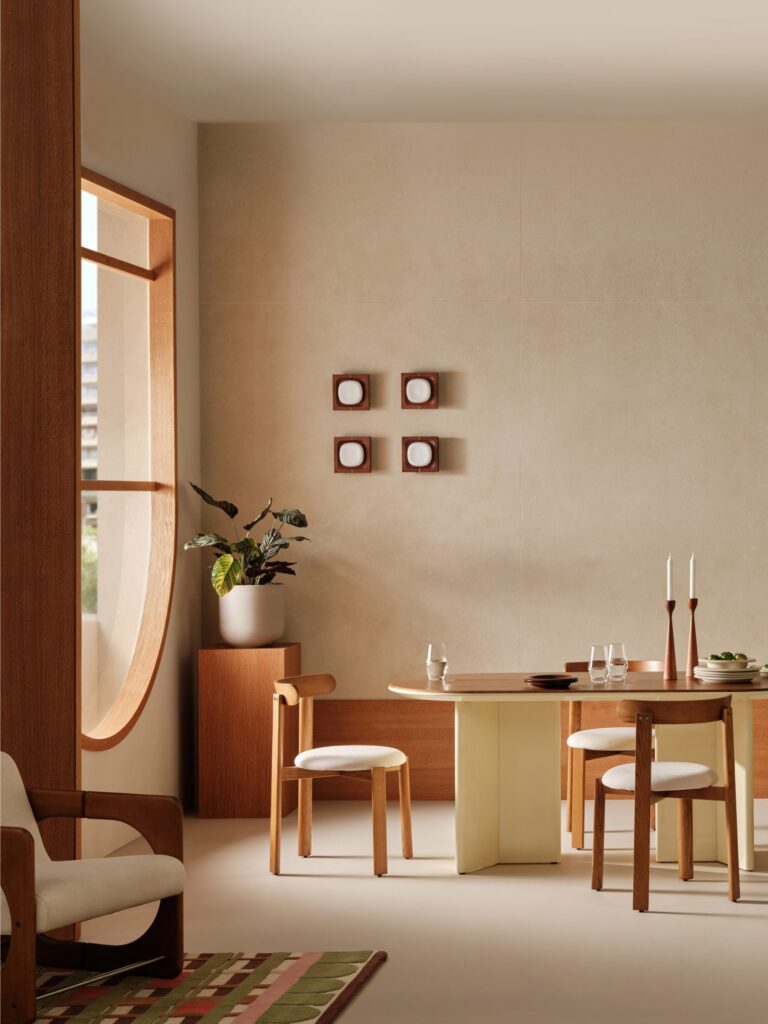
Photo: (c) Felix Speller