
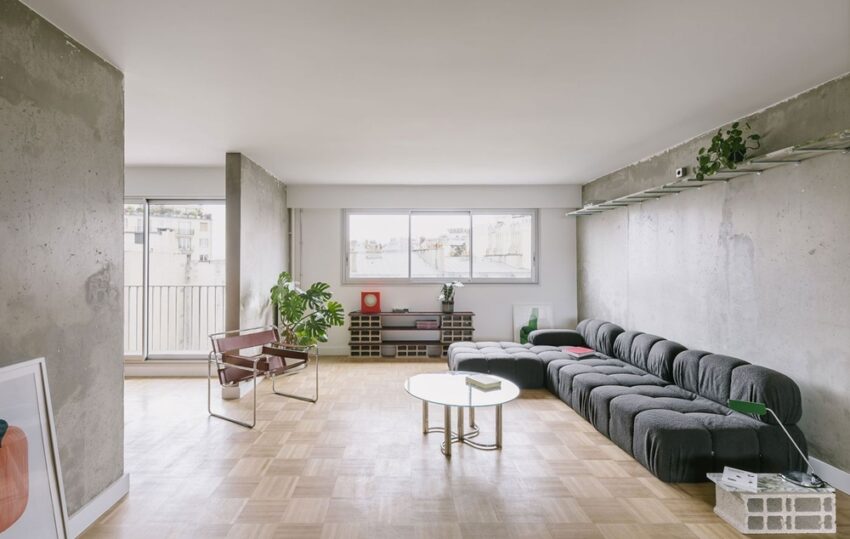
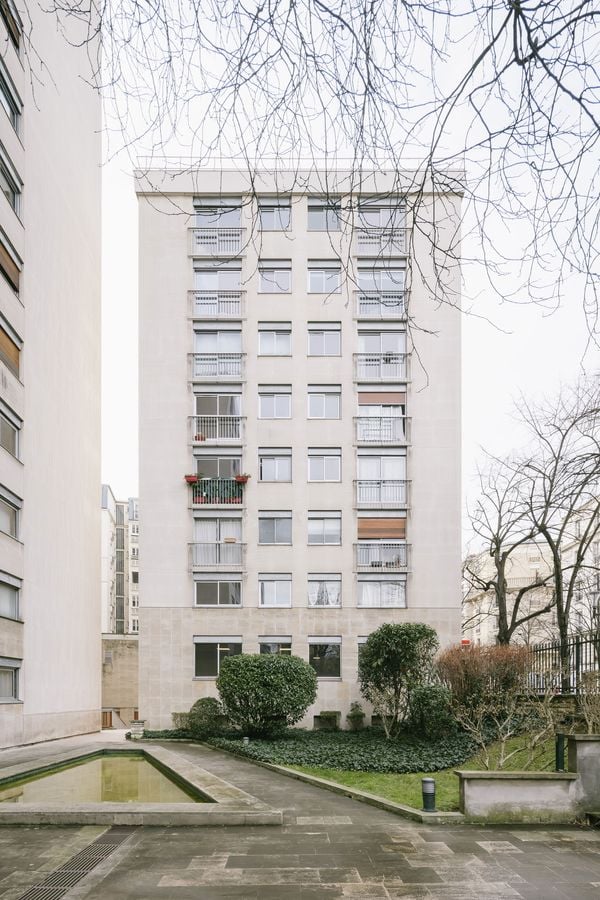
In Paris’s 14th arrondissement of Paris, Atelier Apara has transformed a 93-square-metre apartment from the 1970s–80s into a quietly expressive family home defined by material clarity, spatial precision, and restrained intervention. Led by founders Charlotte Guillochon and Victor Mesguich, the studio approaches renovation less as decoration and more as a process of revealing the existing logic of a space through carefully considered architectural gestures.
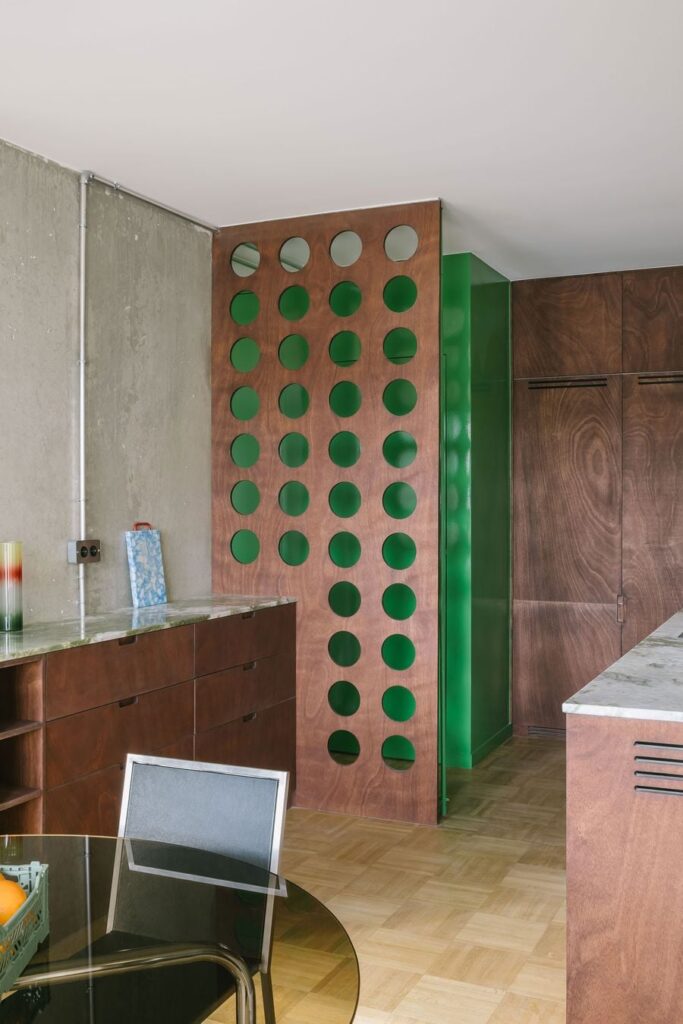
Completed in 2026, the project began with the challenge of converting a three-room apartment into a four-room layout while preserving a sense of openness and fluidity. Rather than fragmenting the plan, Atelier Apara concentrated circulation and technical functions within a single central volume from which the rest of the apartment unfolds. Finished in a striking high-gloss green lacquer, the sculptural core contains a bathroom, lavatory, and compact workspace while simultaneously organizing movement between the private and shared areas of the home. Its reflective surface also helps redistribute natural light into the apartment’s darker zones, giving the intervention both functional and atmospheric significance.
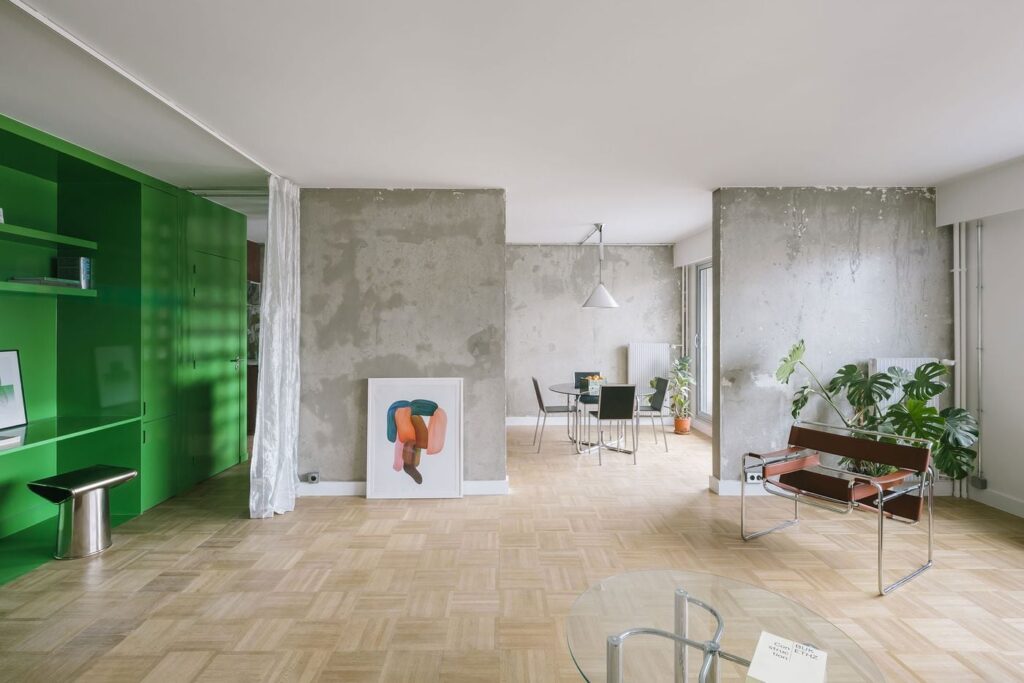
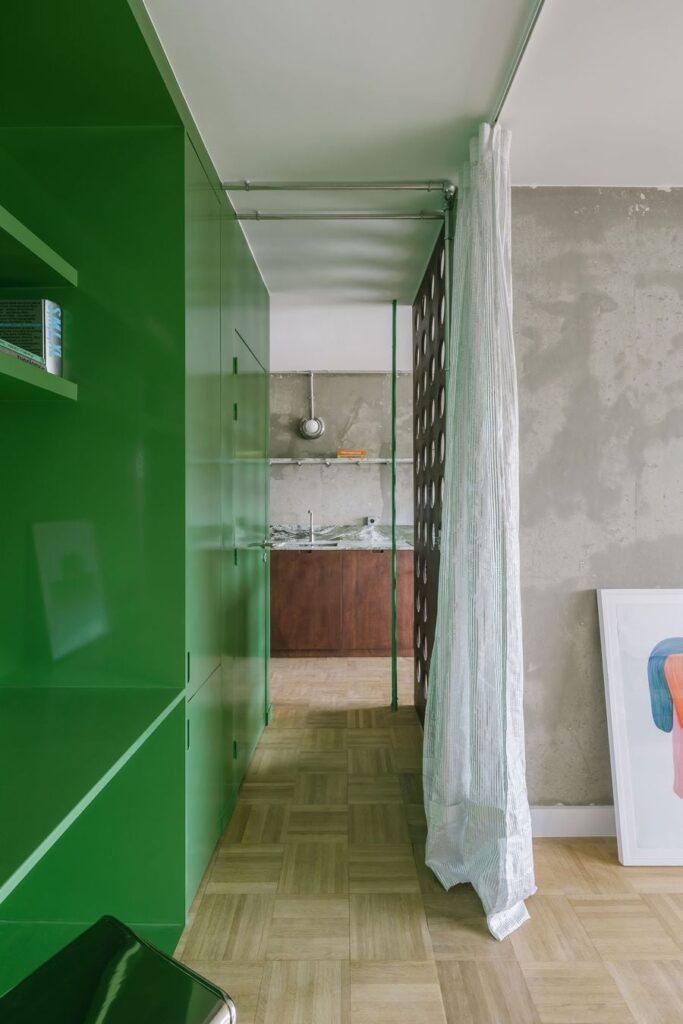
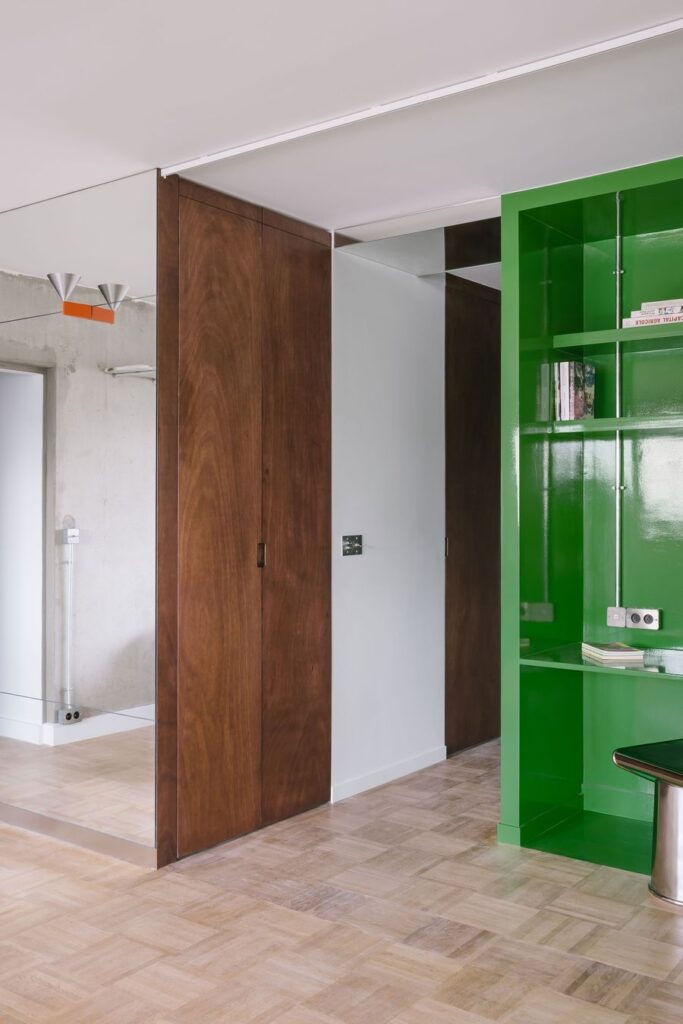
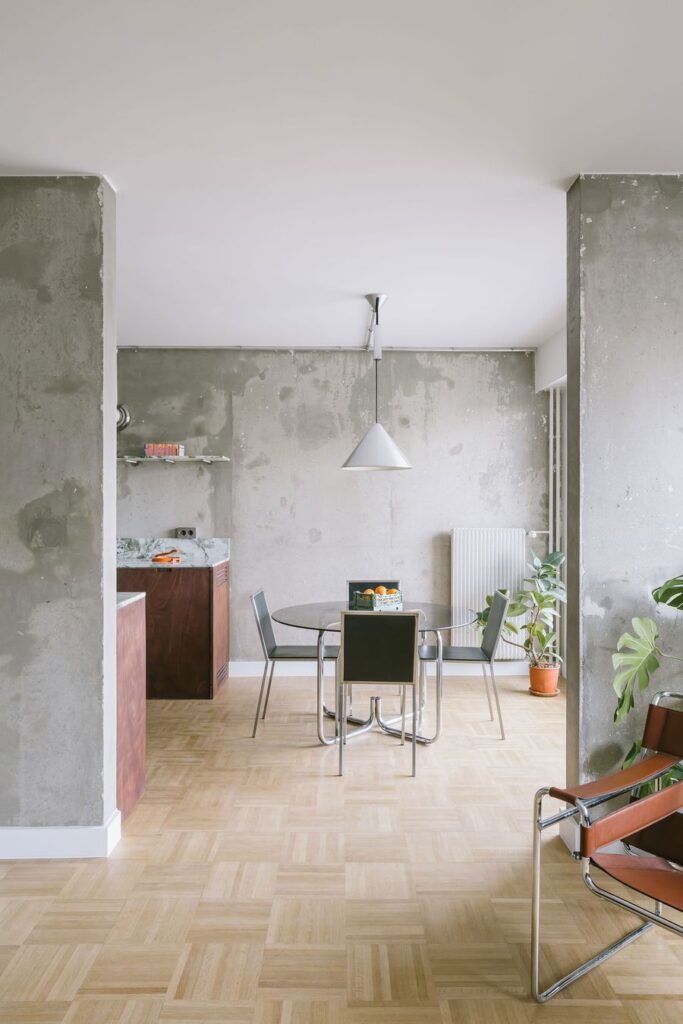
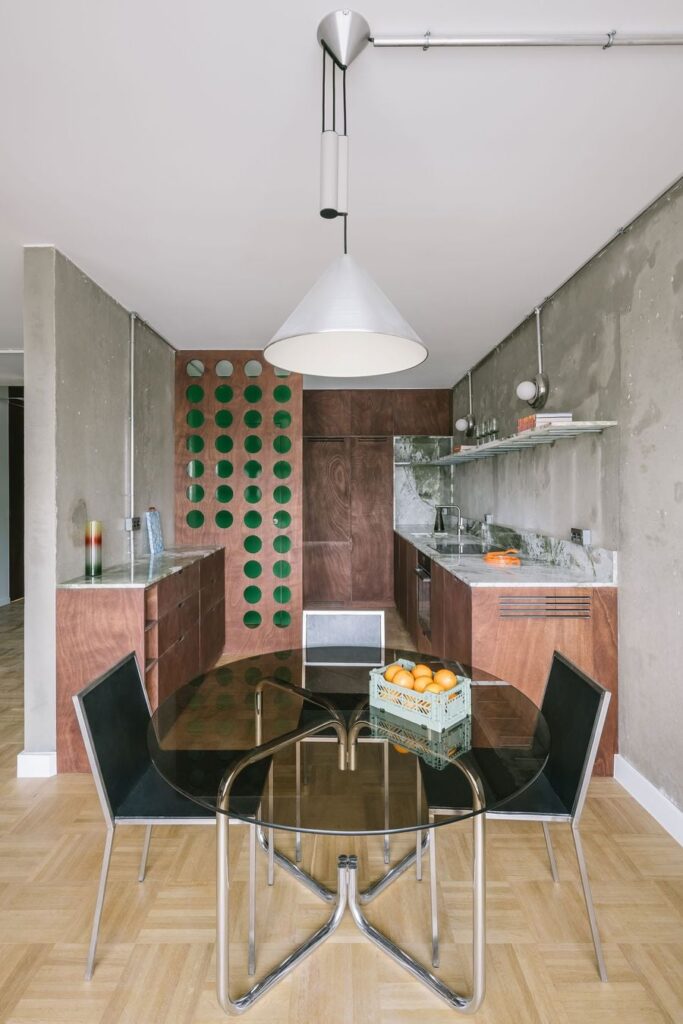
The apartment’s identity is shaped through a carefully balanced contrast between rawness and refinement. Original parquet flooring was restored and extended throughout the interior, creating continuity against exposed concrete walls left intentionally unfinished. The dialogue between tactile warmth and industrial honesty continues through the use of okoumé plywood cabinetry and paneling, whose handcrafted texture softens the otherwise austere architectural language.
In the kitchen, green-veined marble introduces a quieter sense of luxury. Used across countertops, shelving, and backsplashes, the stone is mounted on visible threaded rods and exposed hardware that emphasize construction rather than concealment. Throughout the apartment, practical details, exposed cable conduits, powder-coated steel brackets, visible bolts, and metal switch plates, become part of the visual composition itself.
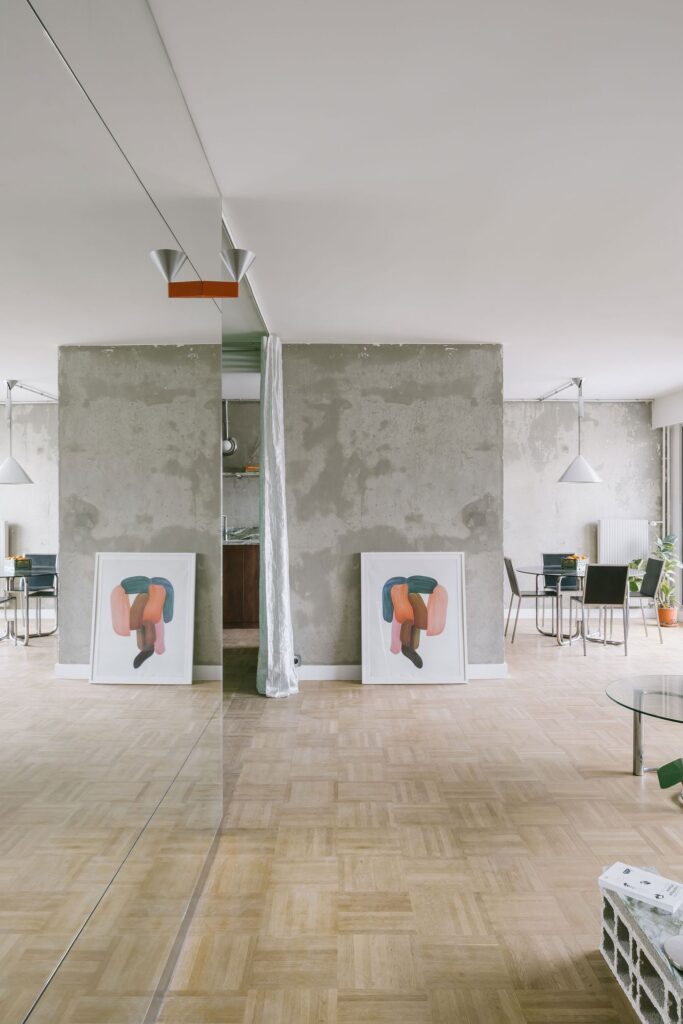
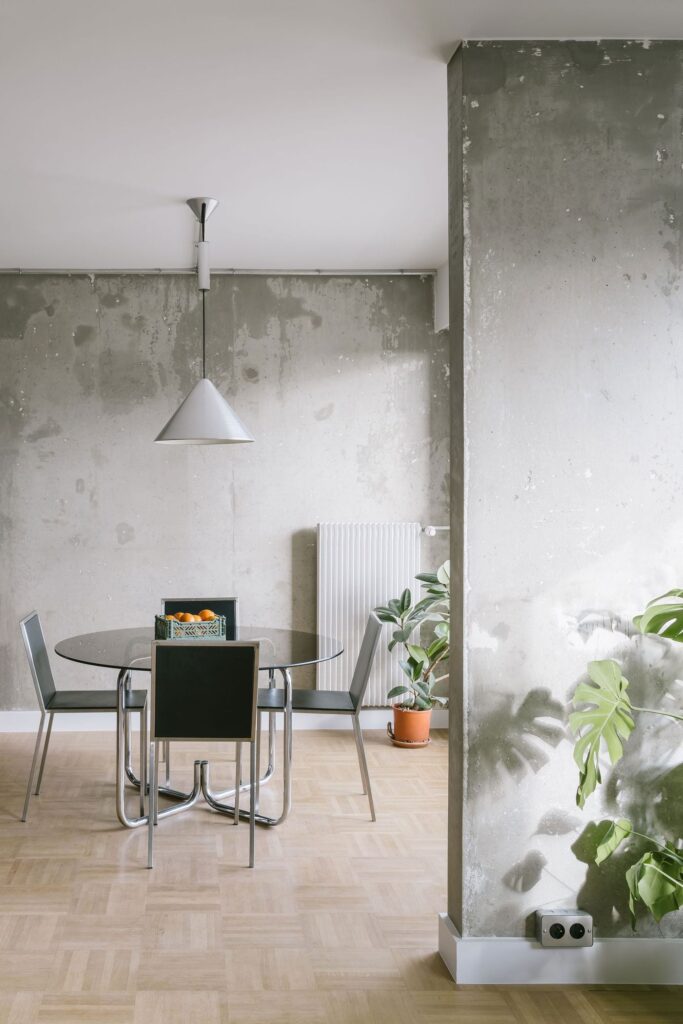
Furniture and lighting reinforce this restrained industrial sensibility. Chrome-framed seating, glass surfaces, conical metal pendants, and Bauhaus-inspired pieces, including a Wassily Chair by Marcel Breuer, introduce a functional clarity that aligns naturally with the architecture.
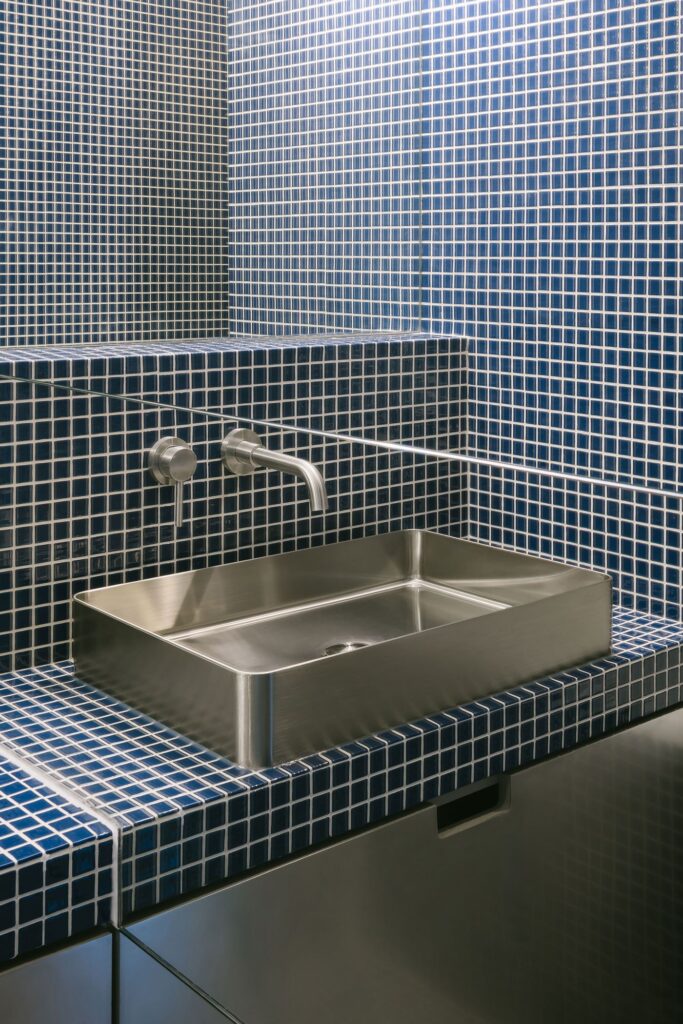
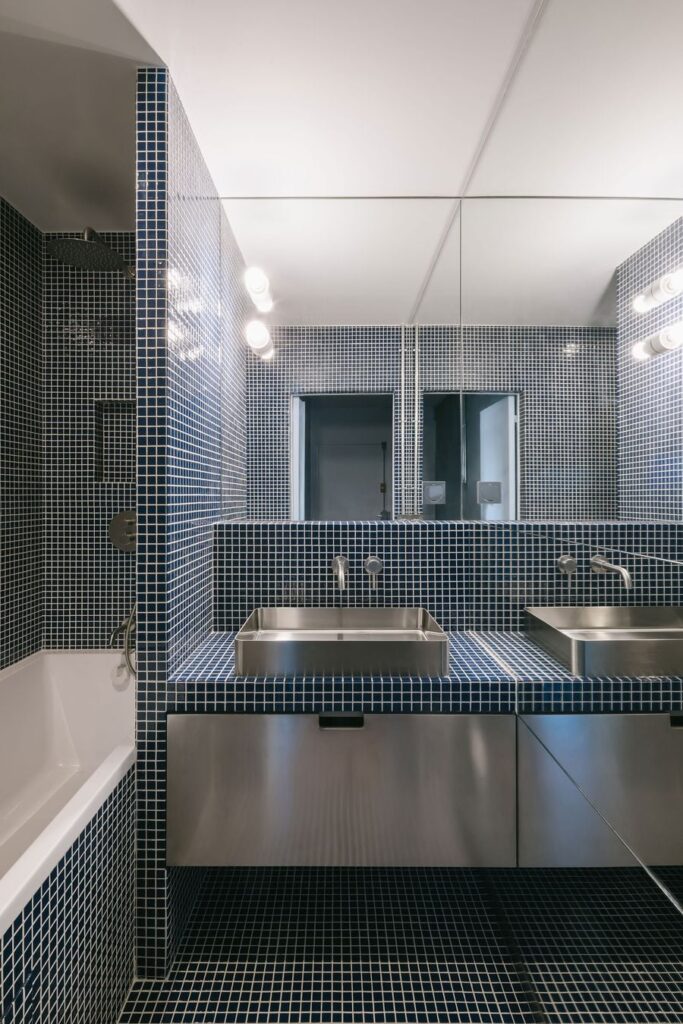
The apartment’s only dramatic chromatic shift appears in the main bathroom, where vibrant blue mosaic tiles contrast against stainless-steel cabinetry and fixtures. Despite the stronger visual intensity, the space remains consistent with the project’s overall balance between utilitarian precision and tactile warmth.
Across the renovation, Atelier Apara demonstrates how limitation and restraint can become generative design tools rather than constraints. Through carefully controlled contrasts between industrial and intimate, rough and refined, the studio creates an apartment that feels both highly functional and deeply atmospheric without relying on unnecessary excess.
More about Atelier Apara on:
Website
Instagram
Photo: (c) Philippe Billard