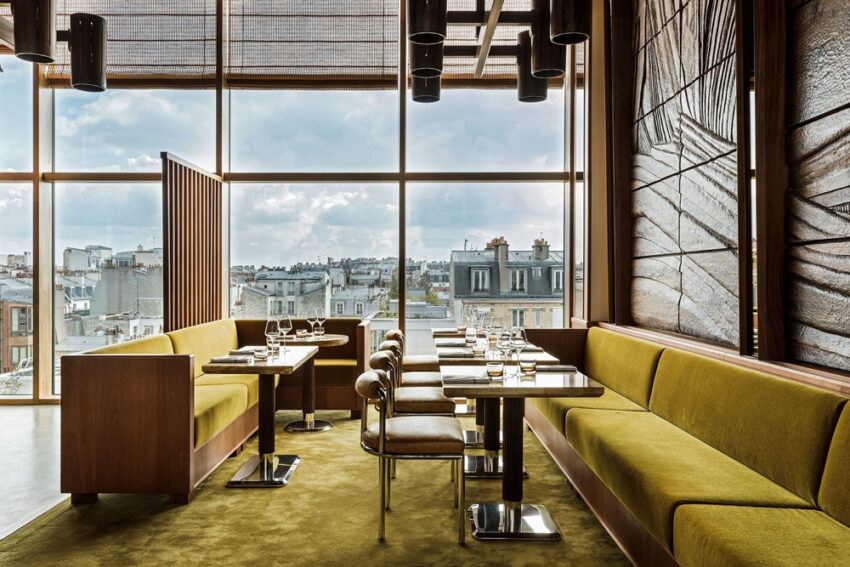
A pair of former 1960s buildings in Paris’s Les Batignolles district have been transformed into La Fondation, a layered mixed-use destination where hospitality, wellness, culture, and work intersect within a carefully preserved Brutalist framework. Rather than following a conventional adaptive reuse approach, the project reimagines a former office building and multi-storey car park as a porous civic environment deeply connected to the social and cultural rhythm of the neighborhood.
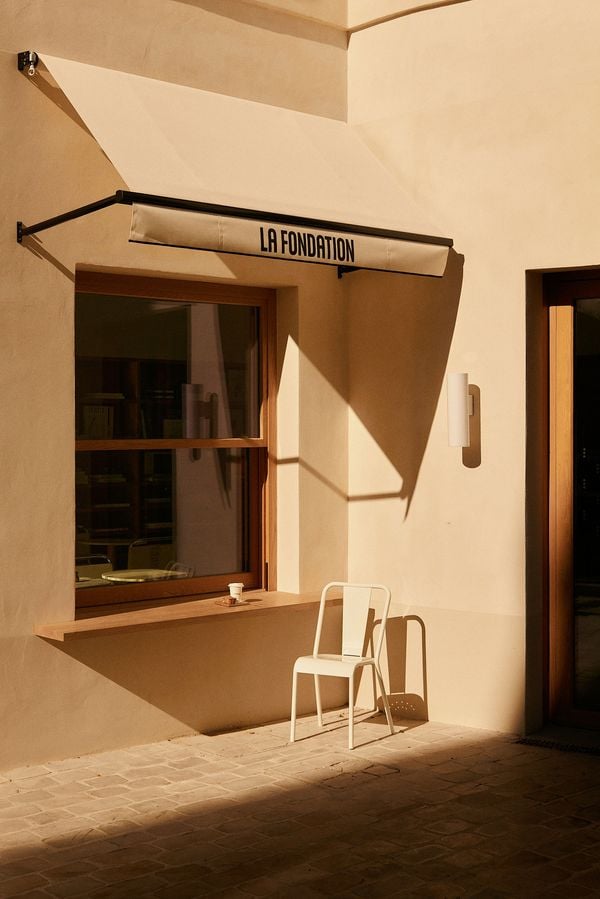
Developed by Groupe Galia, the project brings together several creative collaborators, including Paris-based architecture studio PCA-STREAM, New York interior designers Roman and Williams, and Parisian designer Marika Dru. Together, they reshape the site into a five-star hotel, sports and wellness club, restaurants, cultural venue, and workspace complex while preserving the raw spatial character of the original structures.
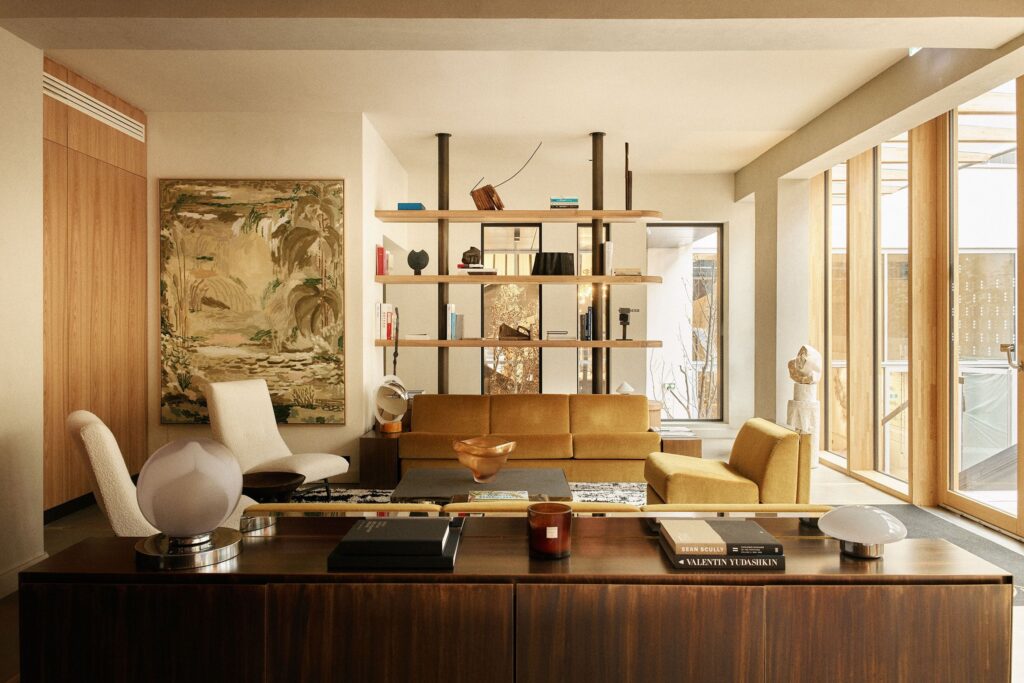
One of the project’s defining architectural gestures is the preservation of the former parking garage’s concrete spiral ramp. Once designed for vehicles, the structure now functions as a monumental staircase connecting the different programs throughout the complex. Acting simultaneously as circulation route, exhibition space, and social gathering point, the ramp becomes the symbolic and physical center of the project’s new identity.
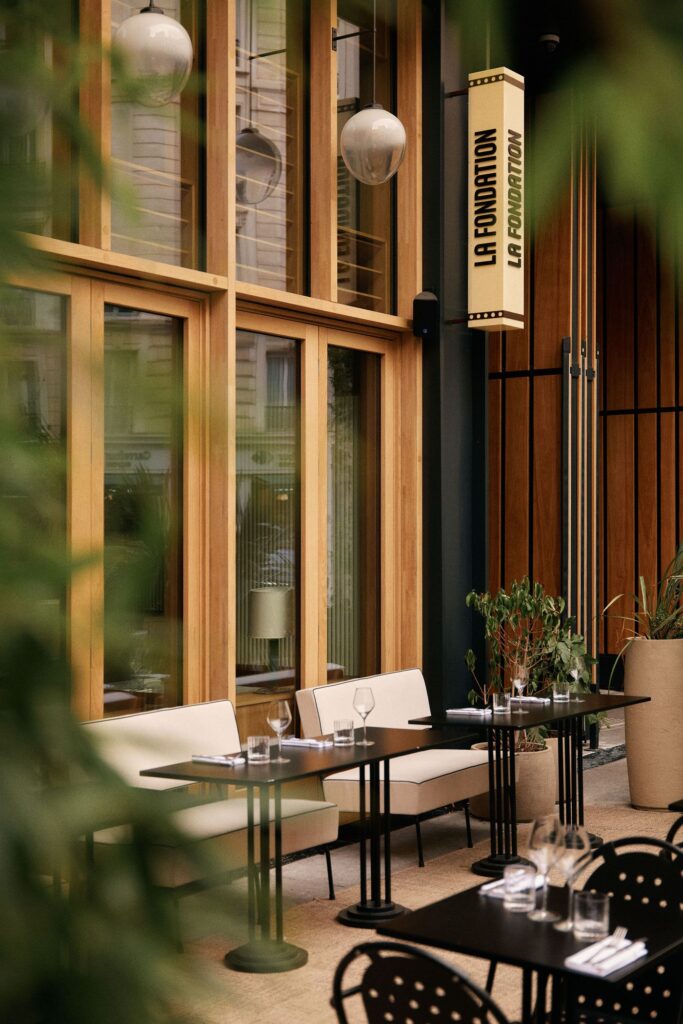
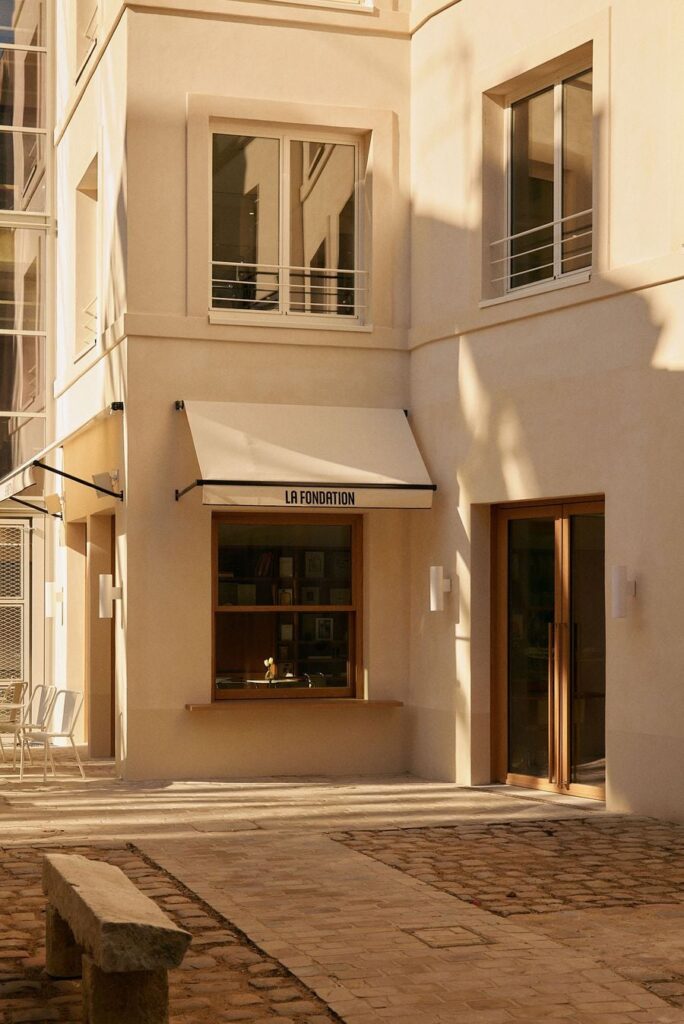
Externally, the architecture balances the heaviness of its Brutalist origins with warmer contemporary interventions. Dark metal framing, large expanses of glass, timber detailing, planted terraces, patios, and green walls soften the building’s industrial character while introducing greater openness and natural light into the interiors. The transition between public and private space feels gradual rather than abrupt, reinforcing the project’s emphasis on permeability and urban interaction.
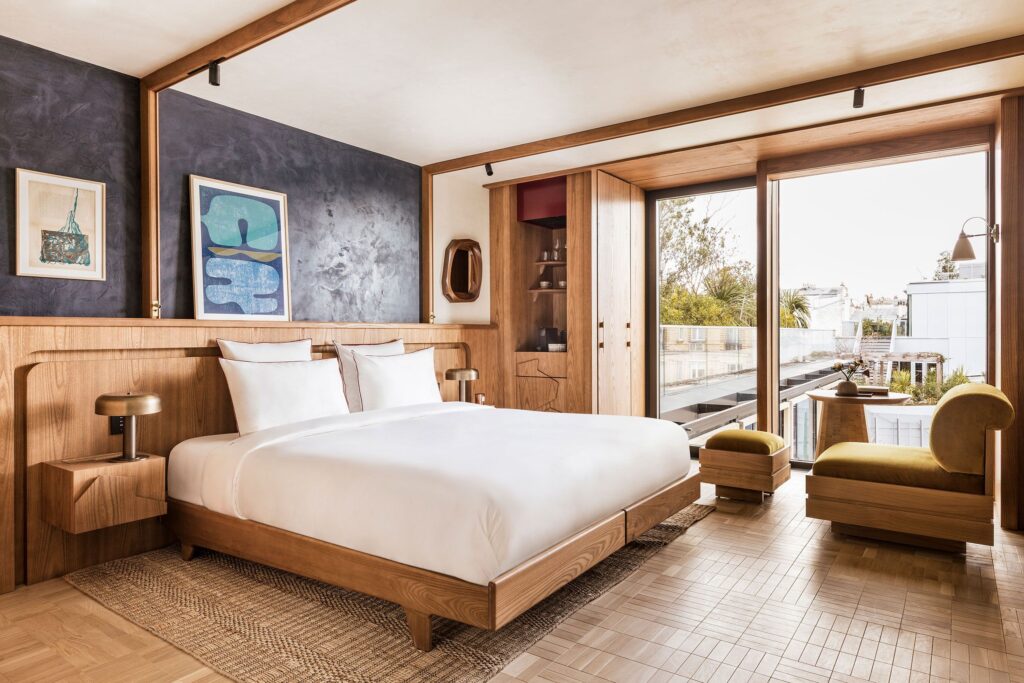
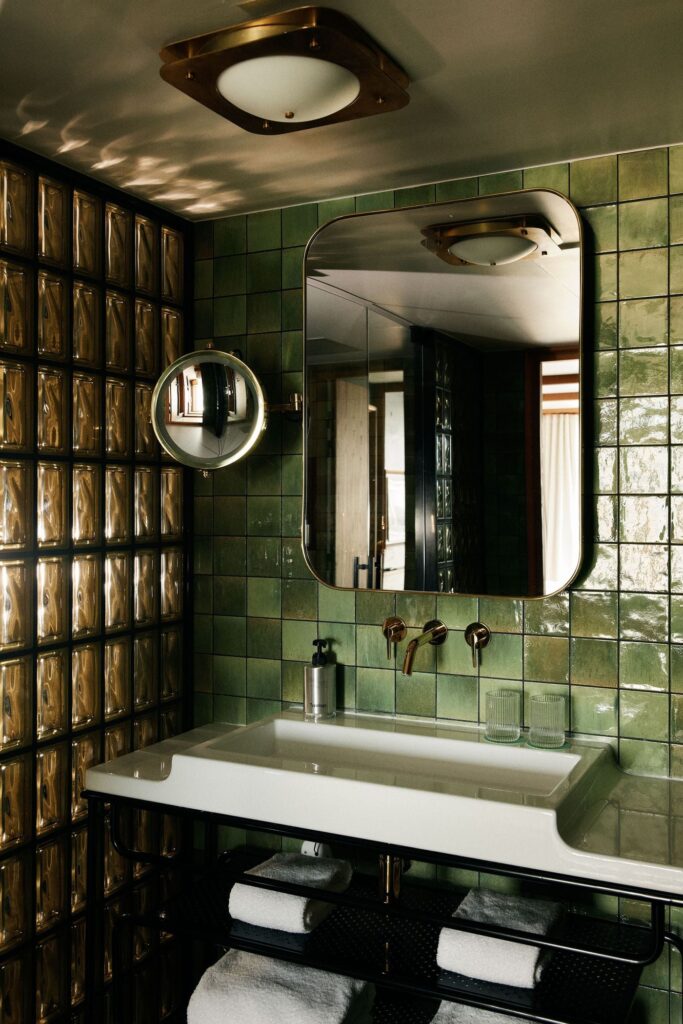
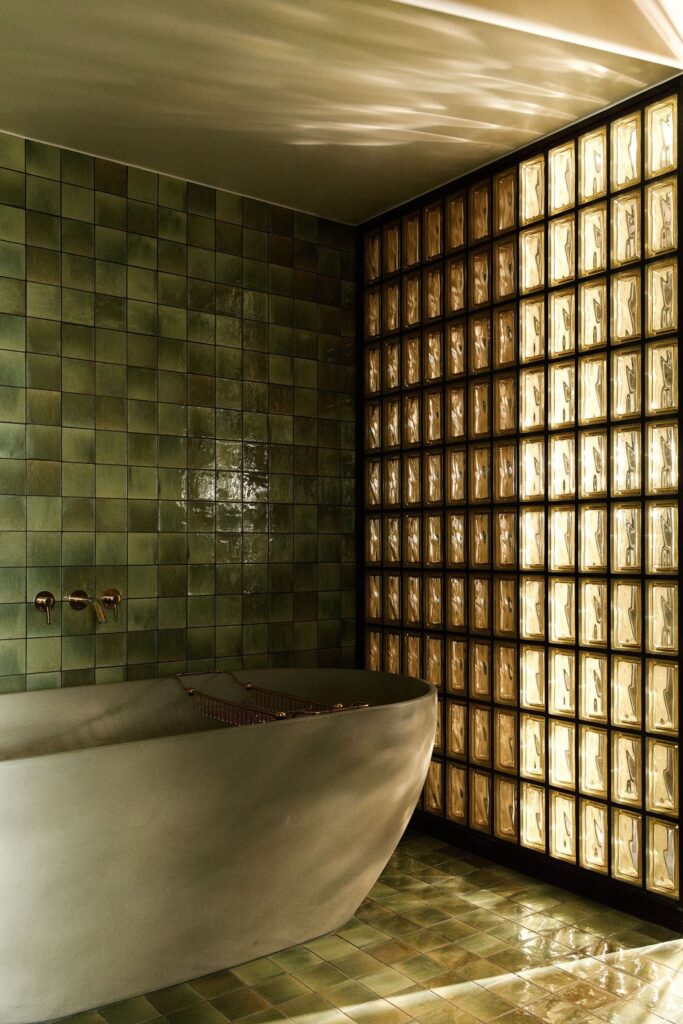
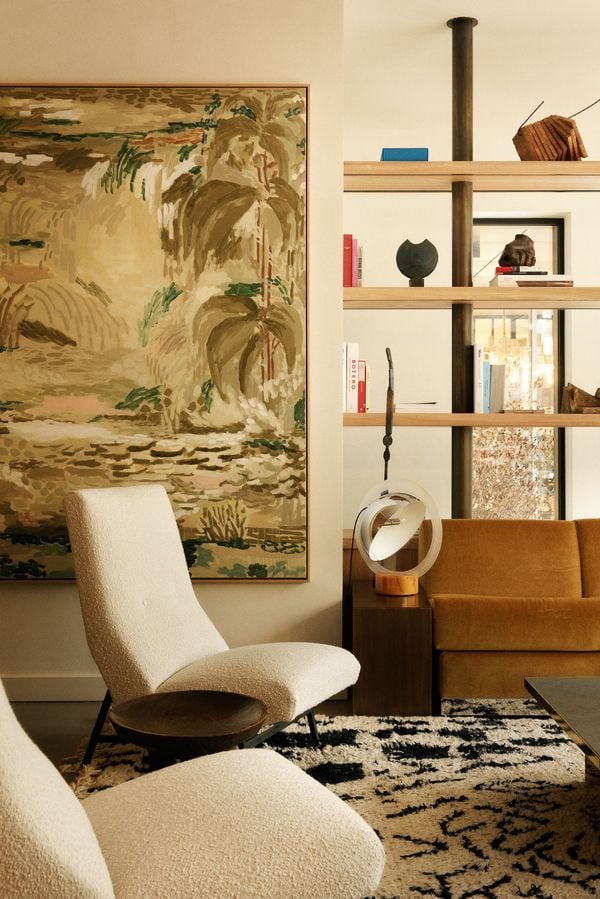
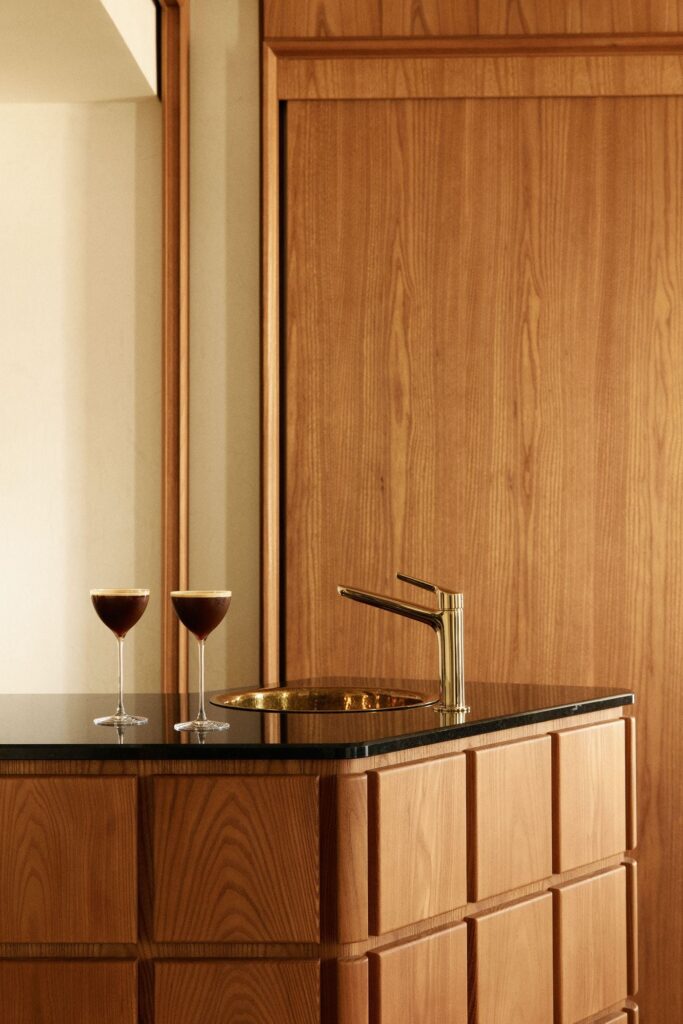
Inside the hotel, Roman and Williams reinterpret mid-century modernism through tactile materials and artisanal craftsmanship. Rich timber paneling, stone, velvet, leather, and custom-made furnishings are layered with vintage pieces from the 1970s and 1980s alongside curated artworks selected by Amélie Maison d’Art. Across the hotel’s rooms and suites, hand-finished indigo walls, sculpted wood joinery, and carefully assembled decorative objects create interiors that feel intimate, residential, and quietly cinematic rather than overtly luxurious.
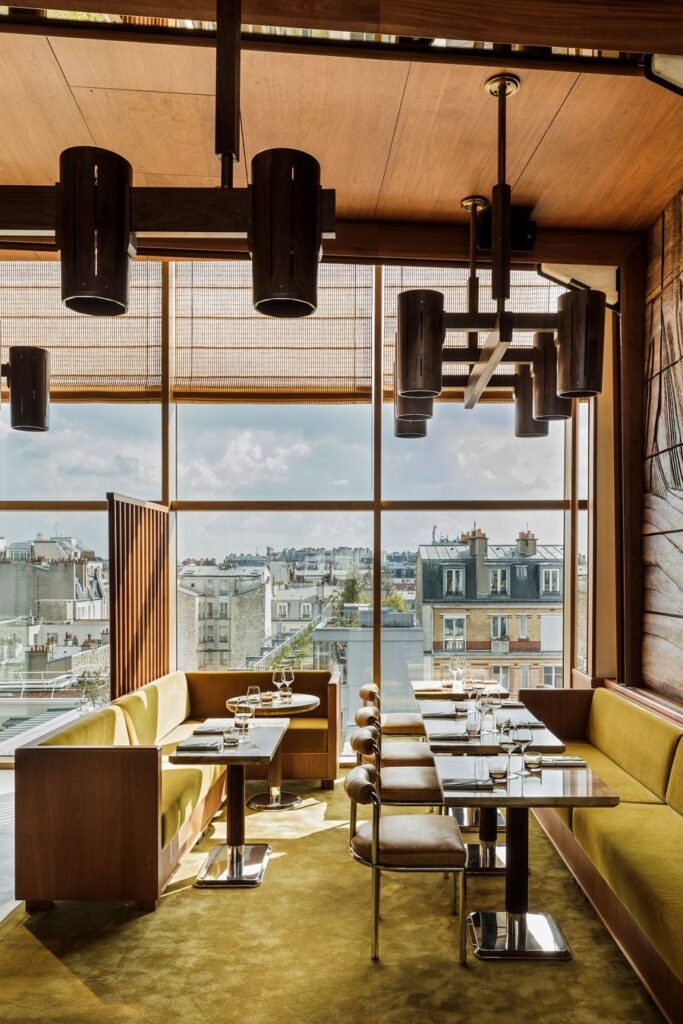
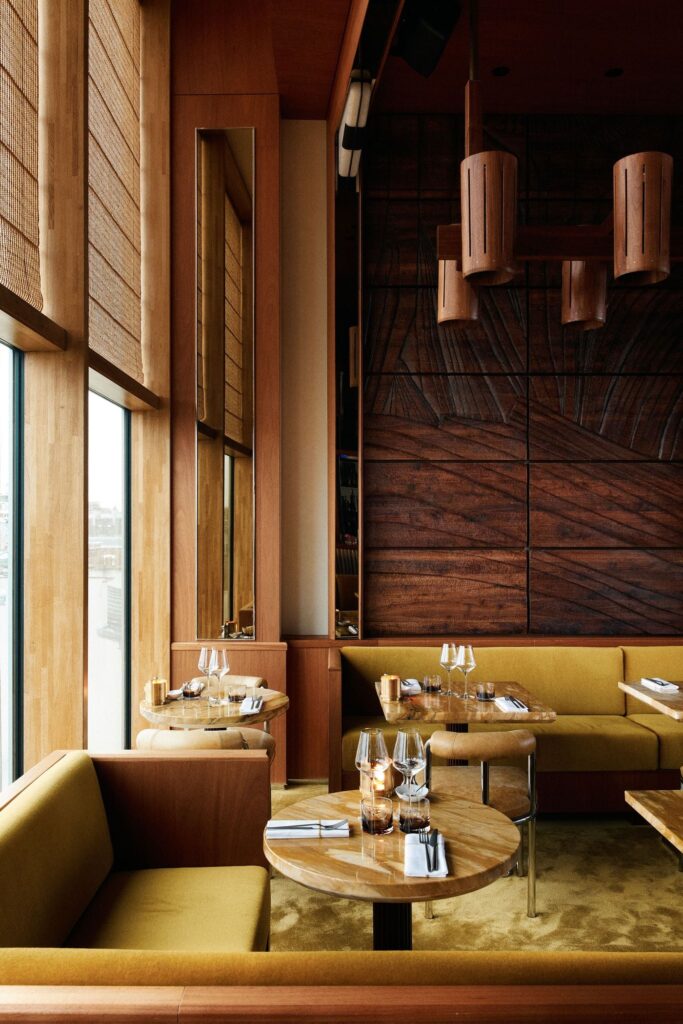
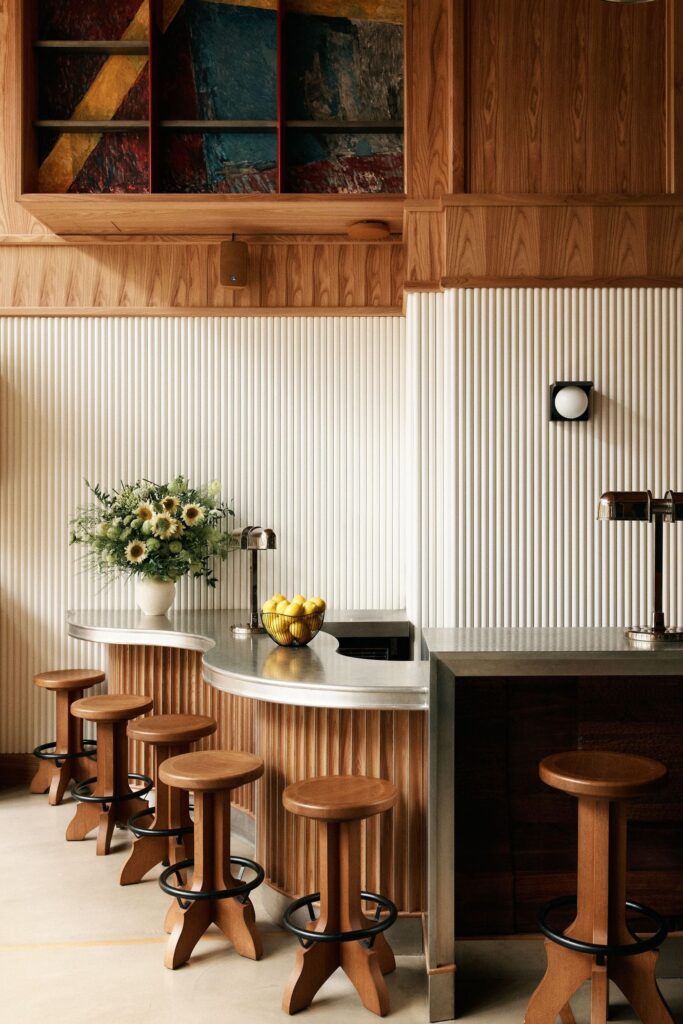
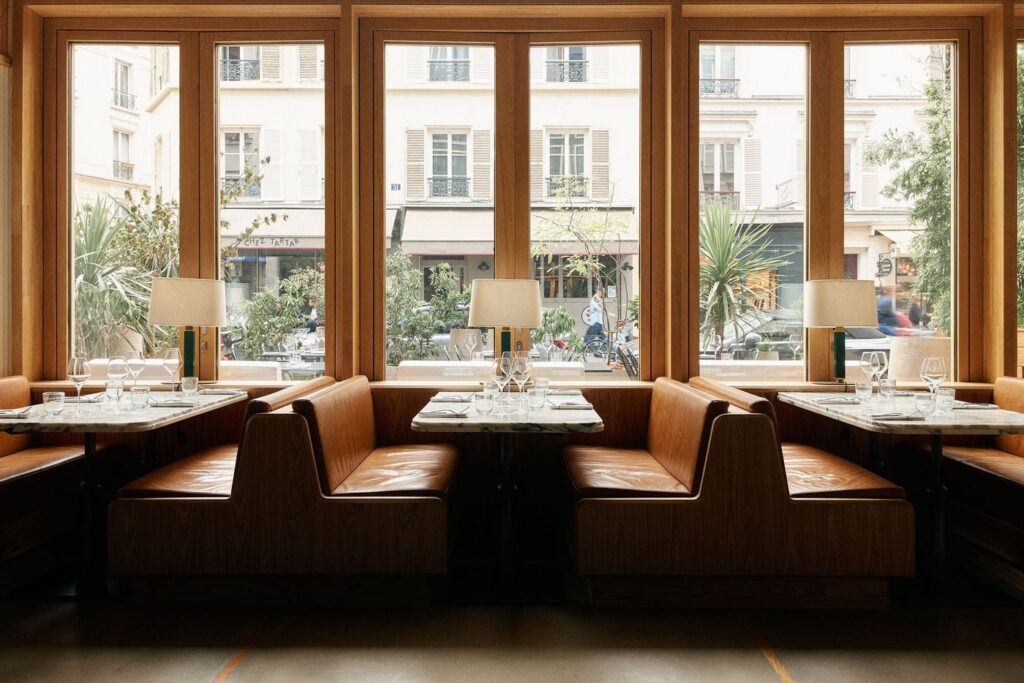
Food and social life also play a central role within the complex. The ground-floor restaurant La Base reinterprets the traditional Parisian brasserie through a contemporary lens, while the rooftop restaurant Les Ailes combines panoramic city views with a more refined dining atmosphere shaped around chef Thomas Rossi’s seasonal approach to French cuisine. Above, a rooftop bar overlooks the Paris skyline, reinforcing the project’s ambition to function as a destination woven into the city’s social rhythm.
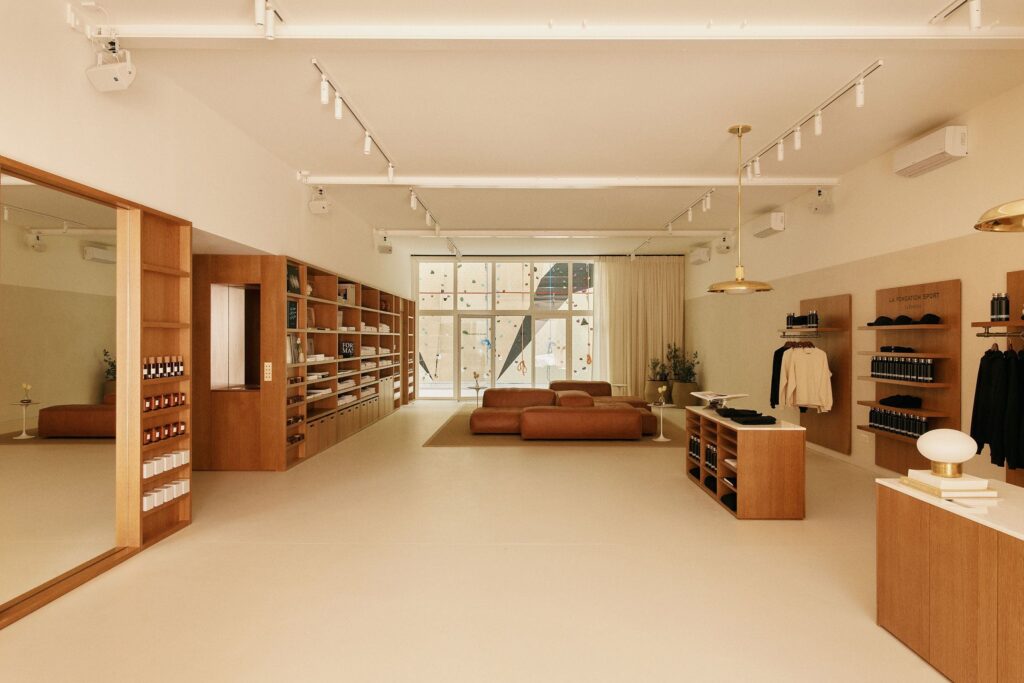
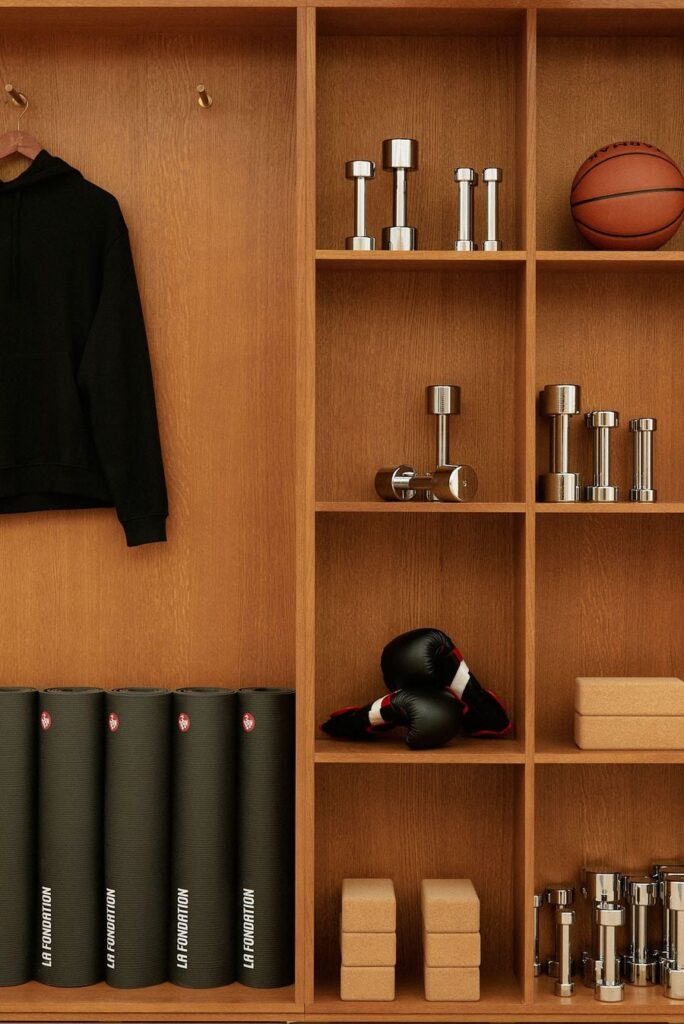
The wellness and sports club, designed by Marika Dru, extends across multiple floors with a restrained architectural language focused on calmness and material clarity. Fitness studios illuminated by skylights overlook a climbing wall that rises dramatically through the building, while subterranean spa spaces — including a pool, hammam, sauna, and treatment rooms, shift toward a more intimate and cocoon-like atmosphere.
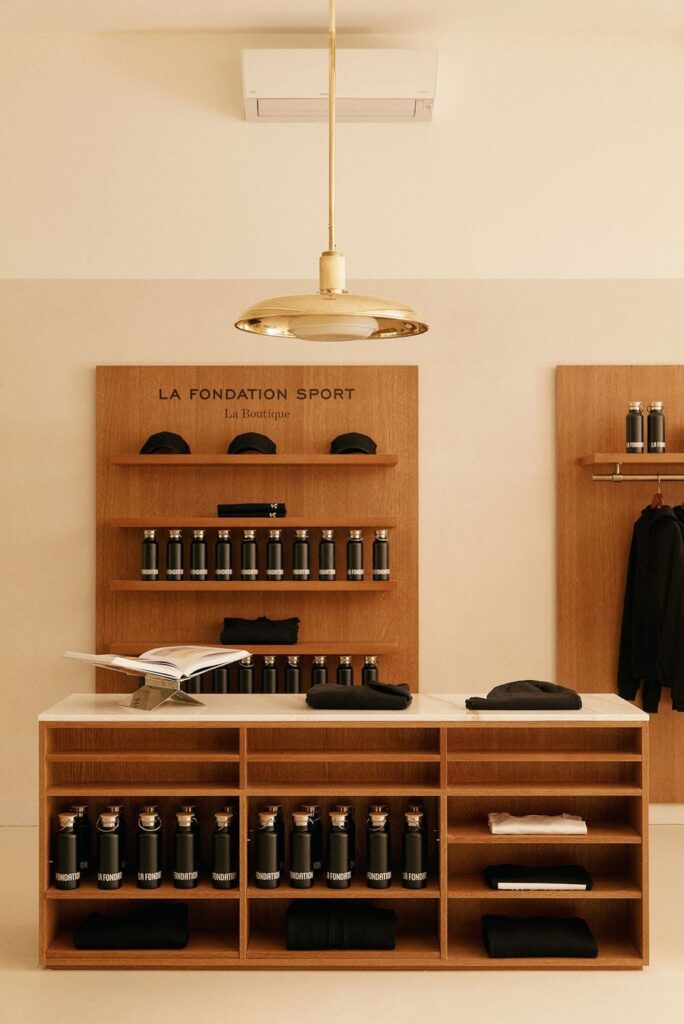
Completing the project’s hybrid program are flexible workspaces, meeting rooms, and an auditorium intended to host exhibitions, performances, talks, concerts, and public events. In this sense, La Fondation operates less as a singular hotel and more as a continuously active urban ecosystem shaped by hospitality, culture, wellness, and community interaction.
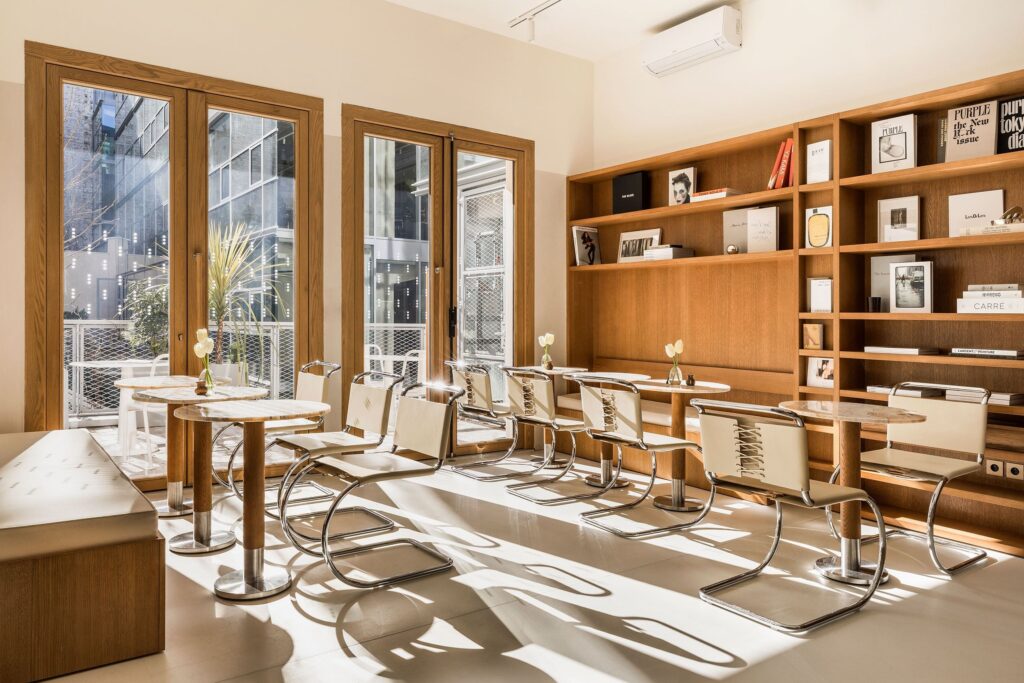
What makes the project particularly compelling is not simply its visual transformation, but the way it reconnects architecture with the social and cultural energy of Les Batignolles itself. The former car park and office block are no longer isolated structures of pure utility; instead, they have been reimagined as a civic landscape where contemporary urban life unfolds across multiple rhythms, functions, and forms of encounter.
More about La Fondation on:
Website
Instagram
Facebook
Photo: (c) Clément Gérard, Romain Ricard