
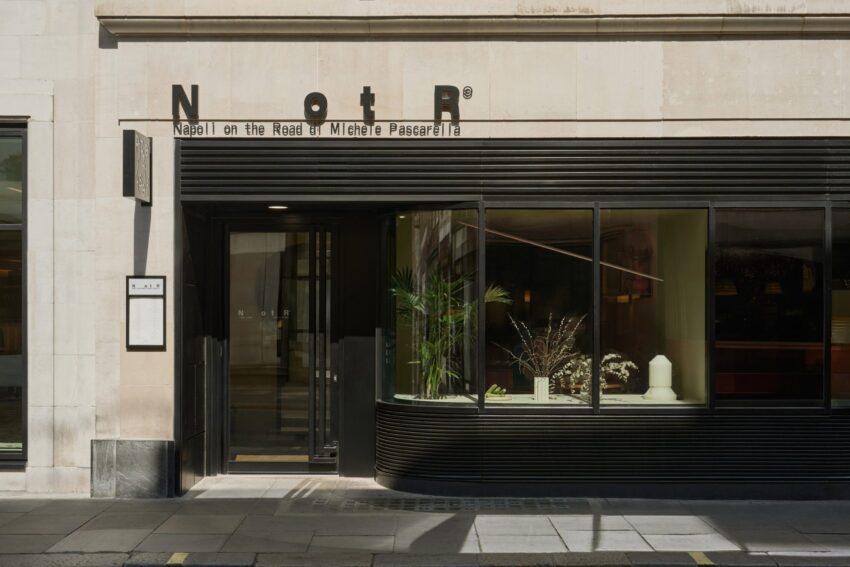
Napoli on the Road has arrived in Soho with an interior that leaves most of the decoration at the door.
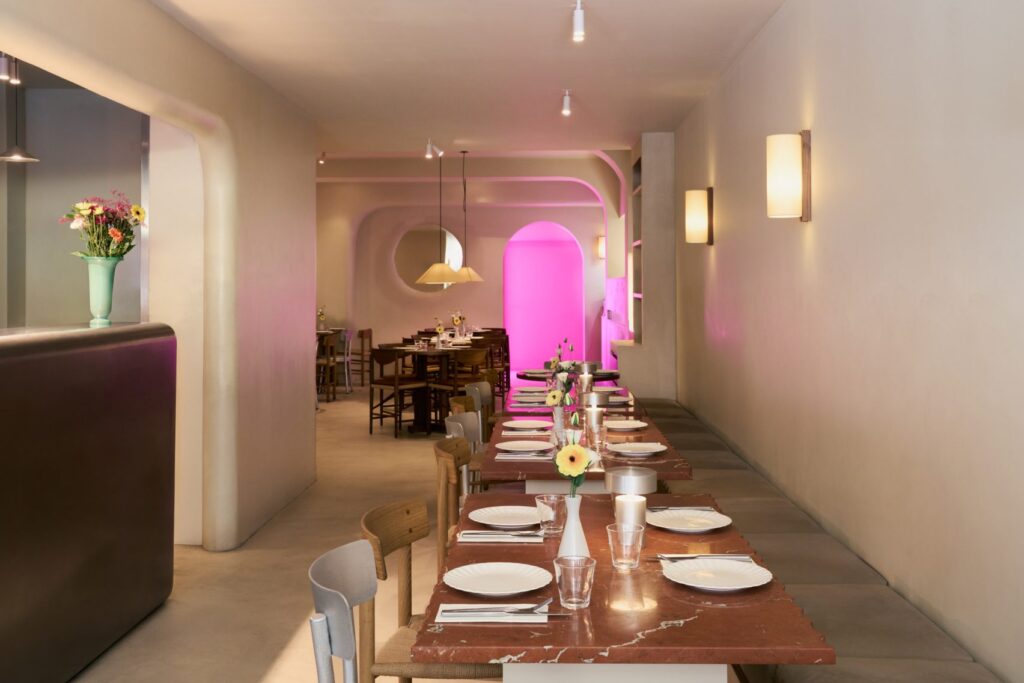
Designed by Spanish designer Isern Serra, the 80-square-metre ground floor and 35-square-metre basement of the London pizzeria draw from Mediterranean vernacular architecture, translating its arches, softened edges and built-in elements into a restrained contemporary setting.
The project was developed around the Italian roots of chef Michele Pascarella, with Serra looking less at specific decorative references and more at the way Mediterranean buildings are shaped by climate, available materials and everyday life.
That approach is visible from the material palette. Wood and stone define much of the furniture, while plasterboard walls sit within a metal framework and a continuous floor runs through the restaurant without interruptions in material or level. The floor becomes a quiet base for everything above it, helping the relatively compact space read as one connected interior.
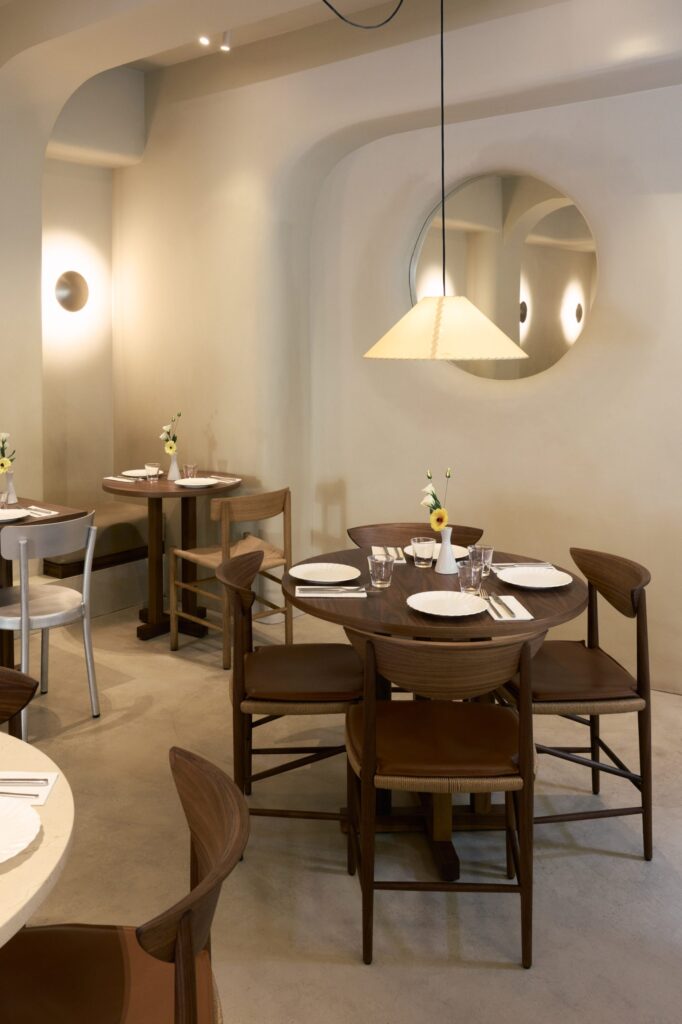
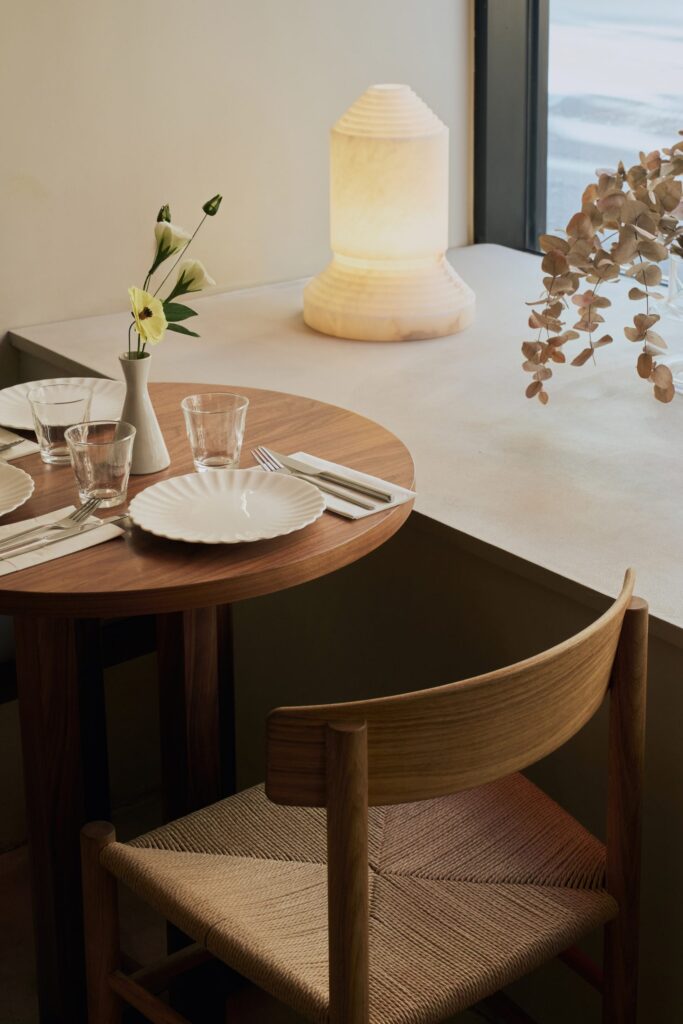
Serra deliberately avoided filling the restaurant with freestanding furniture. Seating, shelving and display areas are built directly into the walls, allowing the architecture to absorb functions that would otherwise occupy the floor.
The result gives the interior a more sculptural quality without making it feel theatrical. Built-in benches and shelves become part of the structure, while the bare surfaces leave room for light to do much of the atmospheric work.
Curves appear throughout the restaurant. Openings, arches, niches and corners have been softened, creating a continuous sequence between the different areas of the two-storey space. Serra draws on traditional Mediterranean construction, where rounded transitions often emerge from the way buildings are made rather than being added as decorative gestures.
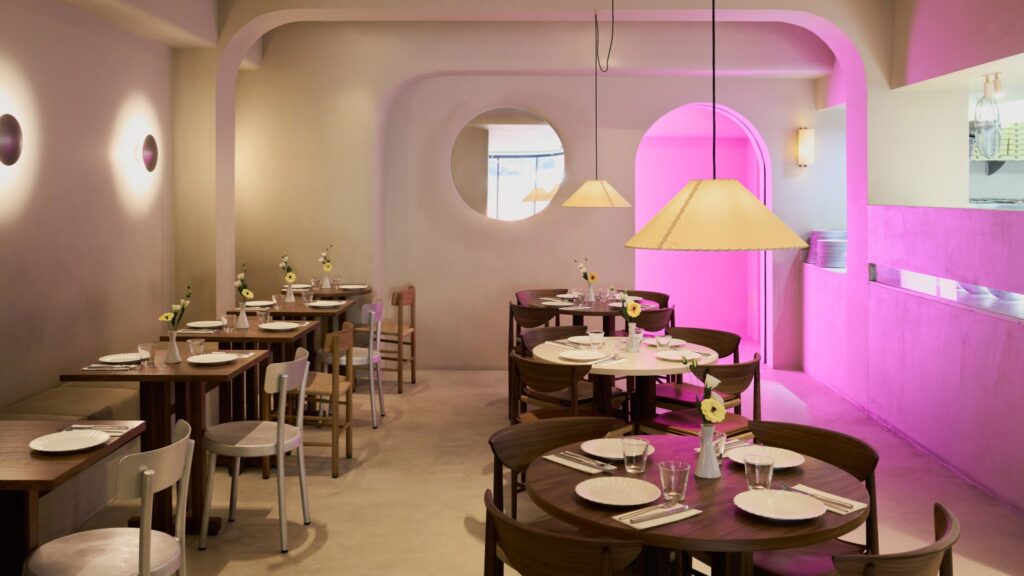
Here, those forms have been reduced and sharpened for a contemporary interior. The curved furniture follows the architecture, guiding movement through the restaurant while giving the rooms a less formal character.
The lighting remains deliberately restrained. With little decorative material competing for attention, changes in natural and artificial light become more visible across the plaster, stone and wood surfaces. Texture and proportion do the work that artwork, ornament or elaborate finishes might otherwise perform.
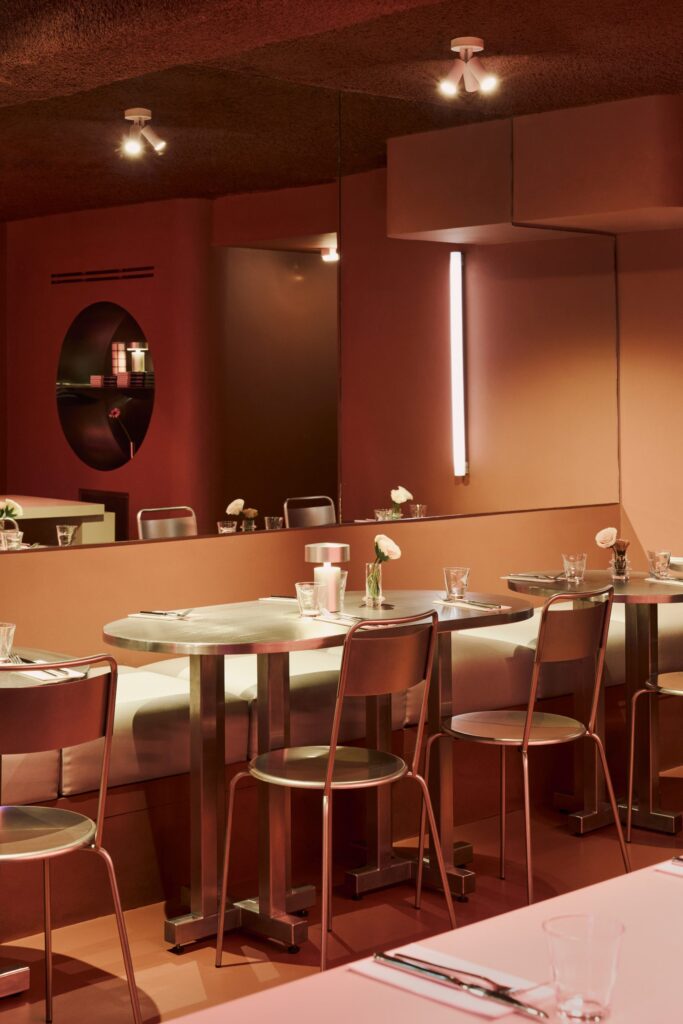
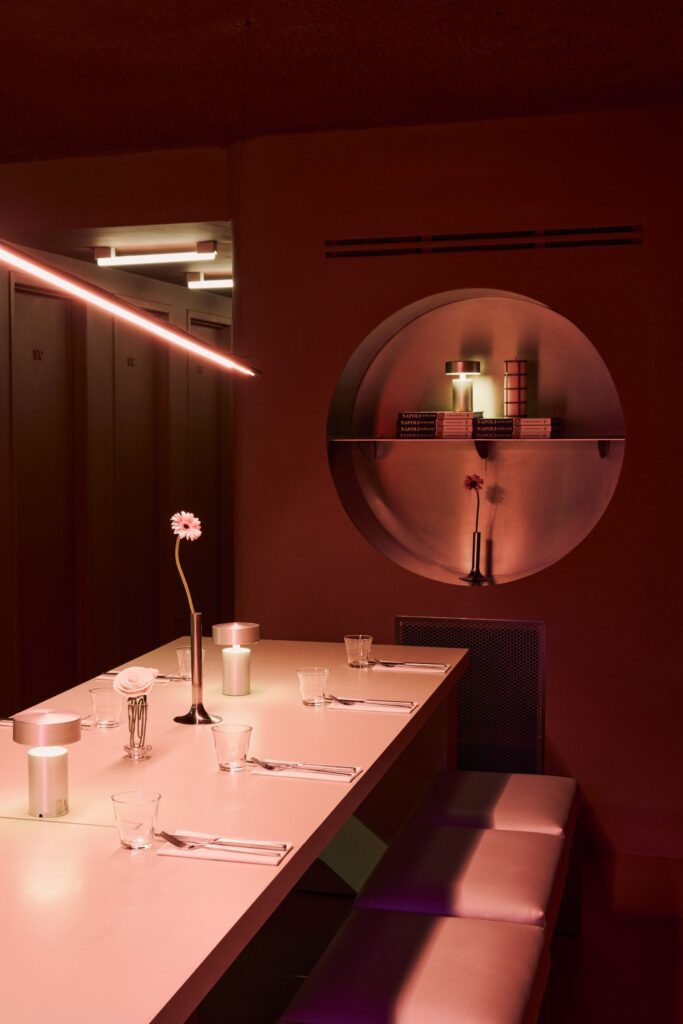
Downstairs, the atmosphere shifts. A dark red tone defines the dining and events space, introducing a deeper colour into an otherwise quiet palette. The room also contains one of the restaurant’s clearest industrial references: a stainless-steel bar counter.
Even the bar refuses to follow a strictly rectilinear language. Its edges are rounded, allowing the metal to sit comfortably within the softer geometry surrounding it. The reflective surface introduces a sharper material quality without disrupting the overall composition.
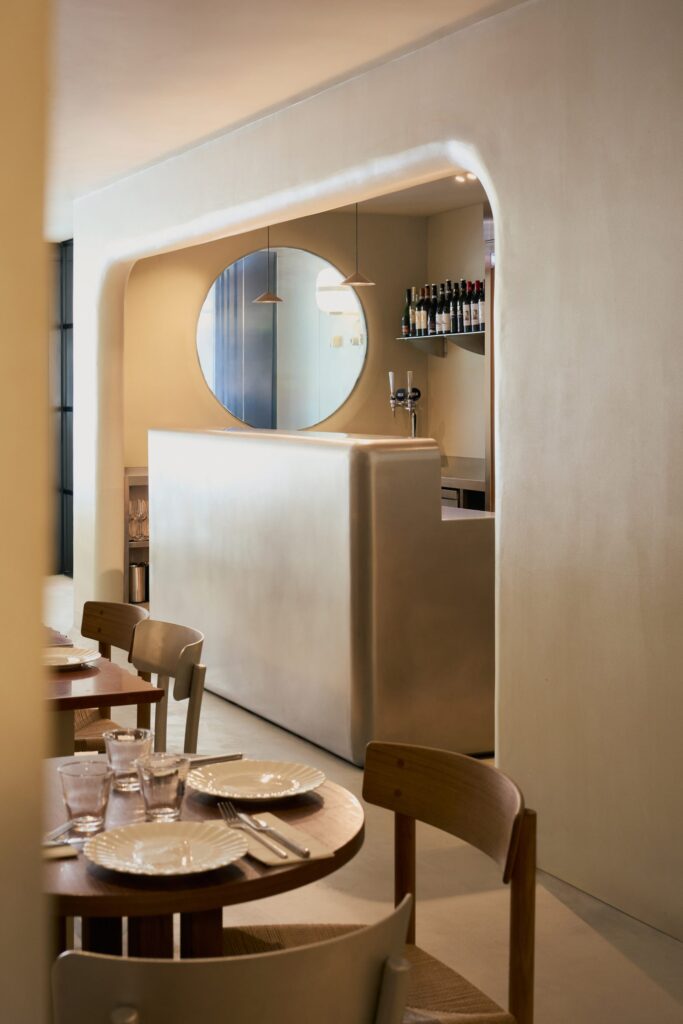
That relationship between steel and mineral finishes gives the basement a different density. The metal catches light and reflects the room around it, while the plastered surfaces absorb it. Wood and stone add another layer of texture, keeping the industrial element from dominating the space.
For Serra, the Mediterranean reference was never intended as a stylistic costume. It comes through in the way the restaurant handles material, movement and the relationship between architecture and furniture.
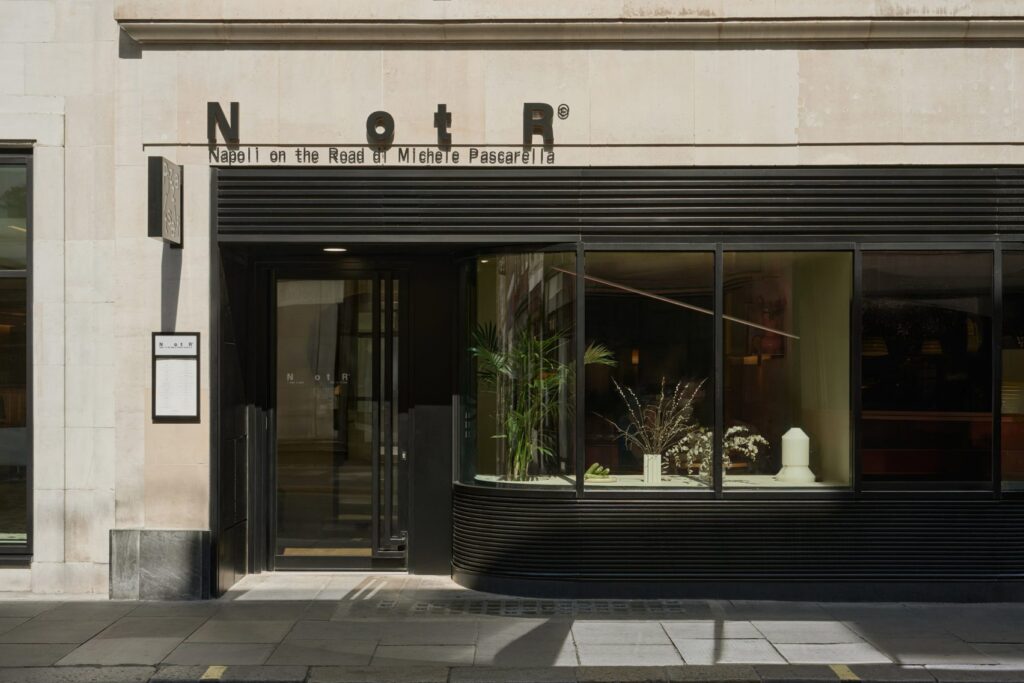
At Napoli on the Road, the pizza is Italian, the address is London and the interior speaks in a quieter architectural language: curved walls, continuous floors, built-in seating, stone, timber and a little stainless steel, all arranged to give a small Soho restaurant its own pace.
More about Napoli on the Road online:
Website
Instagram
Photo: (c) Adrianna Giakoumis