For Zurich Art Weekend 2026, Hauser & Wirth’s space on Bahnhofstrasse marks the 100th anniversary of Polish artist Alina Szapocznikow with an autobiographical exhibition that unfolds across two cities. Titled “Alina Szapocznikow. Autobiography in Fragments”, the presentation runs in parallel with Galerie Loevenbruck in Paris, offering a rare, dual perspective on a career that was as brief as it was radically influential, spanning the mid-1940s through the early 1970s.
The two exhibitions are conceived as a shared narrative, bringing together one work for each year of Szapocznikow’s practice. Seen in sequence, they trace the full intensity of an artist who reshaped sculpture into something deeply personal, a medium capable of holding memory, trauma, and bodily experience at once.
Born in 1926 into a Jewish family in Poland, Szapocznikow survived the horrors of the concentration camps during the Holocaust as a teenager. After the war, she moved first to Prague in 1945 and then to Paris in 1947, where she studied sculpture at the École des Beaux-Arts. Her earliest works are rooted in classical figuration, focusing on the human body in still, measured poses. Plaster pieces such as “Autoportret (Self-Portrait)” (1948), included in the Zurich presentation, reflect this early attentiveness to anatomical form and proportion.
Returning to Poland in 1951, Szapocznikow’s practice shifted significantly in the years following Stalin’s death, when restrictions on artistic production began to loosen. She moved away from strict representation and started exploring abstraction within the figure, producing works such as “Kwiato-owoc (Flower-fruit)” (1957–1958) and “Forma II (Form II)” (1959). During this period, sculpture became less about depiction and more about transformation.
By the 1960s, Szapocznikow had redefined sculpture as an intimate record of the body and its fragility. Instead of presenting the human form as whole and stable, she began fragmenting it, isolating parts to emphasize vulnerability and impermanence. She experimented with casting her own body and introduced industrial materials such as polyester resin and polyurethane foam, aligning her practice with contemporaries including Louise Bourgeois, Eva Hesse, and Paul Thek, who were similarly expanding the language of postwar sculpture.
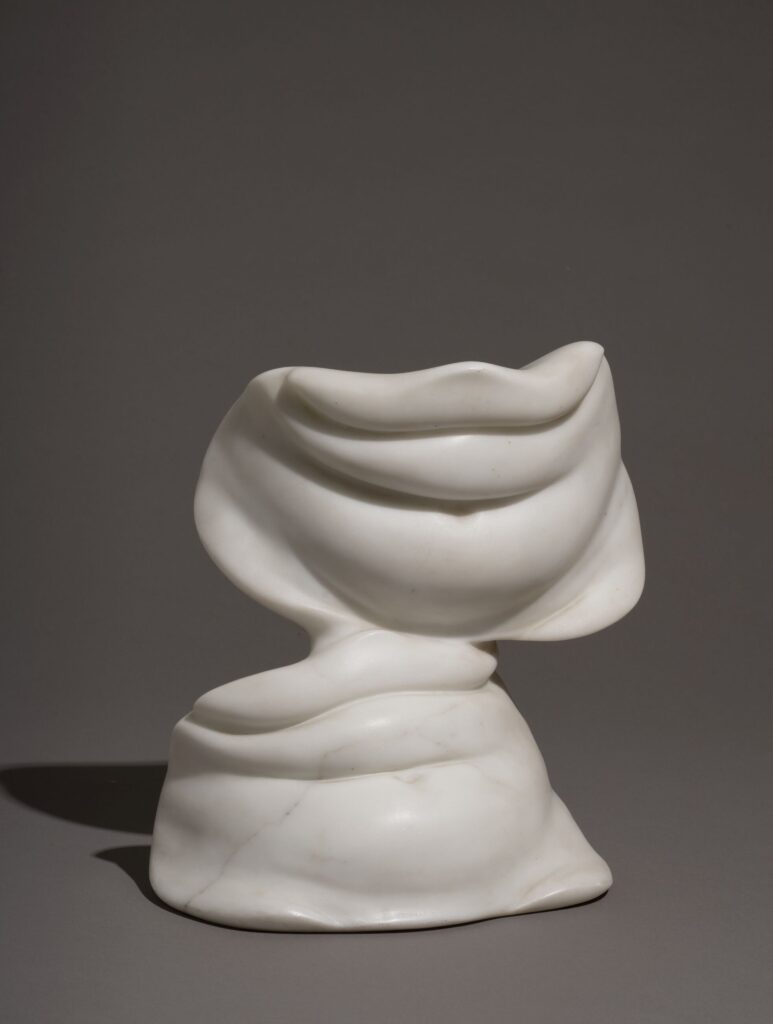
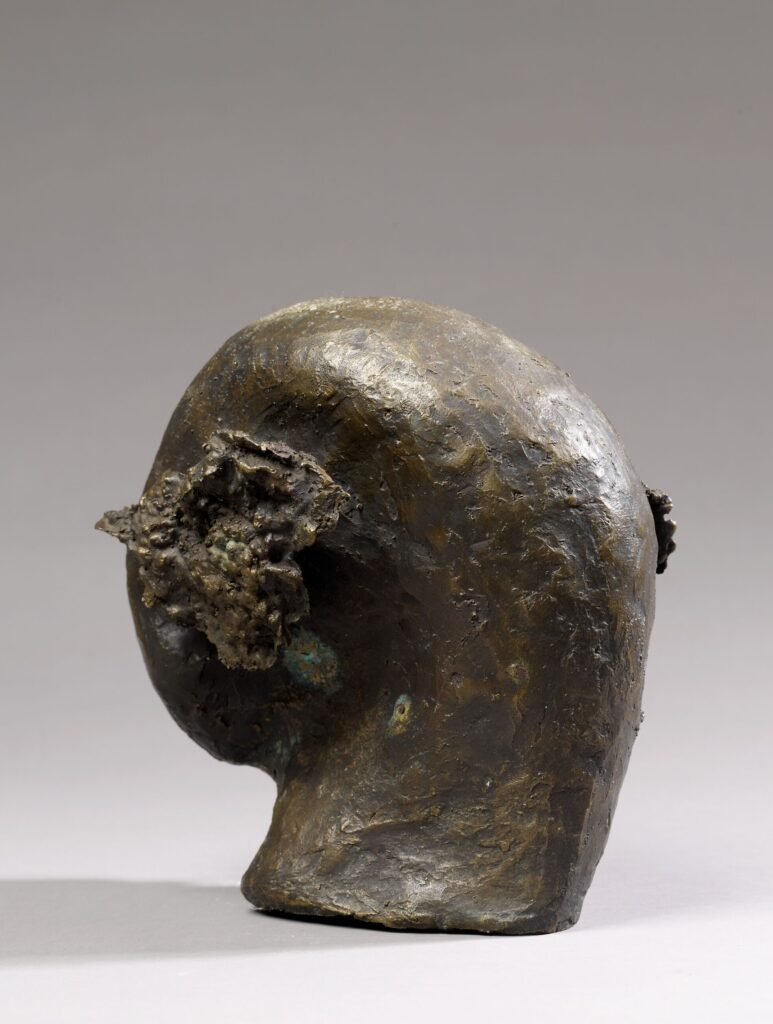
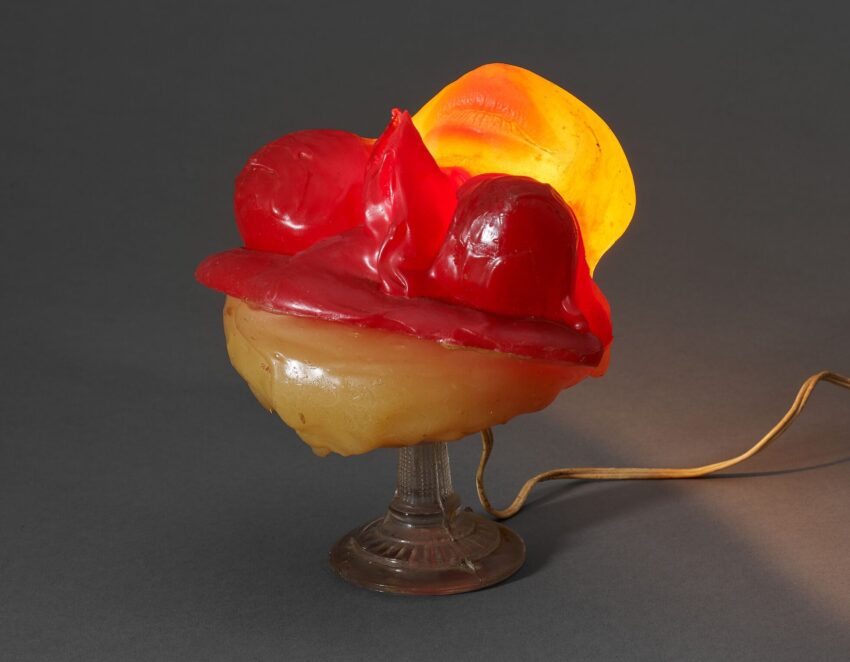
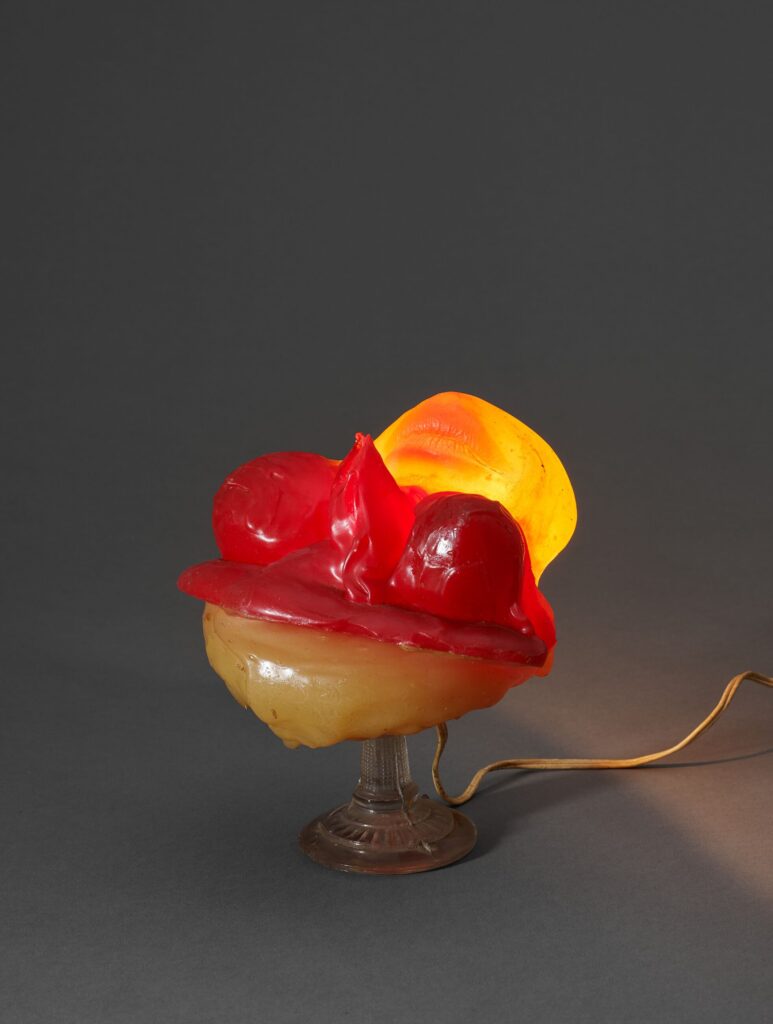
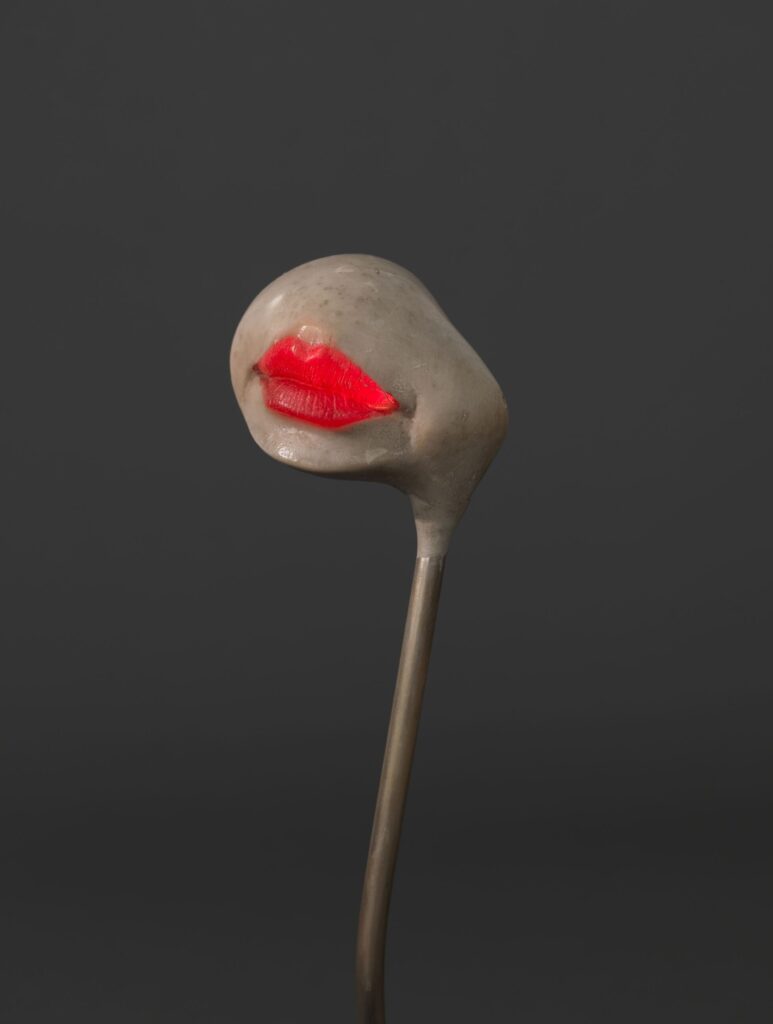
Light became central to her work from 1966 onwards, when she began producing functional sculptural objects in resin, most notably luminous female lips mounted on stem-like forms and wired as lamps. These hybrid works sit uneasily between domestic object and bodily fragment, their glow both seductive and unsettling, collapsing the boundary between utility and flesh.
In 1969, Szapocznikow was diagnosed with breast cancer, a turning point that deeply informed her later work. Her series “Tumors” (1969–1972) translates internal illness into small resin forms containing photographs, clippings, and gauze, giving physical shape to the invisible processes of the body. Around the same time, references to the Holocaust became more explicit in her “Souvenirs” (1967–1971), where layered resin encases photographic fragments. Works such as “Pamiatka I (Souvenir I)” (1971) merge personal memory with collective trauma, overlaying childhood imagery with faces of concentration camp victims in a single translucent surface.
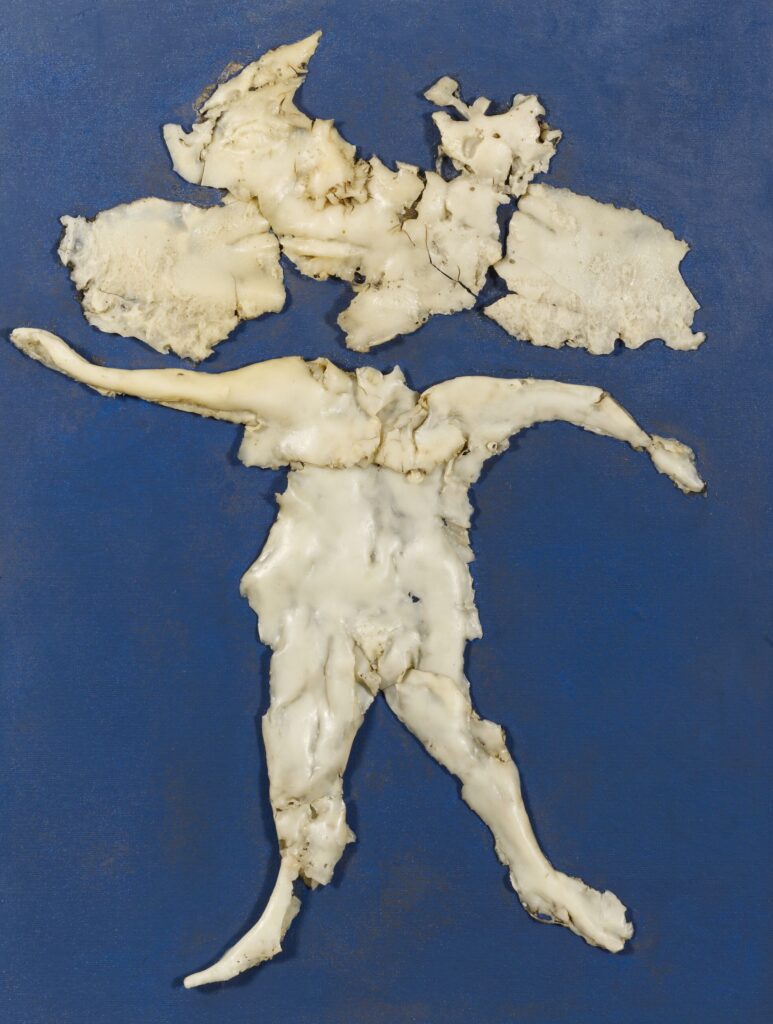
In her final years, Szapocznikow turned repeatedly to casting the body, her own and those of those closest to her. The “Herbier (Herbarium)” series, including “Herbier bleu I (Blue Herbarium I)” (1972), presents these impressions as flattened, skin-like traces that resemble both scientific specimens and burial shrouds. Across her drawings from the same period, including the “Human Landscapes” (1971–1972), the body appears increasingly fragile, dissolving into surface, outline, and gesture.
Reflecting on her practice in 1972, Szapocznikow described her works as “awkward objects,” attempts to fix fleeting moments of life and its contradictions. Although primarily a sculptor, she also produced hundreds of drawings and monotypes that run parallel to her three-dimensional work, echoing its textures and emotional intensity throughout the exhibition.
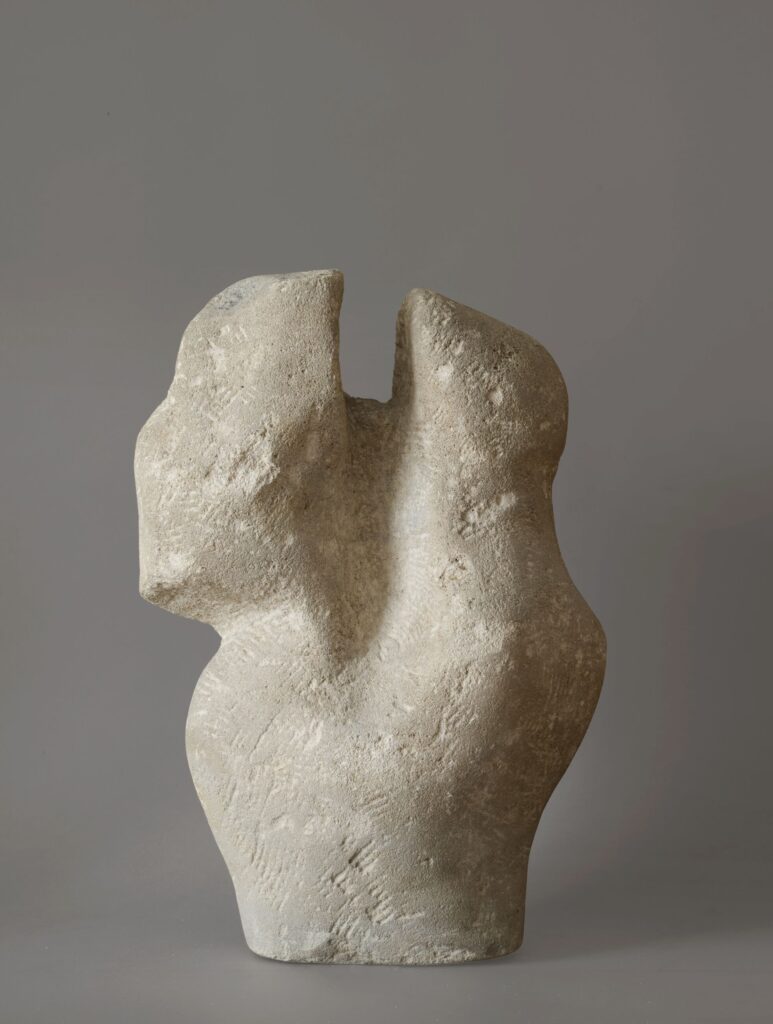
“Autobiography in Fragments” stands as a tribute to an artist who continuously reinvented the language of sculpture in order to confront the instability of the body, memory, and identity. The Zurich and Paris presentations coincide with “Szapocznikow. Personal” at the National Museum in Kraków (20 March – 23 August 2026), extending this centenary reflection across institutions and geographies.
Dates
11 June – 5 September 2026
Location
Zurich, Bahnhofstrasse