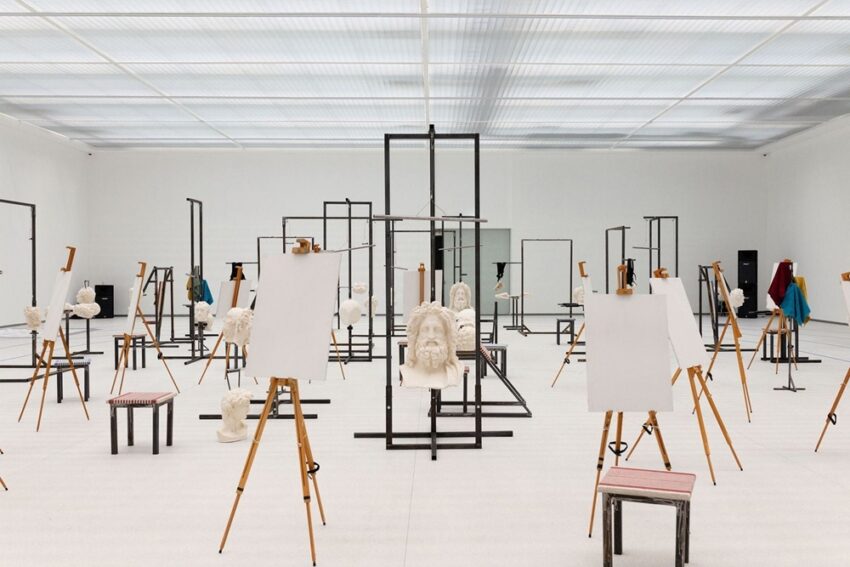
Augustas Serapinas transforms the relationship between art and physical training into a fully immersive experience with Physical Culture, a long-running project that recently occupied the Great Hall of Contemporary Art Centre Vilnius. Presented in its largest form to date, the exhibition converted the museum space into a functioning gym where visitors could simultaneously exercise, draw, and reflect on the cultural ideals embedded within both disciplines.
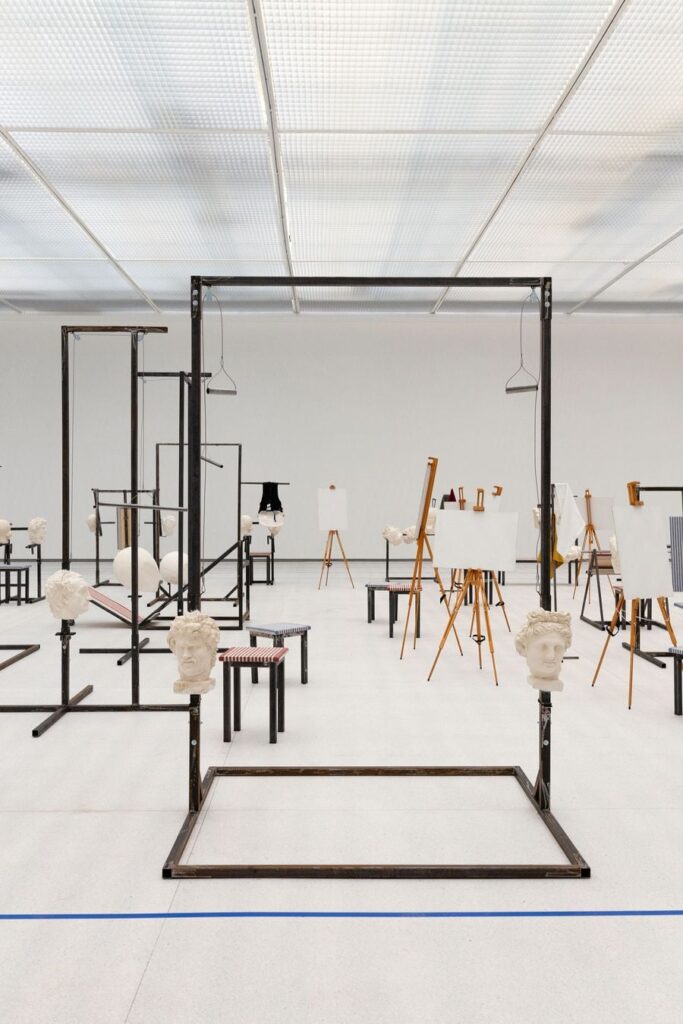
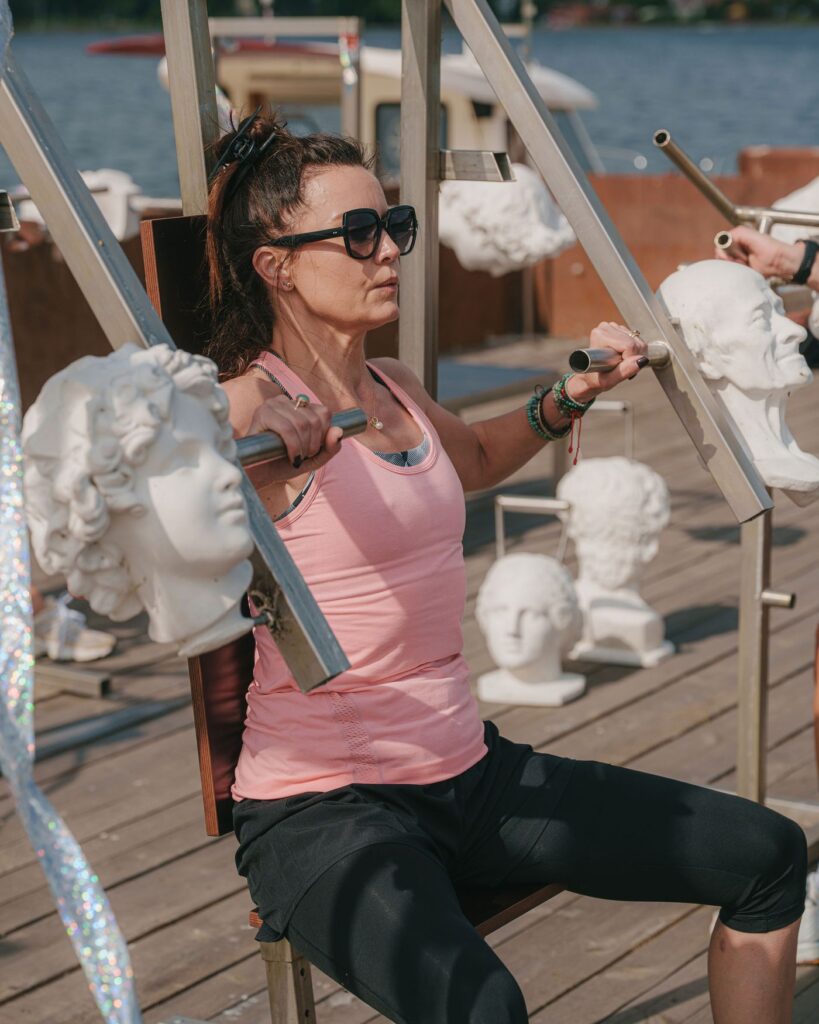
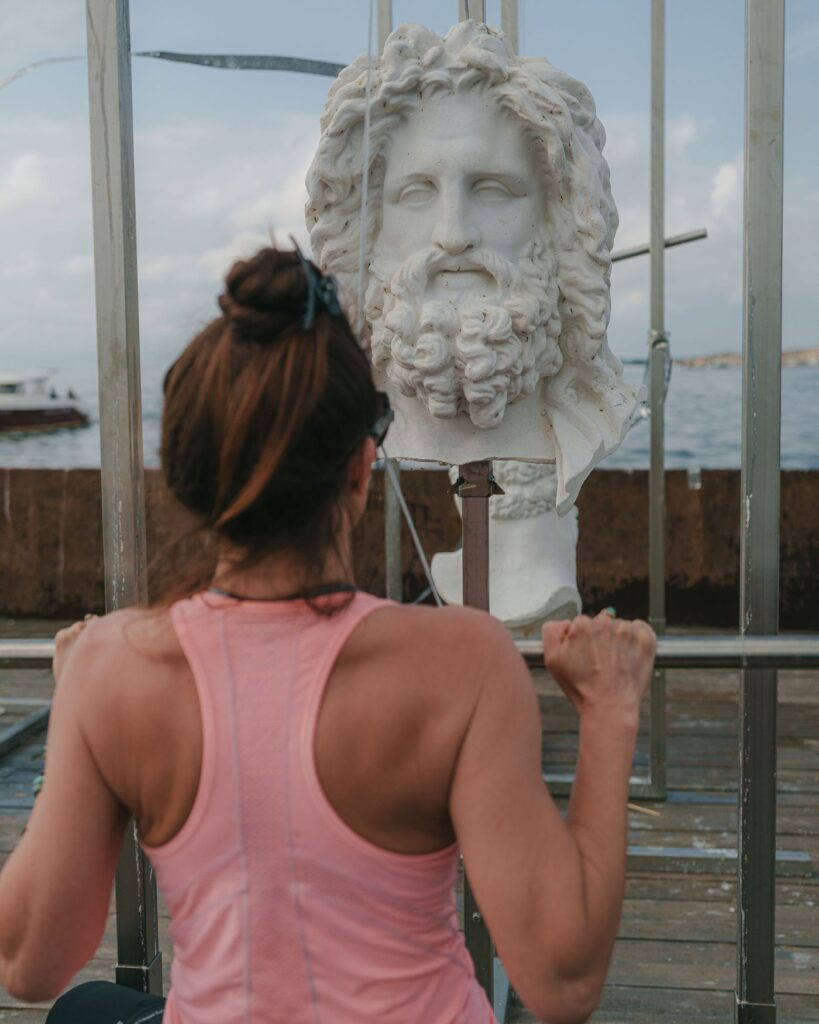
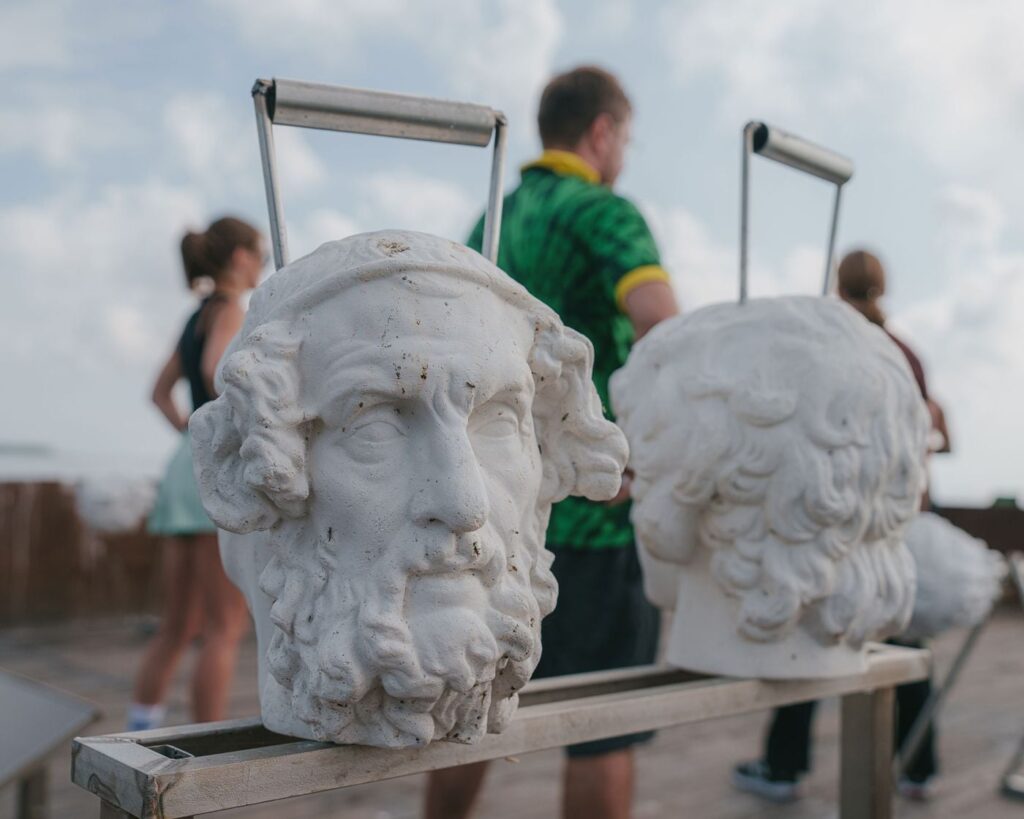
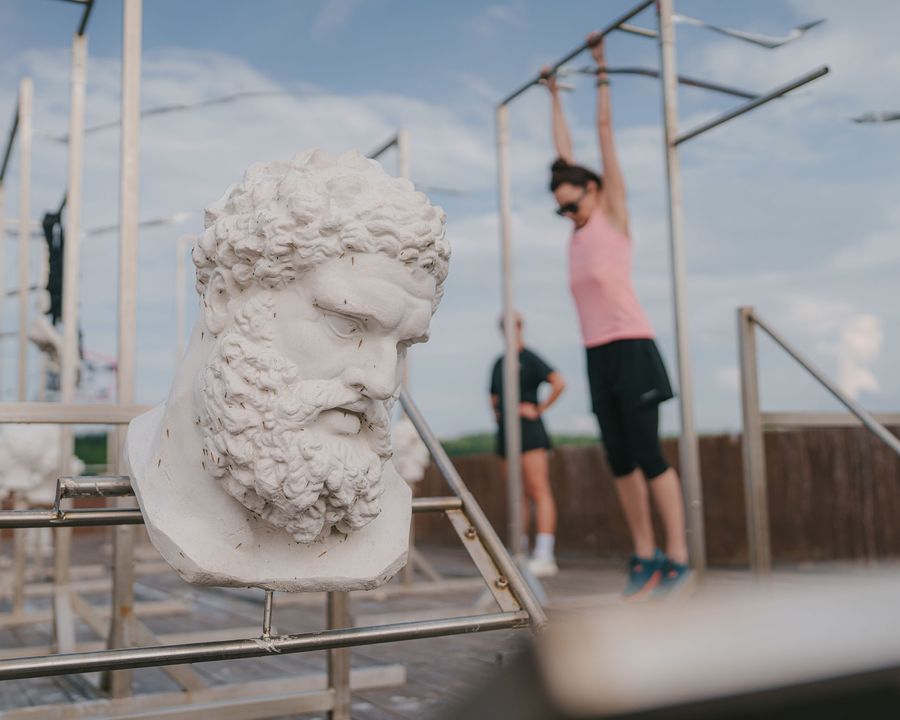
At first glance, the installation resembles a conventional fitness space. Yet instead of traditional weights and equipment, visitors encounter dumbbells and exercise machines constructed from plaster casts of canonical sculptures drawn from classical antiquity and Renaissance art. Figures associated with idealized beauty and physical perfection become literal tools for physical exertion, collapsing the distance between artistic representation and bodily discipline. Easels positioned throughout the installation further blur this boundary, inviting visitors to sketch while others train nearby.
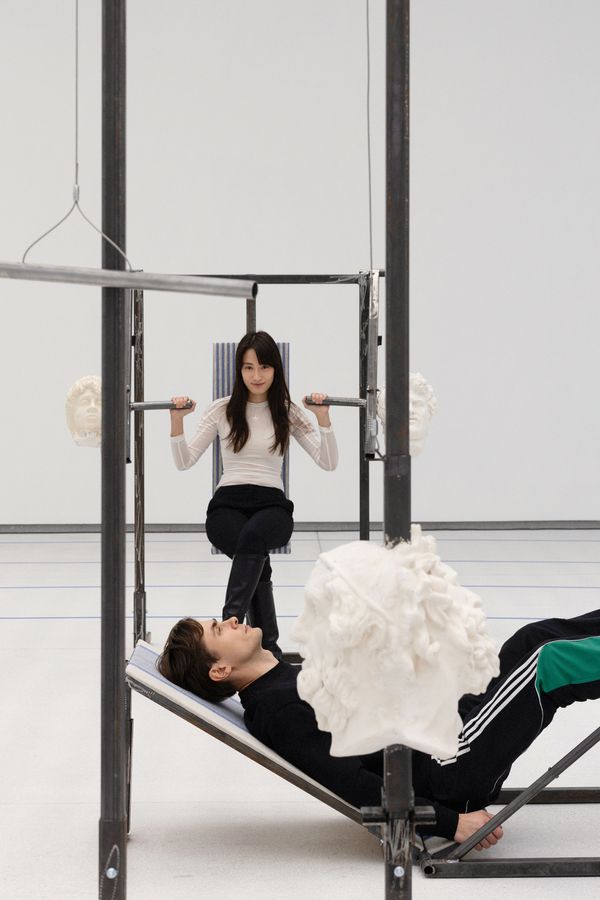
The project began in 2012 while Serapinas was still studying at the Vilnius Academy of Arts. Originally conceived as an experimental intervention using abandoned student sculptures inside an art school, Physical Culture emerged from the artist’s reflection on the repetitive nature of academic art training. Exercises such as copying plaster casts and drawing from classical models gradually revealed parallels with the repetitive mechanics of weightlifting and bodybuilding. Both, in different ways, rely on discipline, repetition, and muscle memory as methods of self-improvement.
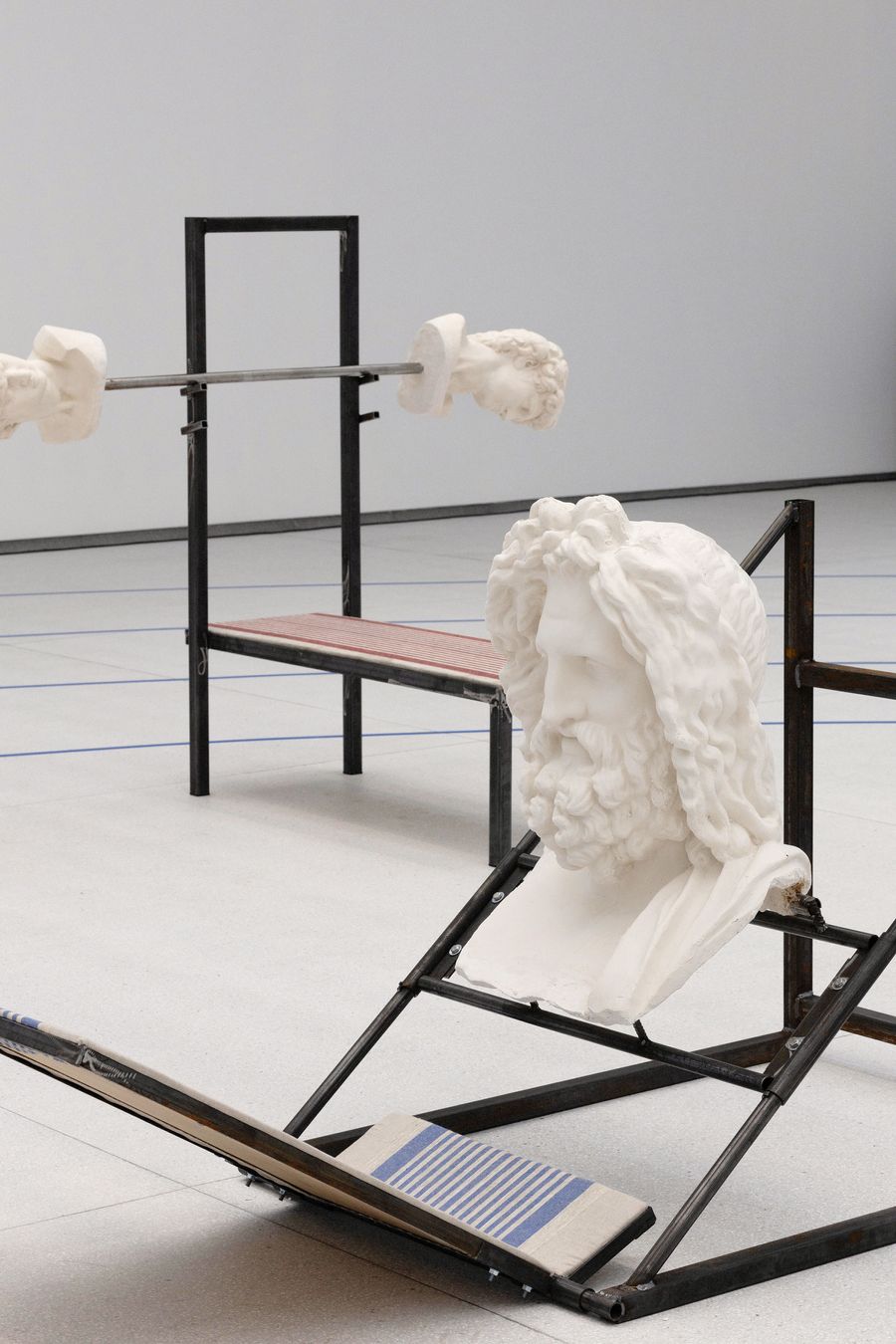
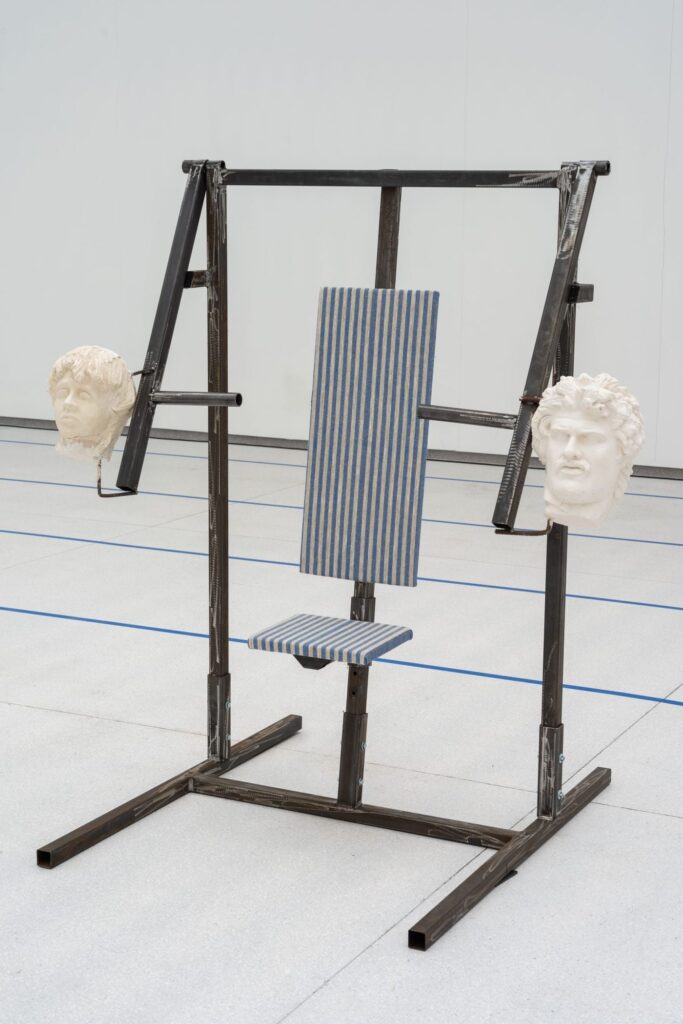
Over the years, the work has evolved through multiple iterations, appearing at venues including Frieze London and Art Basel. Each version adapts to its specific environment while involving local gyms, trainers, and art communities. At CAC Vilnius, curated by Neringa Bumblienė, the installation expanded into a 1,000-square-meter participatory environment where visitors were required to undergo introductory training sessions before using the equipment, reinforcing the project’s interest in how institutions shape behavior through rituals, rules, and systems of instruction.
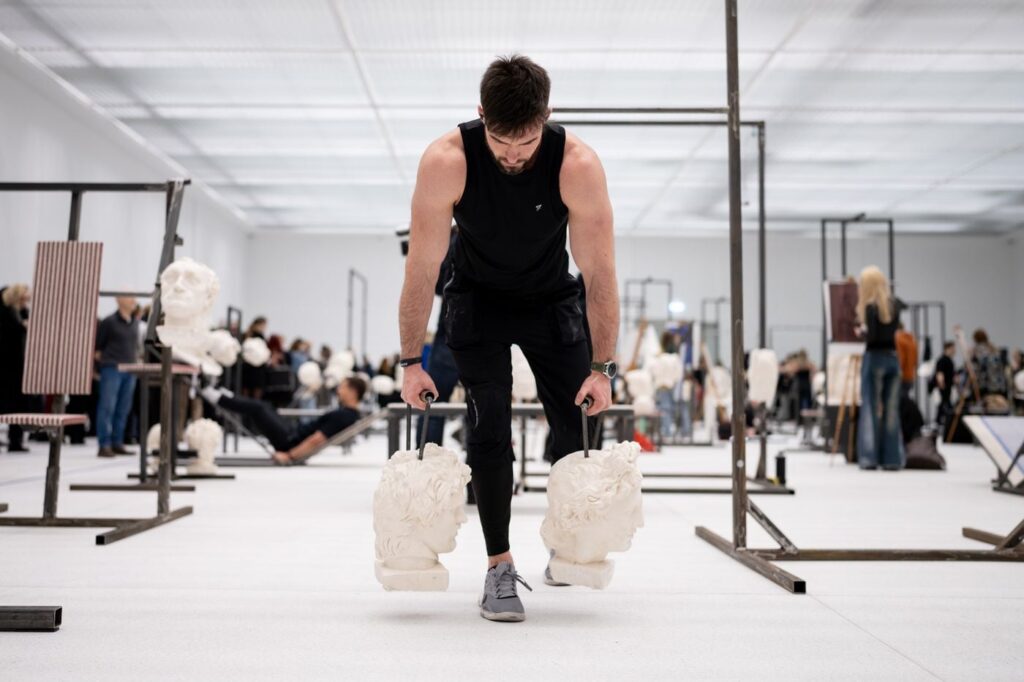
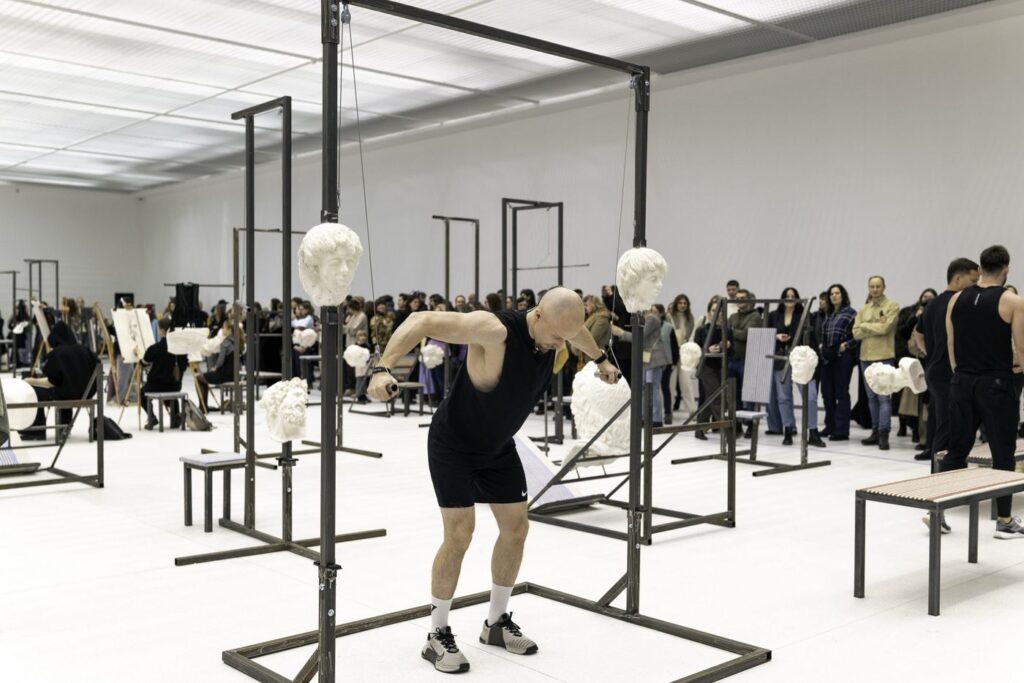
Beneath its humor and playfulness, Physical Culture carries a deeper reflection on Western ideals of beauty and perfection. Classical sculptures such as David or Apollo Belvedere appear not simply as historical references, but as enduring symbols of physical aspiration still embedded within contemporary gym culture. In this context, the museum and the gym begin to mirror one another: both become spaces dedicated to discipline, transformation, and the pursuit of idealized forms.
Throughout his broader practice, Serapinas has consistently examined the social and institutional structures that shape public behavior and collective experience. In Physical Culture, those concerns converge into one of his most direct and accessible works, an environment where art, labor, physicality, and cultural mythology coexist within the same space.
By turning the exhibition hall into a gymnasium, Serapinas ultimately proposes that physical training and cultural education are not opposing activities, but parallel systems shaped by the same human desire for improvement, belonging, and transformation.
More about Augustas Serapinas on:
Instagram
Photo: (c) Dovaldė Butėnaitė